Waste Odor Control in Wisconsin: Solutions for Waste & Environmental Companies

Waste Odor Control in Wisconsin: Solutions for Waste & Environmental Companies
For Wisconsin's waste management and environmental industries, controlling odor is more than making a facility smell better.
Landfills, transfer stations, recycling facilities, composting operations, wastewater and leachate systems, industrial waste facilities, and environmental remediation projects can generate complex odors that affect employees, neighboring properties and surrounding communities.
Wisconsin's regulatory environment makes the issue particularly important. The Wisconsin Department of Natural Resources (DNR) regulates malodorous emissions under Wisconsin Administrative Code NR 429, while landfill operating requirements also address odor management.
For operators and environmental companies, the objective should therefore be clear:
Identify where the odor is generated, understand what compounds are responsible, and control the problem before it becomes an off-site complaint.
Ecolo Odor Control Technologies works with waste and environmental applications using multiple treatment approaches—including airborne odor counteractants, biological treatment, automated misting, mobile atomization and source-specific treatment.
The important part is choosing the right technology for the actual odor problem.
Why Waste Odor Control Matters in Wisconsin
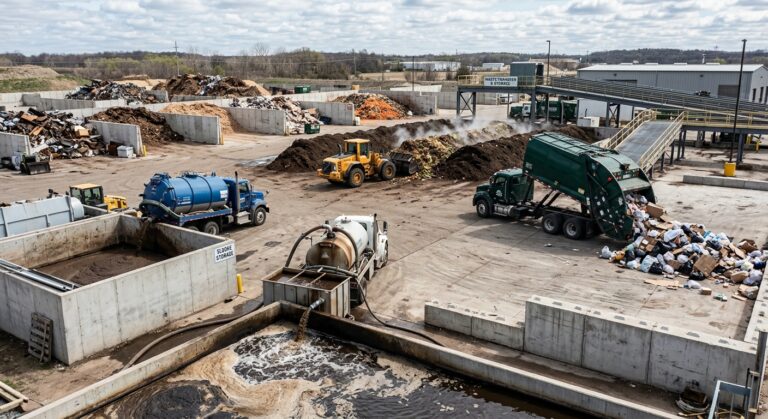
Wisconsin has an extensive network of municipal and industrial waste operations supporting communities, manufacturers, agriculture and businesses throughout the state.
Where waste is collected, transported, processed, stored or decomposed, odor can become an operational challenge.
Common sources include:
Municipal solid waste
Food and organic waste
Leachate
Sludge
Industrial residuals
Composting material
Wastewater
Contaminated soil
Rendering and animal-derived waste
Waste transfer and storage
Truck unloading and tipping operations
The Wisconsin DNR notes that landfill odors can originate from uncovered waste, particular waste types, leachate and landfill gas produced during waste decomposition.
Importantly, both active and closed landfills can experience odor issues.
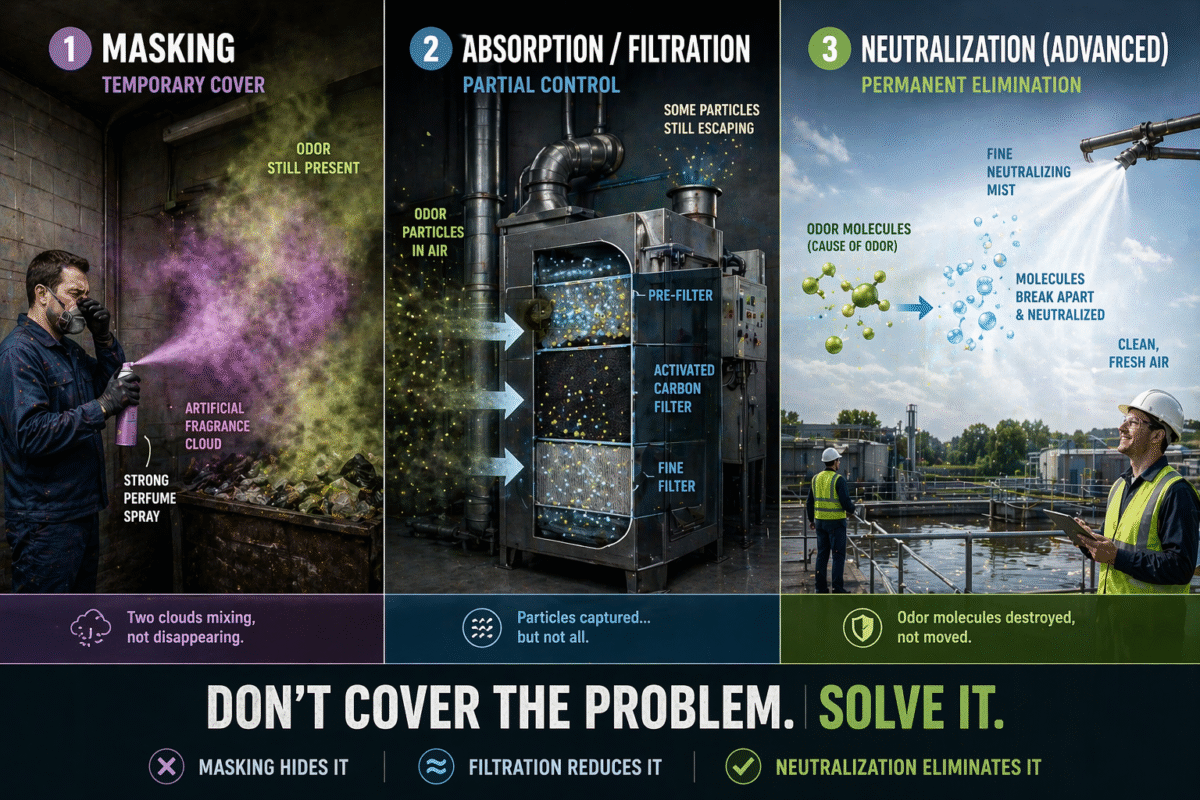
That illustrates why odor management cannot be reduced to spraying fragrance around a property.
Different sources require different treatment strategies.
Wisconsin's Regulations Address Malodorous Emissions
Odor is not merely an aesthetic consideration for Wisconsin businesses.
The Wisconsin DNR identifies NR 429 – Malodorous Emissions and Open Burning among the state's air-pollution-control rules.
Wisconsin DNR guidance explains that a business may not allow emissions that create an objectionable odor beyond its property and discusses measures businesses can take to prevent or control odors.
For landfills specifically, the DNR states that many air permits require an odor control plan describing precautions taken to prevent malodorous emissions.
Wisconsin landfill operating requirements also call for odor-control planning, and the DNR may require specific odor-control provisions during landfill siting or expansion.
This makes proactive odor management particularly valuable.
A facility that understands its sources and has a defined response strategy is in a stronger position than one that begins investigating only after complaints become frequent.
Where Do Waste Facility Odors Come From?
A waste facility rarely has just one odor.
What people perceive as "landfill smell" or "garbage odor" can actually be a mixture of many chemical compounds generated through different processes.
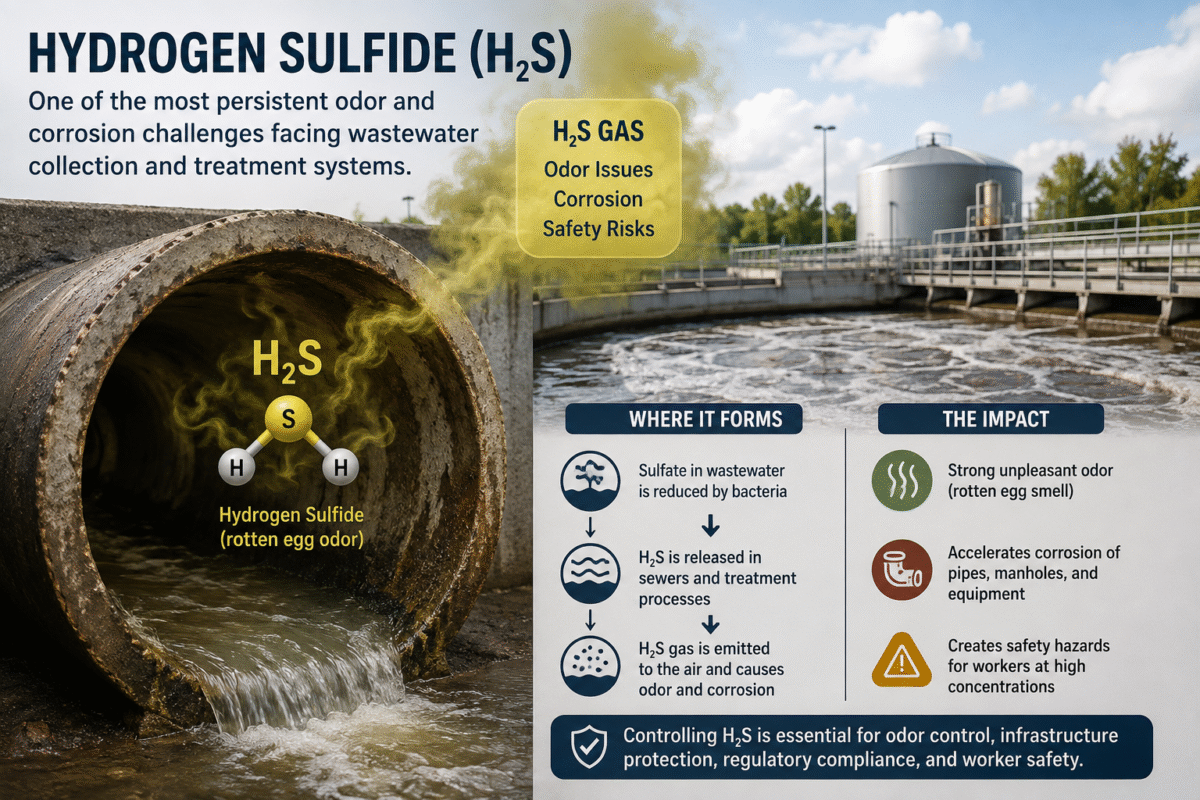
Hydrogen Sulfide – H₂S
Hydrogen sulfide is recognized by its characteristic rotten-egg odor.
It can develop under anaerobic conditions where sulfur-containing materials and sulfate are biologically reduced.
Potential sources include:
Leachate
Wastewater
Sludge
Organic waste
Certain industrial wastes
Anaerobic zones within waste material
H₂S requires particular attention because elevated concentrations can represent more than an odor issue.
Mercaptans
Mercaptans—or thiols—contain sulfur and can generate extremely strong odors even at relatively low concentrations.
They may contribute to odors associated with decomposing organic waste and certain industrial waste streams.
Ammonia and Amines
Protein-rich organic material and nitrogen-containing wastes can generate ammonia and amine odors.
These can be particularly relevant to:
Food waste
Agricultural materials
Rendering
Composting
Biosolids
Organic processing residuals
Volatile Fatty Acids
Anaerobic decomposition can also produce volatile fatty acids such as acetic, propionic and butyric acids.
These compounds can contribute sour, rancid and unpleasant organic odors.
Wisconsin Landfills: Control Odor at the Source and Boundary
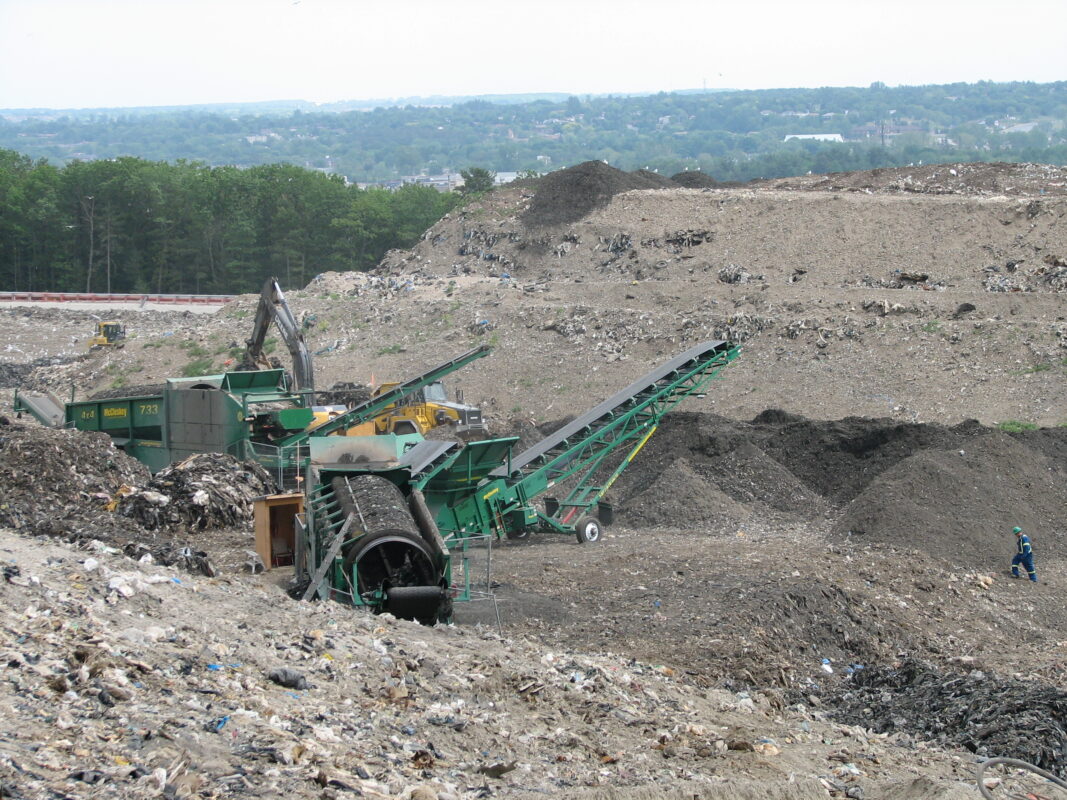
Landfills are among the most challenging odor-control environments because conditions constantly change.
The working face moves.
Waste composition changes.
Weather changes.
Wind direction changes.
Leachate conditions fluctuate.
Heavy equipment and trucks continually disturb material.
For this reason, one fixed odor-control method may not adequately address every source.
The Wisconsin DNR itself recognizes several potential landfill odor-control measures, including waste-management practices, cover materials, landfill-gas extraction, leachate management and odor-control products and technologies.
A comprehensive program can combine operational controls with supplemental odor treatment.

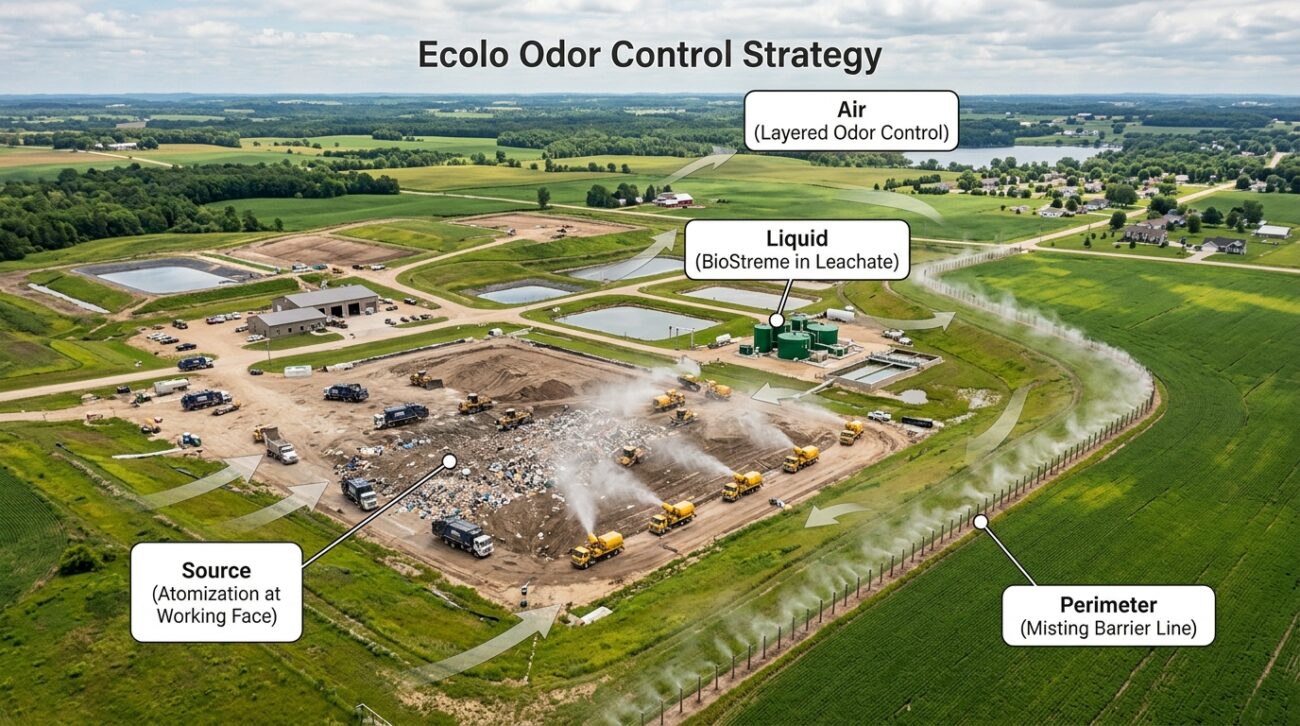
1. Working-Face Odor Control
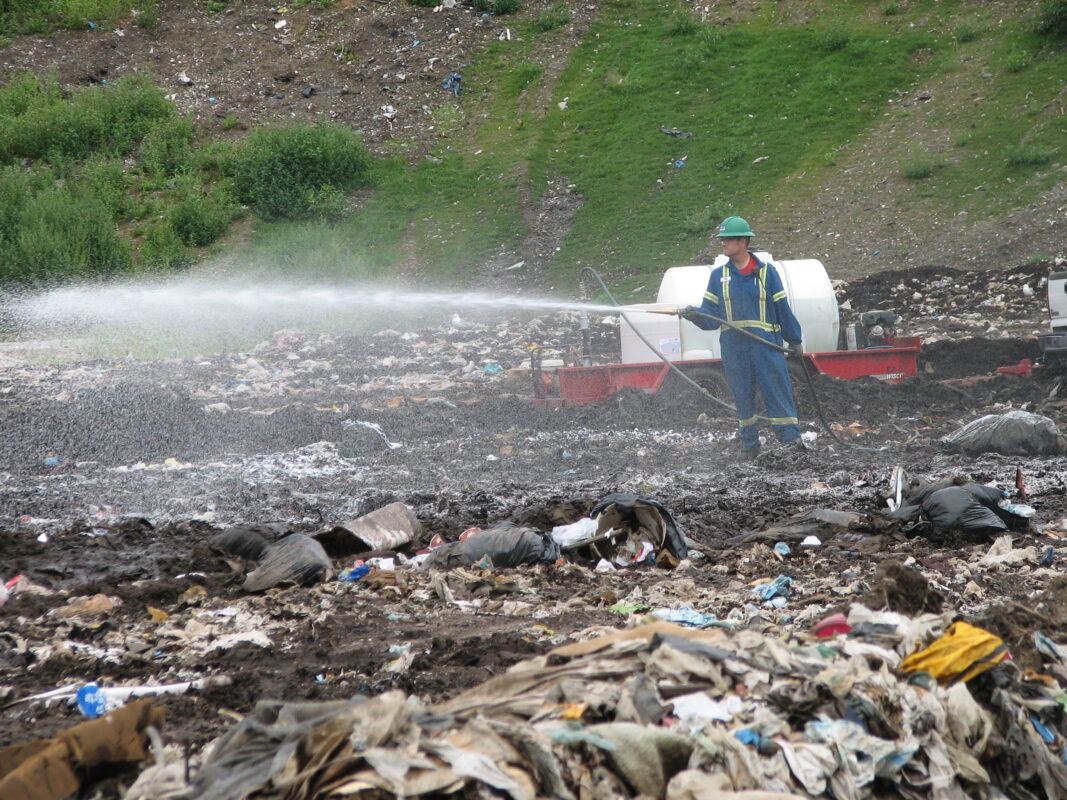
Fresh waste at the active working face can create substantial odor during unloading, spreading and compaction.
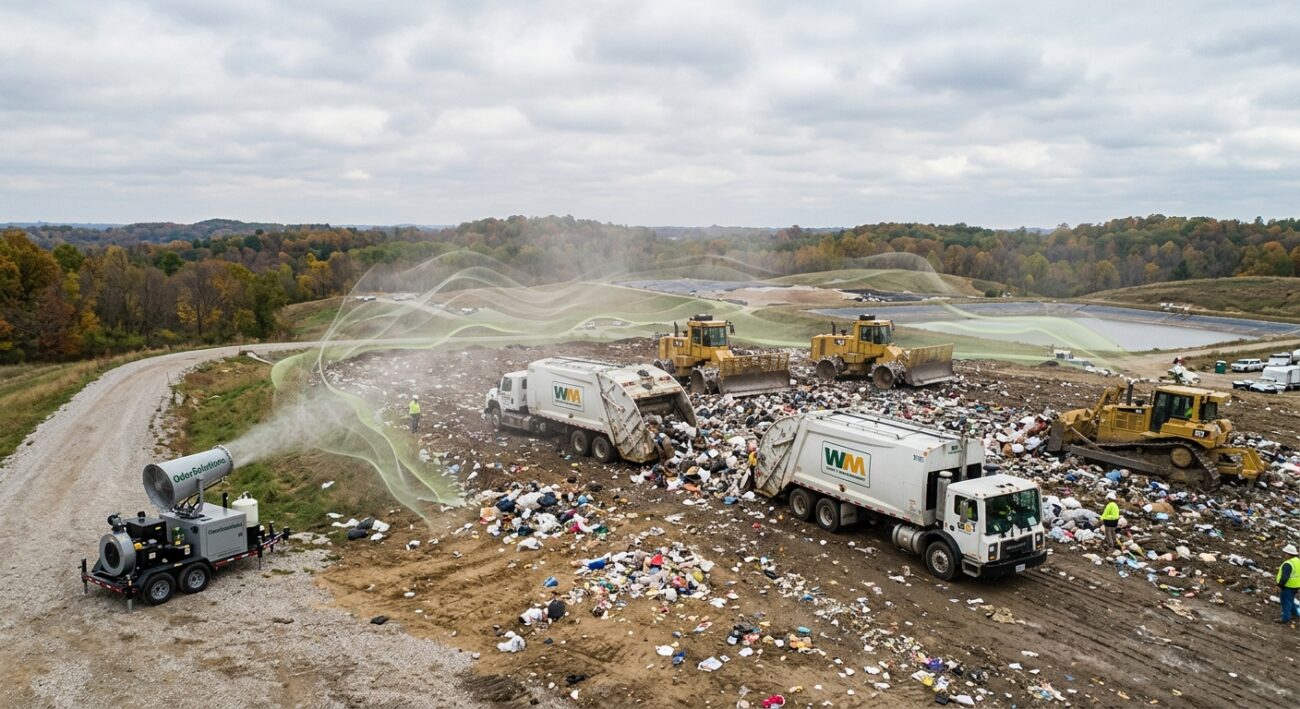
An atomized odor counteractant can be applied near the active area to treat airborne odors as they are released.
Ecolo's AirSolution formulations are designed for airborne odor treatment and can be delivered through engineered atomization systems.
The objective is not to cover garbage odor with perfume.
The treatment is intended to interact with malodorous compounds in the air and reduce their impact.
Depending on the site, treatment equipment can be repositioned as operations move.
2. Perimeter Odor Control
Sometimes the most important location is not where the odor originates.
It is where the odor leaves the property.
Consider a landfill where prevailing winds move odor from the working face toward a residential area.
Treating only the immediate source may not provide sufficient protection during unfavorable weather.
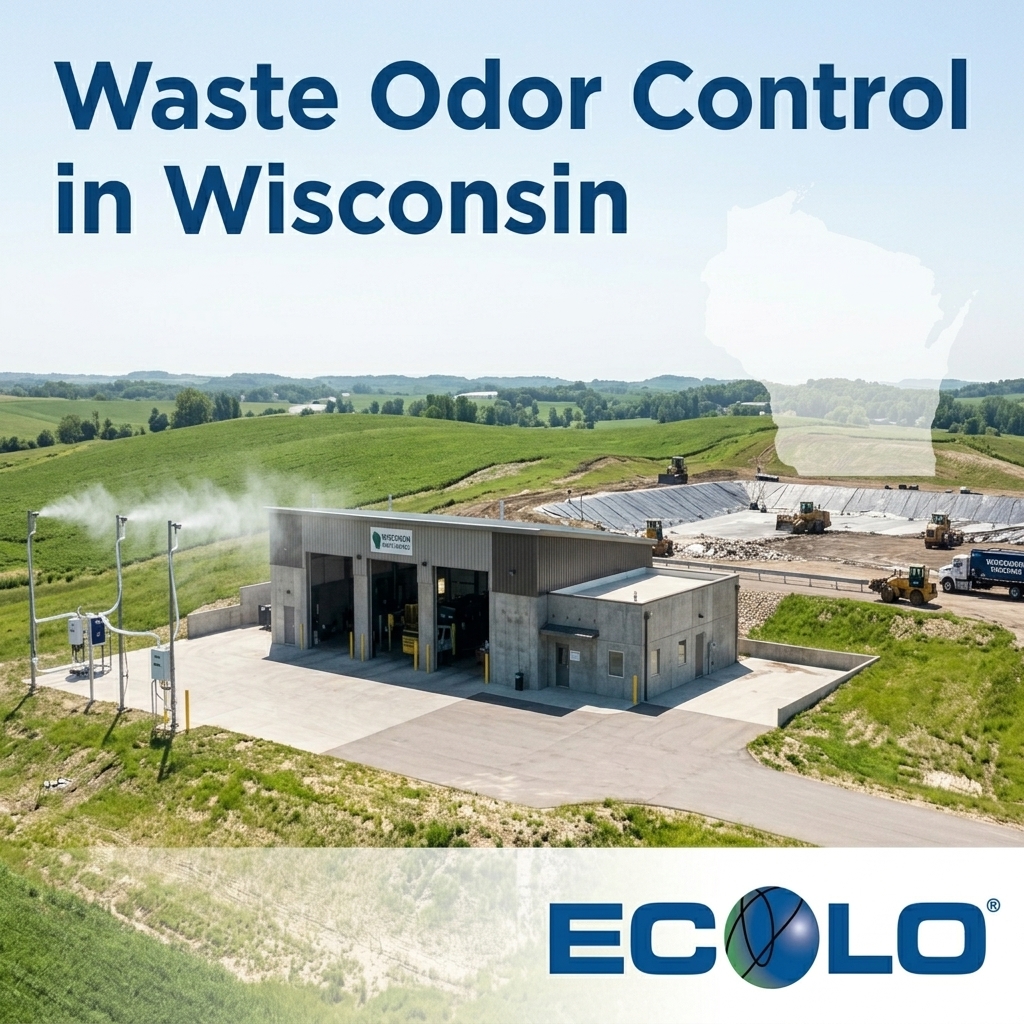
A perimeter misting system can create an additional treatment zone between the odor source and property boundary.
Ecolo's AMC automated misting systems can operate engineered nozzle networks around selected treatment areas.
This approach allows treatment to focus on the portions of the property where odor migration presents the greatest risk.
3. Mobile Odor Control for Changing Conditions
Waste facilities are dynamic environments.
A permanent nozzle line cannot follow every operational change.
Mobile atomization or cannon-based systems can provide another option for:
Active landfill cells
Tipping areas
Large compost piles
Temporary waste storage
Emergency odor events
Remediation work
Seasonal operations
Ecolo's Vapor Cannon technology can be used for large-area applications where treatment needs to reach beyond a localized fixed nozzle network.
A mobile strategy can be particularly useful when wind direction or active operations change throughout the day.
Leachate: Don't Ignore the Liquid Odor Source
One of the most important landfill odor sources may not be the waste surface at all.
Leachate can develop significant odor as organic materials break down under oxygen-limited conditions.
Ponds, tanks, pumping systems and leachate-handling operations can generate H₂S and broader organic odors.
This requires a different strategy from perimeter misting alone.
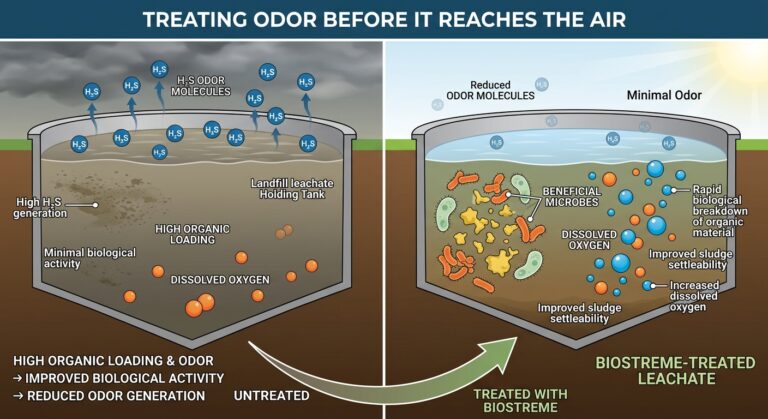
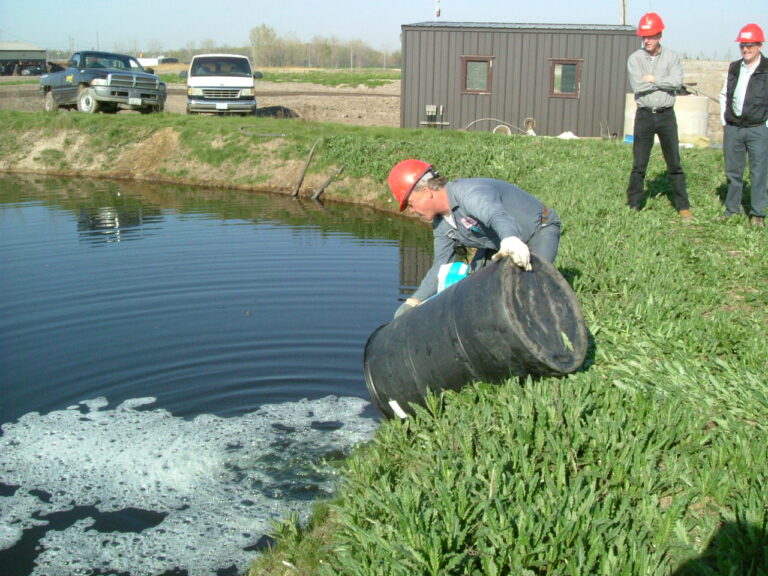
Where biological conditions contribute to the problem, BioStreme 201 can be considered as part of a liquid-phase treatment strategy.
BioStreme 201 is a micronutrient formulation designed to support naturally occurring facultative bacteria and encourage efficient decomposition of organic waste without generating the same level of undesirable odorous by-products.
Ecolo's technical guidance identifies leachate lagoons and holding tanks among BioStreme 201's applications.
The product can therefore provide a different layer of treatment:
BioStreme → address biological conditions in the liquid
AirSolution → address odor after compounds become airborne
In complex facilities, these technologies can complement rather than replace one another.
Transfer Stations and Material Recovery Facilities
Transfer stations and material recovery facilities (MRFs) present another set of challenges.
Waste may arrive continuously throughout the day.
Trucks unload inside receiving areas.
Material is moved, compacted and loaded again.
Doors repeatedly open and close.
This can generate short periods of very high odor release.
Potential treatment locations include:
Tipping floors
Truck unloading areas
Compactors
Waste storage areas
Building exhaust points
Door openings
Property boundaries
Automated misting can provide consistent treatment during operating hours without requiring employees to manually spray odor-control chemicals throughout the facility.
For enclosed facilities, nozzle positioning becomes especially important.
The objective is to intercept the odor pathway—not simply install the greatest possible number of nozzles.
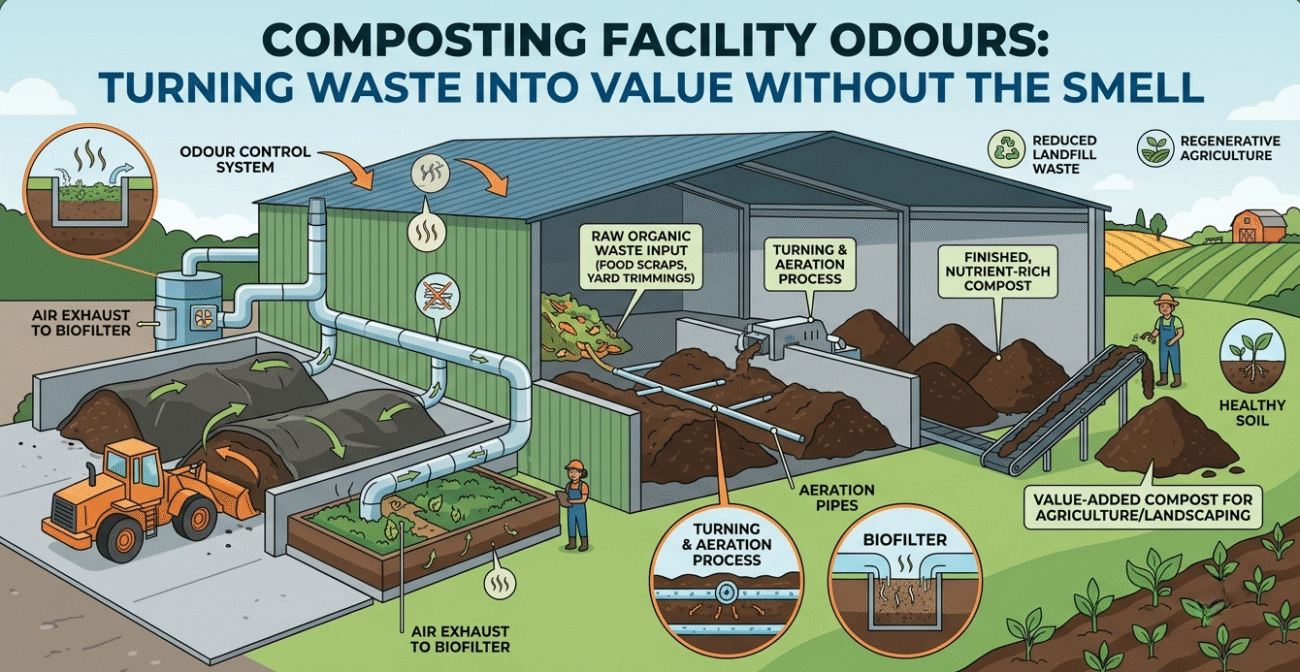
Composting Facilities in Wisconsin
Composting turns organic material into a useful resource, but the biological process can create substantial odor if conditions become unfavorable.
Potential compounds include:
Ammonia, H₂S, mercaptans, amines and volatile fatty acids.
Odor can indicate issues with moisture, oxygen availability, carbon-to-nitrogen balance, feedstock characteristics or decomposition conditions.
For composting applications, Ecolo can approach the problem from both sides.
BioStreme 101
BioStreme 101 is specifically designed for composting applications.
It supports naturally occurring facultative microorganisms and can be applied topically to working exteriors or incorporated with feedstock.
Its targeted nuisance odors include H₂S, mercaptans, volatile fatty acids and ammonia.
AirSolution
AirSolution can supplement biological management by treating odors already released into the surrounding air.
This can be useful around:
Receiving areas
Windrows
Material handling
Screening
Storage
Property boundaries
The combination creates an important distinction:
Improve the biological process where possible—and treat residual airborne odor where necessary.
Industrial Waste and Environmental Companies in Wisconsin
Odor-control requirements extend well beyond municipal solid waste.
Wisconsin's environmental service companies may encounter odor during:
Soil remediation
Contaminated-site cleanup
Sludge removal
Tank cleaning
Industrial wastewater treatment
Environmental dredging
Waste transportation
Spill response
Lagoon remediation
Excavation of contaminated materials
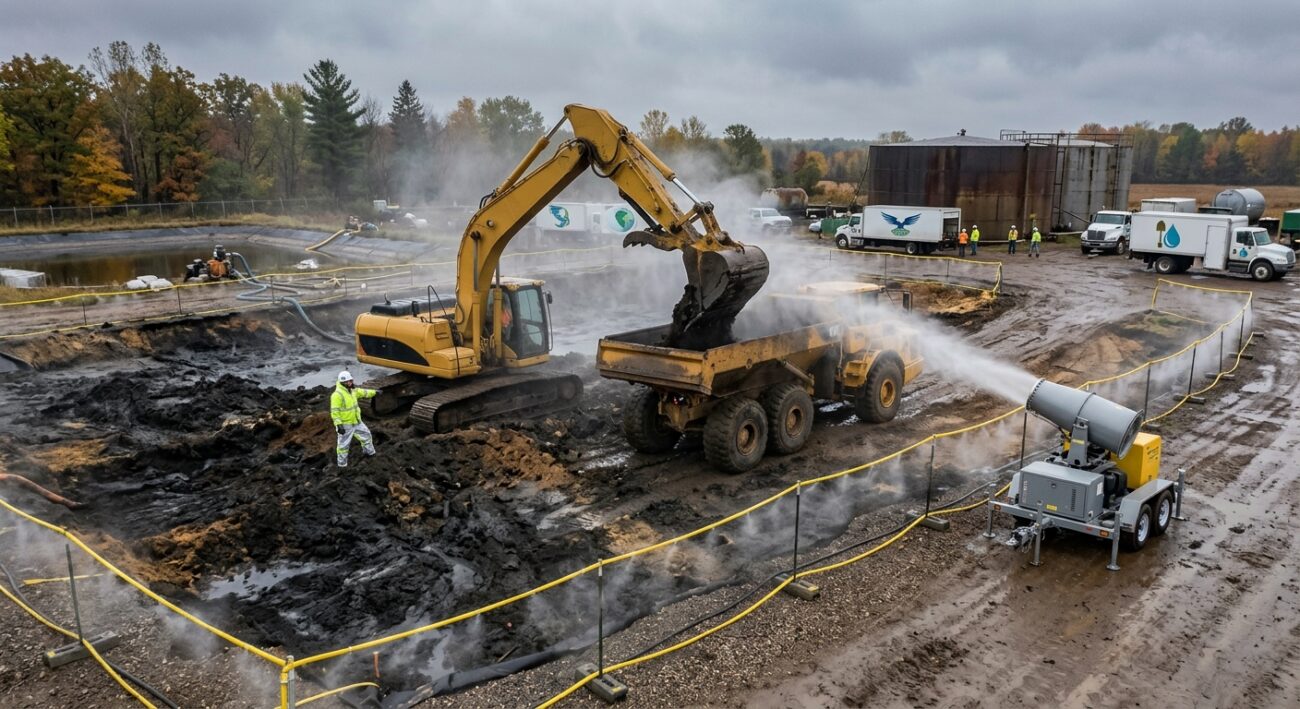
These projects are particularly challenging because odor conditions can change as material is disturbed.
Soil that creates little odor while undisturbed can release significant VOC or sulfur odors after excavation.
Likewise, pumping an old lagoon or tank can suddenly release gases that were previously contained.
For environmental contractors, odor control can therefore become part of the project execution plan rather than a permanent facility installation.
Portable misting, mobile atomization and temporary perimeter treatment can be particularly useful in these situations.
Odor Control Should Follow the Wind
Environmental conditions matter.
Wisconsin's seasonal temperature changes can influence biological activity and odor behavior, while wind direction determines which neighboring properties are most likely to experience an odor event.
An effective site assessment should therefore examine:
Prevailing wind direction
Sensitive receptors
Distance to neighboring properties
Terrain
Odor source locations
Operating schedule
Waste delivery schedule
Seasonal conditions
Complaint history
This information can determine where treatment equipment should actually be installed.
A facility surrounded by industrial properties may require a different strategy from a waste operation located close to homes, schools or commercial properties.
Don't Treat Every Odor With the Same Product
One of the biggest mistakes in industrial odor control is assuming that every bad smell requires the same chemical.
It does not.
A landfill experiencing sulfur odors from leachate may require a different formulation and application method from a composting operation experiencing ammonia.
Likewise, an environmental remediation contractor excavating petroleum-contaminated soil has a different problem from a transfer station handling municipal waste.
Ecolo's approach starts with:
Odor source → odor chemistry → treatment location → delivery technology → dosage → monitoring
Only then should a product and system be selected.
Measuring Whether Odor Control Is Working
The human nose is extremely useful for identifying an odor problem, but it should not be the only measurement tool.
Depending on the Wisconsin facility and odor source, monitoring can include:
H₂S measurements
Ammonia
VOC monitoring
Meteorological data
Wind direction
Complaint records
Odor observations
Treatment consumption
Operational events
For larger projects, odor surveys, laboratory analysis or more specialized monitoring may be appropriate.
The goal should be to establish a baseline before treatment and compare performance afterward.
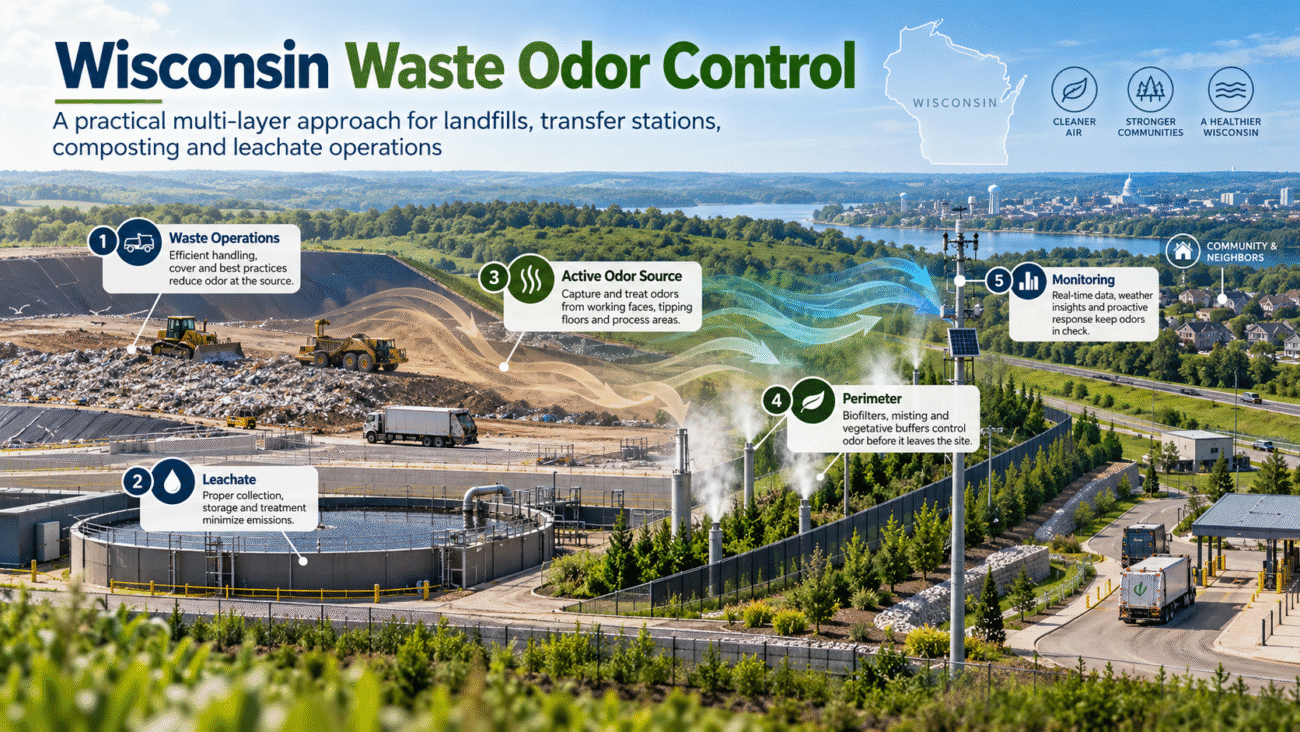
Building an Odor-Control Plan for a Wisconsin Waste Facility
A practical odor-control assessment should answer five questions.
What is generating the odor?
Waste? Leachate? Compost? Sludge? Industrial material?
What compounds are involved?
H₂S? Ammonia? Mercaptans? Amines? VOCs? Mixed organic odors?
When is the odor strongest?
During unloading? Hot weather? Excavation? Windrow turning? Pumping?
Where does the odor travel?
Understanding airflow and sensitive neighboring properties is critical.
Where should treatment occur?
At the source? In the liquid? In the air? At the perimeter?
For many facilities, the answer will involve more than one treatment point.
A Multi-Layer Approach to Waste Odor Control
Consider a Wisconsin landfill experiencing periodic community complaints.
Instead of installing one piece of equipment and expecting it to solve every problem, the site could be evaluated in layers:
Layer 1 – Waste Operations
Manage working-face exposure, cover practices and problematic incoming waste.
Layer 2 – Leachate
Evaluate biological conditions and consider liquid-phase treatment where appropriate.
Layer 3 – Active Odor Source
Use localized atomization around the working face or other high-emission areas.
Layer 4 – Perimeter
Create treatment zones along boundaries facing sensitive receptors.
Layer 5 – Monitoring
Track H₂S, weather, operational events and complaints to optimize the program.
This creates a controllable odor-management strategy rather than a reactive one.
Supporting Wisconsin Environmental and Waste Management Companies
Ecolo is interested not only in working directly with facility owners, but also in supporting Wisconsin environmental companies, waste contractors, consultants and service providers that already work with these facilities.
A local environmental company may already understand the facility, regulations, waste stream and customer relationship.
Ecolo can provide the specialized odor-control component.
Potential partnerships can include:
Product supply
Equipment supply
Site-specific odor-control design
Application recommendations
Pilot testing
Technical support
Odor-control systems for environmental projects
Ongoing chemical supply
This creates an opportunity for environmental service companies to add professional odor management to projects where odor is currently being handled reactively—or outsourced altogether.
Looking for Waste Odor Control in Wisconsin?
From Milwaukee and Madison to Green Bay, Appleton, Kenosha, Racine and communities throughout Wisconsin, waste and environmental operations face different odor challenges.
There is no universal solution.
A landfill may require working-face and perimeter treatment.
A transfer station may require automated indoor misting.
A composting facility may benefit from biological management combined with airborne treatment.
A remediation contractor may need temporary mobile odor control.
A leachate operation may need treatment inside the liquid before addressing residual airborne odor.
The technology should follow the application.
Ecolo Odor Control Technologies has more than 60 years of experience developing odor-control solutions for solid waste, wastewater, composting, industrial and environmental applications.
If your Wisconsin facility is experiencing odor complaints—or if you are an environmental, waste management, engineering or remediation company looking to add odor-control capabilities to your services—contact Ecolo to discuss the application.
We can review the odor source, site layout, operating conditions and treatment objectives and recommend an appropriate combination of AirSolution, BioStreme and Ecolo odor-control equipment.
The objective is not to make waste smell like something else. It is to control the odor before it becomes someone else's problem.