
Odour Control for Food & Beverage Processing Facilities

1. The Challenge of Odour in Food Processing
1.1 Why Odour Control Is Essential
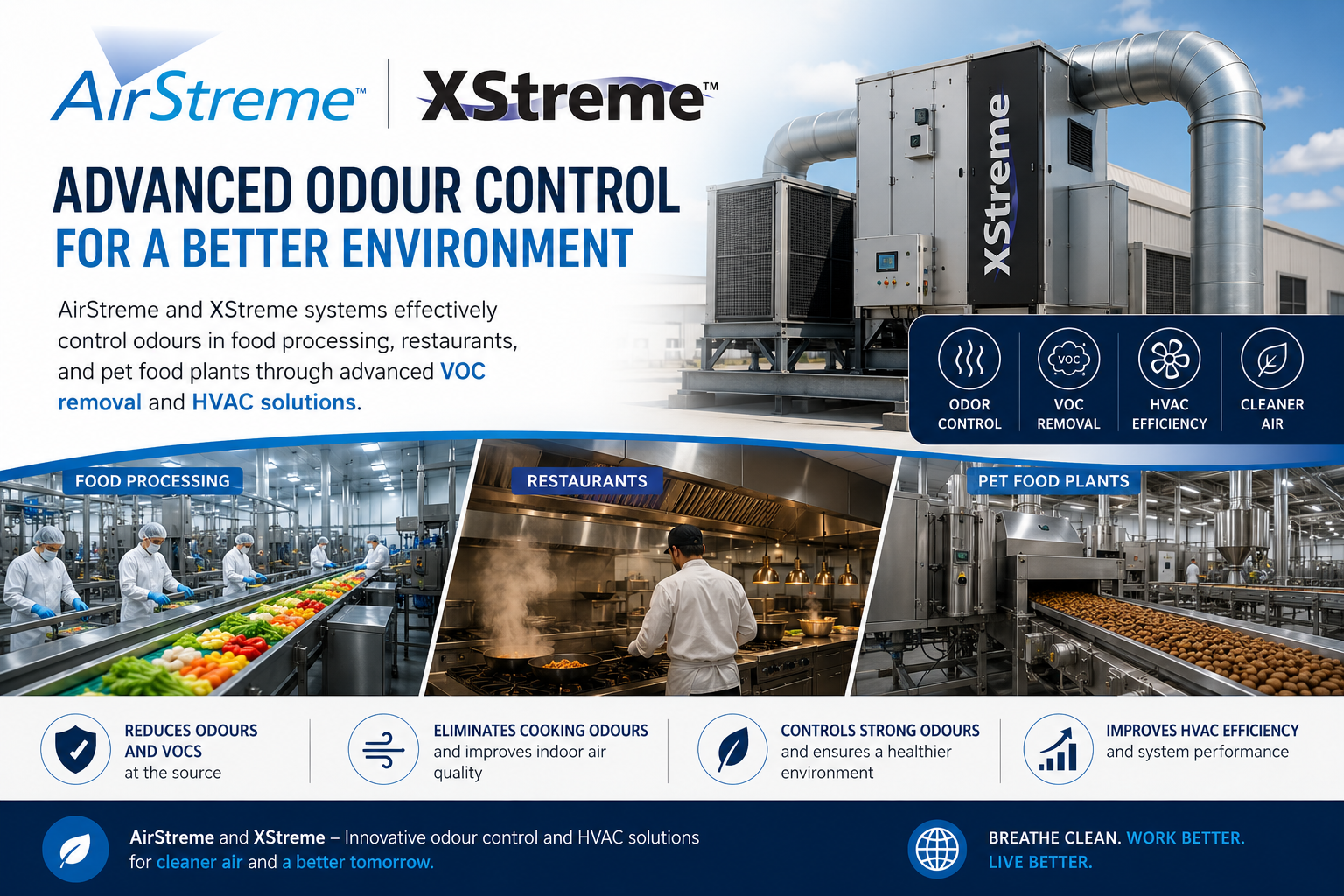
Food and beverage facilities are among the most odour-intensive environments in the industrial sector. From fermentation tanks to frying vents and waste handling areas, organic vapours and volatile compounds can quickly accumulate, affecting both air quality and brand reputation.
Uncontrolled odours can:
- Trigger regulatory complaints and fines
- Impact employee comfort and retention
- Migrate through HVAC systems into public zones
- Lead to negative customer perceptions in restaurants and food courts
👉 Reference: U.S. EPA – Odor Assessment and Management
Effective odour management in the food industry is not just about compliance — it’s about maintaining product integrity, public confidence, and workplace safety.

2. Sources of Odour in Food & Beverage Facilities
2.1 Primary Odour Sources
Source | Common Odour Compounds | Example Facilities |
Cooking & Frying | Fatty acids, aldehydes, VOCs | Restaurants, food courts |
Fermentation | Alcohols, esters, CO₂ | Breweries, bakeries, soy sauce production |
Protein Processing | Amines, sulfur compounds | Meat, pet food plants |
Dairy Operations | Butyric acid, ammonia | Cheese and butter factories |
Waste & By-products | Hydrogen sulfide, VOCs | Food waste and rendering |
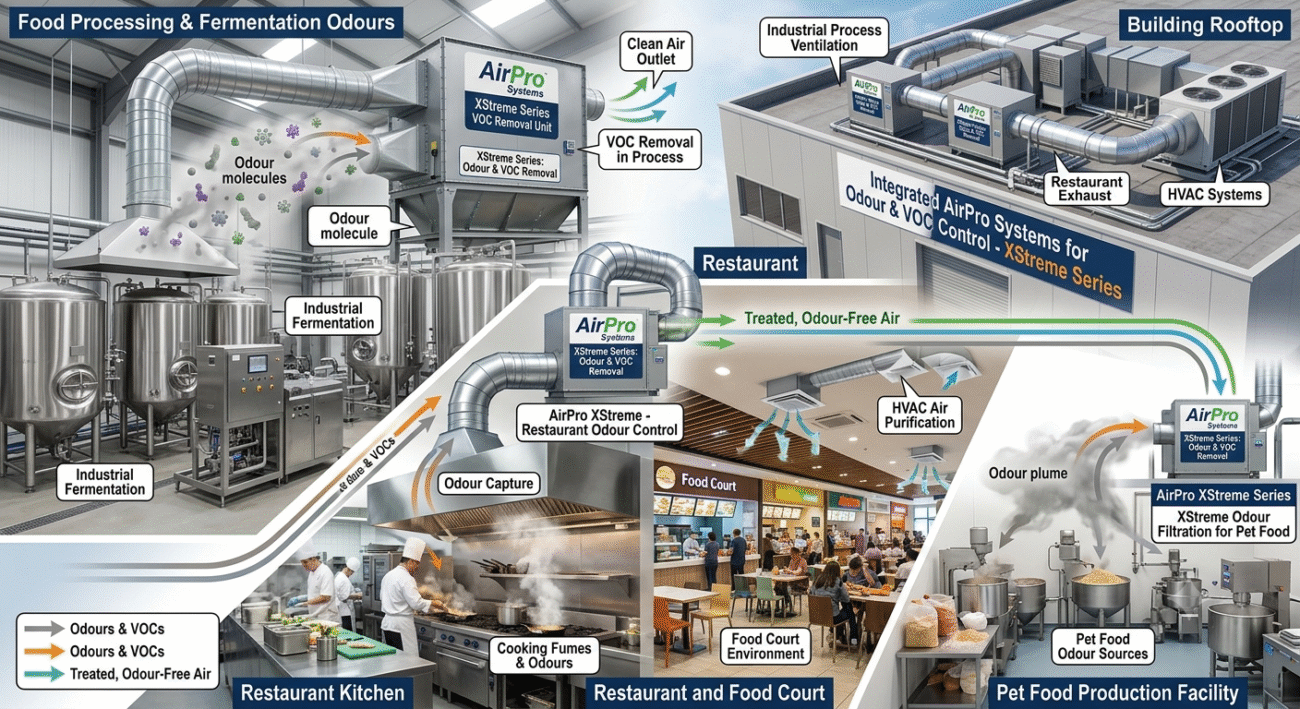
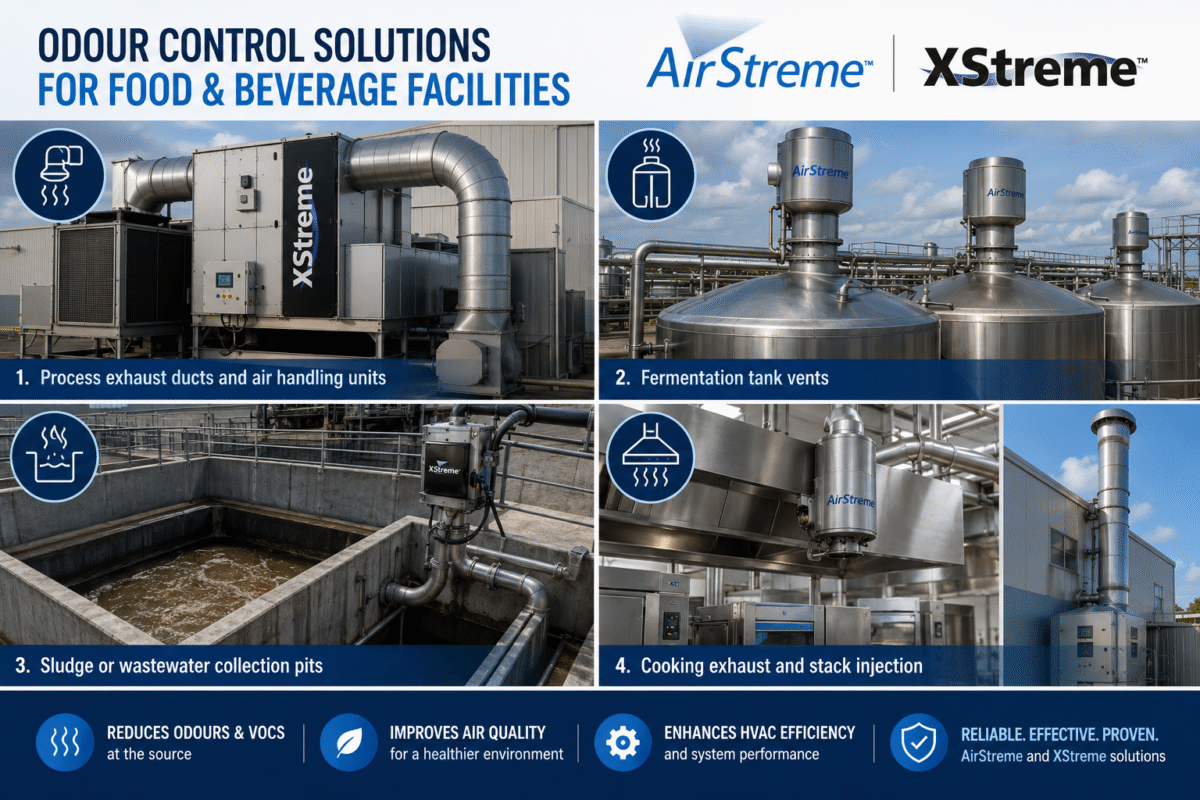
Each source demands a different control strategy — from localized misting at emission points to duct and stack injection for process exhausts.
2.2 The Chemistry of Food Odours
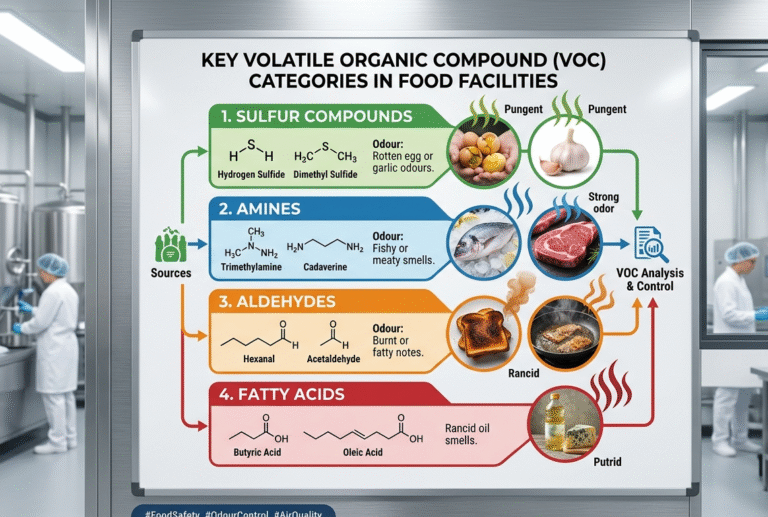
Most food odours are caused by volatile organic compounds (VOCs) generated during heating, decomposition, or microbial activity. These molecules evaporate easily and can travel far through air ducts and vents.
Key VOC categories in food facilities:
- Sulfur compounds: rotten egg or garlic odours
- Amines: fishy or meaty smells
- Aldehydes: burnt or fatty notes
- Fatty acids: rancid oil smells
👉 Reference: ScienceDirect – Volatile Compounds in Food Processing
Without proper treatment, VOCs can accumulate in HVAC systems and compromise indoor air quality.
3. Understanding Regulatory and Health Implications
3.1 Air Quality Standards
Odours in food facilities fall under multiple environmental and health standards:
- EPA Clean Air Act – VOC emissions and industrial exhaust.
- OSHA & NIOSH – indoor air contaminants and employee exposure.
- WHO IAQ Guidelines – health-based exposure limits for ammonia, VOCs, and odours.
👉 Reference: World Health Organization – Air Quality Guidelines
3.2 Brand and Consumer Perception
Even trace odours in customer areas can create powerful subconscious associations.
In food courts or open kitchens, lingering smells from grease traps or waste bins can translate to perceptions of uncleanliness, regardless of actual hygiene levels.
A 2023 Restaurant Business Online report showed that 68% of consumers associate unpleasant odours with poor food safety — directly impacting sales and loyalty.
👉 Reference: Restaurant Business Online – Clean Air, Clean Brand
4. The Science of VOC and Odour Control
4.1 Odour Formation in Food Environments
Odour molecules form during:
- Thermal oxidation (cooking, roasting, frying)
- Fermentation (yeast and bacteria metabolism)
- Anaerobic decomposition (waste or grease traps)
They often mix with steam or grease aerosols, making removal complex.
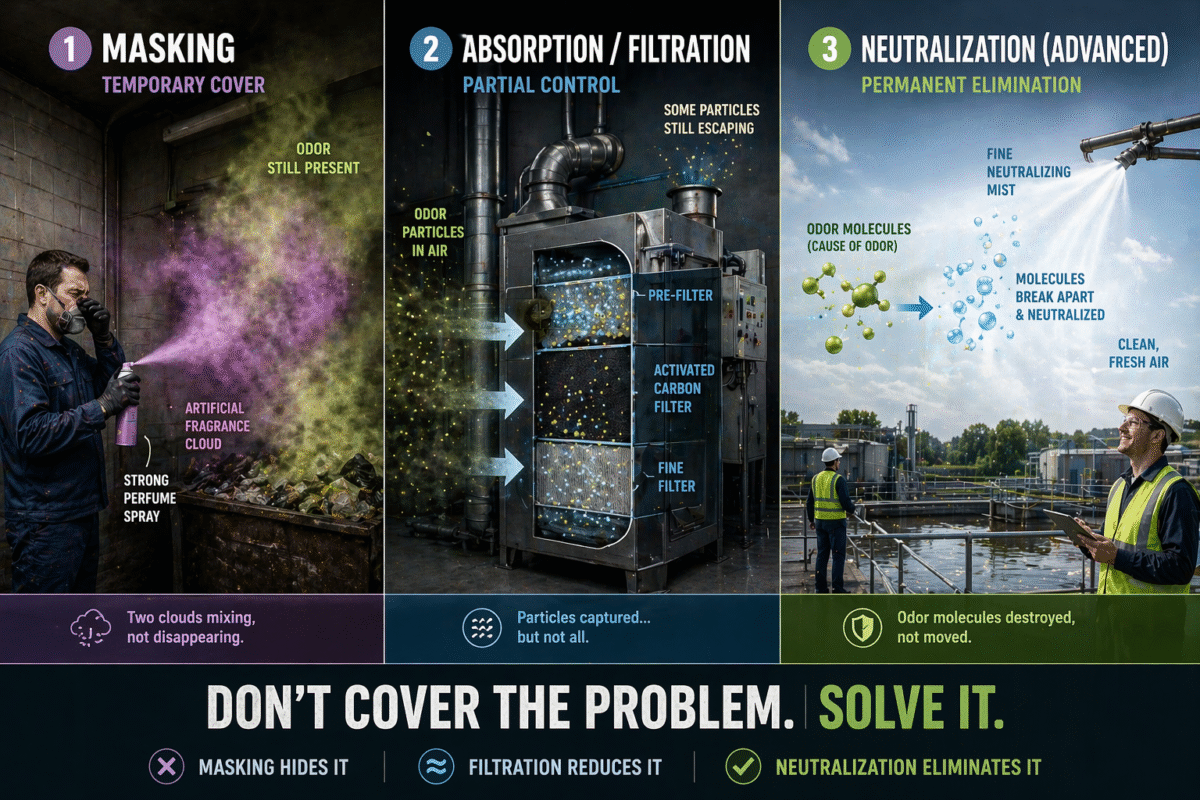
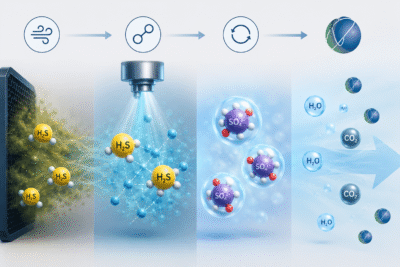
Simple filtration or masking agents fail because odour compounds are chemically active — they must be neutralized or oxidized at the molecular level.
4.2 Key Control Technologies
Modern odour management relies on a combination of physical, chemical, and biological systems:
Method | Mechanism | Application |
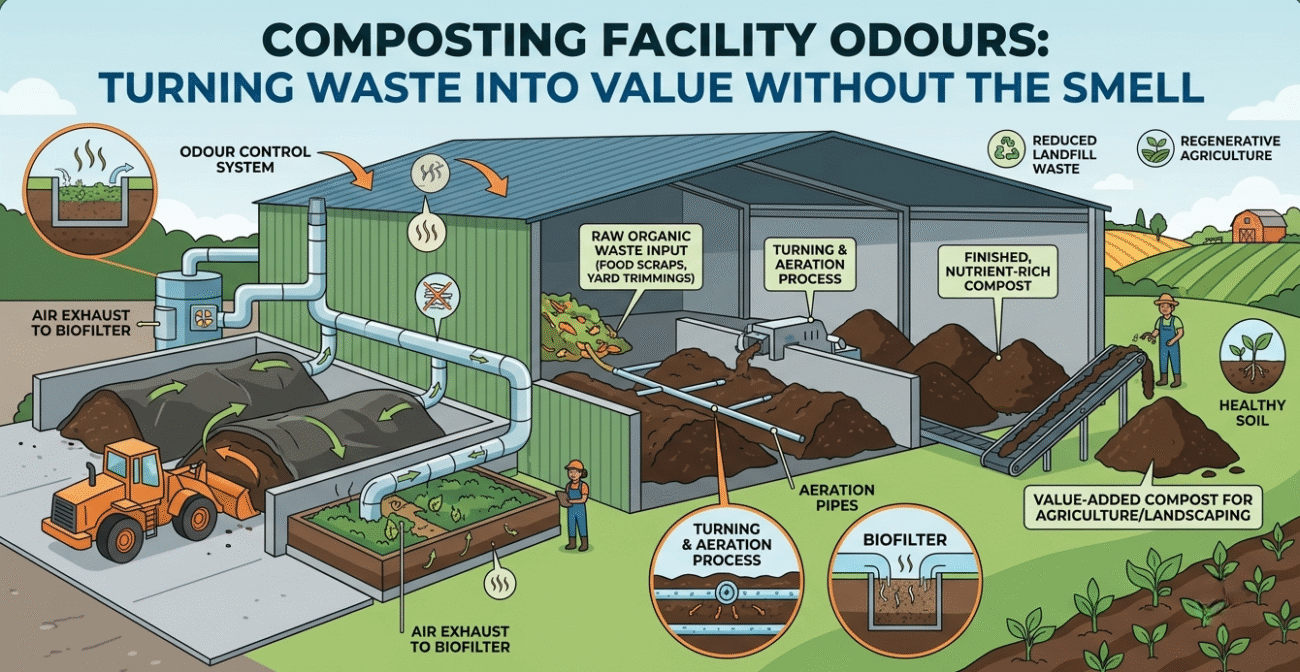
Biofiltration / Bio-augmentation | Uses microbes to break down VOCs | Waste areas, drains |
Misting & Atomization (XStreme) | Neutralizes odours in air-phase | Ducts, exhausts, open processing |
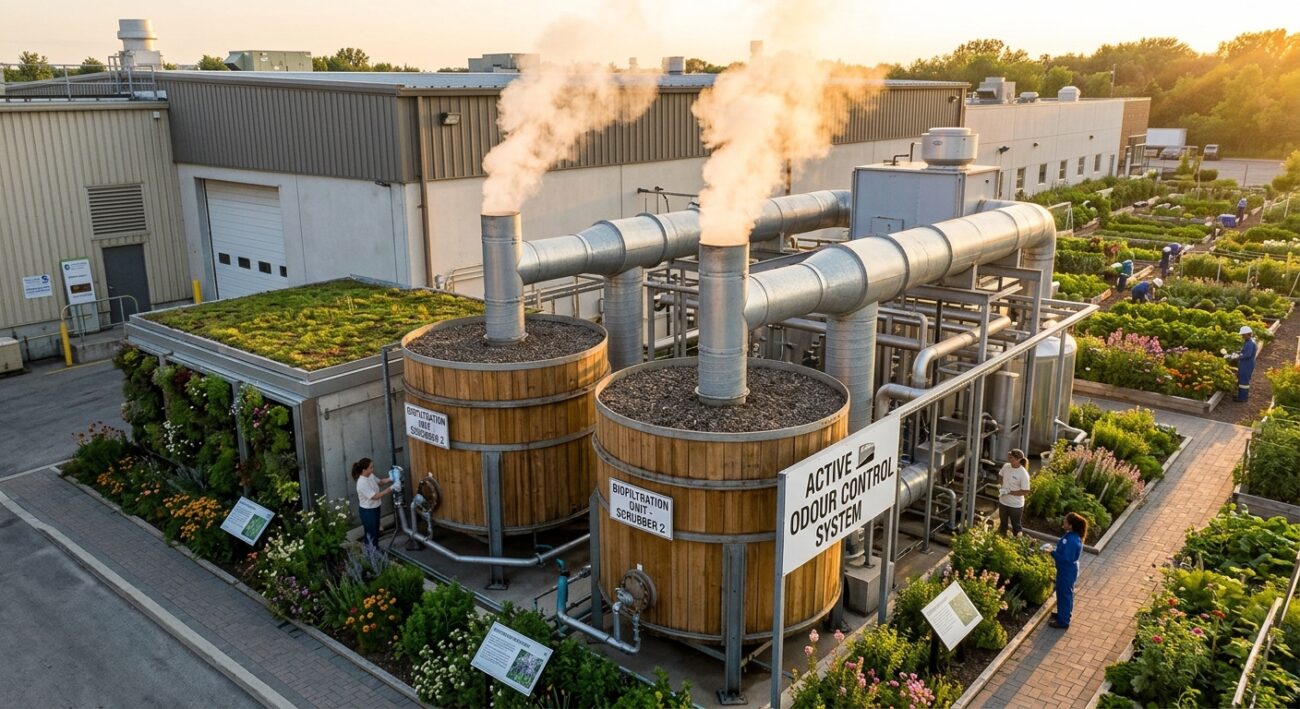
Chemical Scrubbing | Gas-liquid contact neutralization | Stack and vent treatment |
HVAC Integration (AirPro) | Continuous air treatment | Indoor areas and food courts |
5.2 AirPro Systems: Clean Air in Commercial & Restaurant Spaces
For front-of-house or mixed-use spaces like restaurants, food courts, and cafeterias, Ecolo’s AirPro System ensures clean, fresh air without overpowering fragrances.
Key Advantages:
- Compact and HVAC-integrated
- Delivers continuous diffusion of odour-neutralizing solutions
- Maintains balanced humidity and indoor air freshness
- Compatible with AirSensory or AirSolution formulations
- Ideal for indoor grease, fryer, and kitchen exhaust odours
AirPro’s smart diffusion units provide 24/7 control while improving overall indoor air quality (IAQ) — an essential factor for both comfort and regulatory compliance.
👉 Reference: EPA – Indoor Air Quality in Commercial Kitchens
6. Managing Fermentation Odours
6.1 The Biological Challenge
Fermentation is central to brewing, baking, soy, and vinegar production — but it produces strong odours like ethanol, acetic acid, and sulfur.
Uncontrolled fermentation gases can:
- Travel through open vents into work areas
- Affect nearby businesses or residential zones
- Overload carbon filters or scrubbers
6.2 Targeted Solutions
- Duct misting: XStreme’s fine atomization neutralizes ethanol and organic vapours.
- Surface application: AirSolution neutralizers treat open fermenters and tanks.
- HVAC integration: AirPro maintains a neutral indoor atmosphere in production and tasting rooms.
By integrating molecular neutralization with mechanical ventilation, facilities can reduce odour impact by over 85%.
7. VOC Removal and Emission Compliance
7.1 Understanding VOCs in Food Processing
Volatile Organic Compounds (VOCs) are by-products of heating fats, oils, and proteins.
They contribute to odour and environmental pollution, particularly in:
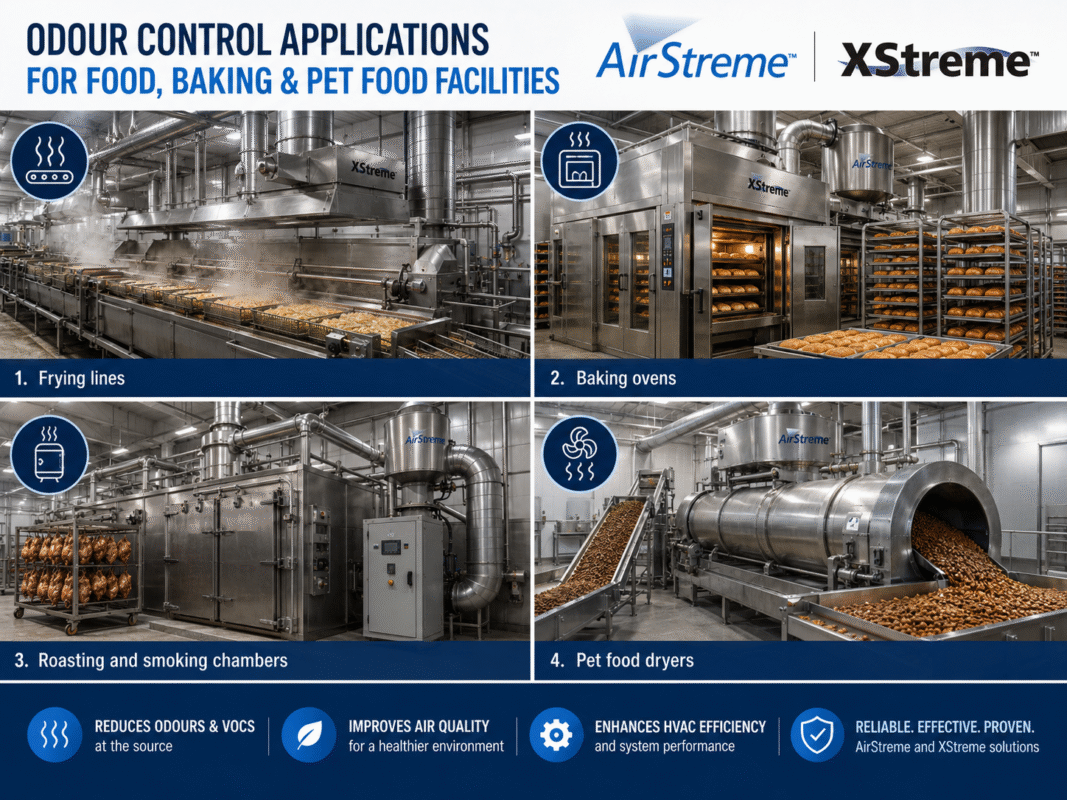
- Frying lines
- Baking ovens
- Roasting and smoking chambers
- Pet food dryers
7.2 Control Strategies
- Capture: Install XStreme misting lines before stack outlets.
- Neutralize: Inject AirSolution formulations into ducts or scrubbing chambers.
- Filter: Combine with HEPA and carbon filtration for final polishing.
👉 Reference: European Commission – Best Available Techniques for Food, Drink and Milk Industries
7.3 Monitoring and Measurement
Continuous monitoring of VOCs and odour intensity ensures compliance.
Tools include:
- PID sensors for VOC concentration
- Olfactometric testing (EN 13725)
- IAQ monitoring in customer-facing zones
Properly maintained systems can achieve >90% VOC reduction efficiency.
8. Odour Control in Restaurants, Food Courts, and Kitchens
8.1 The Customer Experience Factor
Customers associate clean air with food quality and hygiene.
In open-concept kitchens or dining courts, odours from frying, seafood, or garbage bins can dominate the environment — reducing dwell time and comfort.8.2 AirPro in Hospitality Applications
- HVAC-integrated neutralization for continuous odour prevention
- Adjustable diffusion intensity for lunch vs. dinner traffic
- Compatible with scent marketing (AirSensory) for brand enhancement
Restaurants using AirPro systems report higher air freshness ratings and longer average dining times.
👉 Reference: NIH – Impact of Odours on Human Appetite and Mood
9. Odour Challenges in Pet Food Manufacturing
9.1 Why Pet Food Odours Are Complex
Pet food plants produce some of the most persistent industrial odours — a mix of animal proteins, oils, and amino acids.
These compounds produce amine- and sulfur-based emissions that traditional filters struggle to remove.9.2 XStreme and AirPro Integration
A combined approach delivers superior results:
- XStreme neutralizes process exhaust directly at dryers and cookers.
- AirPro systems ensure ambient air within the plant remains fresh and safe.
- Bio-augmentation (with BioStreme) can stabilize biological residues in wastewater and waste bins.
Result: Drastic reduction in H₂S and VOC levels, fewer complaints, and longer filter life.
👉 Reference: EPA – Industrial Odor Source Identification and Mitigation
- HVAC-integrated neutralization for continuous odour prevention
8. Applications of AirSensory Across Industries
8.1 Retail Environments
Objective: Drive sales and create an emotional connection.
- Fragrance zones can match product themes (floral for fashion, vanilla for luxury goods).
- Neutral scents reduce odour from materials or HVAC.
- AirSensory diffusers ensure consistent scent profiles across multiple stores.
Result: Increased dwell time, higher sales conversion, and improved store ambiance.
8.2 Hospitality & Hotels
Objective: Build brand identity through signature experiences.
- Scented lobbies improve first impressions and relaxation.
- Spa-like aromas reinforce comfort and luxury.
- In-room diffusion enhances guest satisfaction and brand memory.
Hotels using scent marketing see 23% higher guest satisfaction scores, according to the Journal of Travel Research.
8.3 Gyms & Wellness Centers
Objective: Boost energy and mask unpleasant odours.
- Citrus and mint blends increase alertness.
- Continuous scenting improves perceived cleanliness.
- AirSensory’s neutralizers eliminate sweat and humidity odours.
Result: Longer sessions, higher membership retention, and cleaner facility perception.
8.4 Corporate Offices & Showrooms
Objective: Enhance indoor air quality and brand professionalism.
- Fresh, subtle fragrances reduce stress and improve focus.
- Meeting rooms and lobbies feel more inviting.
- Integrates with HVAC for automated, low-maintenance operation.
Clean scenting is now part of modern well-being design under WELL Building Standard guidelines.
👉 Reference: WELL Building Institute – Air Concept
- Fragrance zones can match product themes (floral for fashion, vanilla for luxury goods).

10. Integration with HVAC Systems
10.1 Why HVAC Matters
Odours spread through shared ventilation systems, reaching dining areas or offices even if the source is isolated.
Integrating XStreme or AirPro into supply ducts or return vents:
- Prevents cross-contamination
- Neutralizes odour molecules before redistribution
- Maintains consistent indoor air balance
10.2 System Optimization
- Use cold mist atomization to prevent condensation.
- Install high-efficiency filters upstream of scenting units.
- Adjust diffusion rates based on occupancy and temperature.
Properly calibrated HVAC-integrated systems ensure invisible, effective odour control that enhances comfort and compliance.
11. Maintenance & Best Practices
11.1 Preventive Maintenance
Task | Frequency | Benefit |
Clean nozzles and lines | Weekly | Prevent clogging and ensure mist quality |
Inspect filters | Monthly | Maintain airflow and efficiency |
Calibrate pumps and dosing | Quarterly | Consistent neutralization |
Monitor IAQ readings | Continuous | Early detection of odour events |
11.2 Choosing Certified Neutralizers
Always use UL Ecologo and IFRA-compliant formulations to ensure:
- Food-safety compatibility
- Non-toxicity
- Biodegradability
- Global compliance standards
👉 Reference: UL Ecologo – Sustainable Product Certification
12. Sustainability and Energy Efficiency
Sustainability is central to modern food industry operations.
Both XStreme and AirPro systems are designed for:
- Low chemical consumption (precision dosing)
- Energy-efficient pumps and atomizers
- Zero-VOC, biodegradable neutralizers
- Reduced waste footprint through long-life components
This aligns with ISO 14001 and LEED v4 Indoor Environmental Quality (IEQ) standards for sustainable facilities.
👉 Reference: ISO 14001 – Environmental Management Systems
13. Case Study: Integrated Odour Control in a Pet Food Plant
Location: Midwest USA
Facility: Pet food extrusion and drying plant
Challenge: Neighbourhood complaints, high VOCs, odour migration through vents
Solution:
- Installed XStreme duct injection on exhaust stacks
- Added AirPro units in packaging and office areas
- Introduced BioStreme dosing to wastewater sumps
Results:
- 92% odour reduction within 3 months
- Improved employee satisfaction
- No further regulatory complaints
14. The Ecolo Advantage
Ecolo’s odour control technologies integrate chemistry, biology, and engineering for total air-quality management.
With decades of expertise in industrial odour solutions, Ecolo delivers:
- XStreme Series – high-performance atomization for industrial odour sources
- AirPro Systems – sleek, HVAC-integrated air treatment for commercial settings
- AirSolution & BioStreme – eco-certified, high-efficiency neutralizers
These systems are proven across food, beverage, waste, and hospitality sectors worldwide.
15. Conclusion: Clean Air, Safe Food, Stronger Brand
Odour in food processing isn’t just a technical problem — it’s a sensory and brand challenge.
From fermentation plants to restaurants and food courts, maintaining clean, neutral air ensures compliance, safety, and customer confidence.
By adopting XStreme and AirPro systems, facilities achieve:
- Real odour elimination, not masking
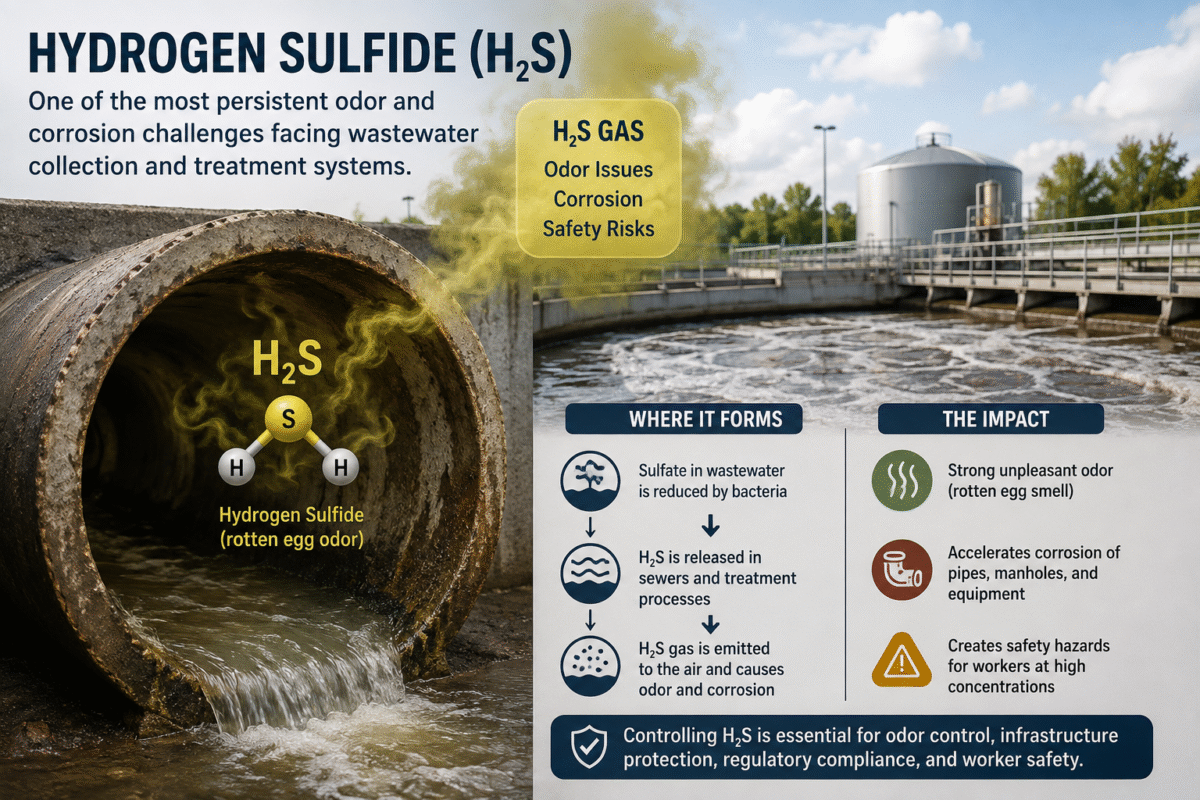
- VOC and H₂S reduction for compliance
- Improved indoor air quality
- Enhanced employee and customer experience
In the food and beverage world, clean air equals clean reputation — and Ecolo’s technologies make that standard achievable, sustainable, and measurable.