
Calcium Nitrate for Hydrogen Sulfide Control: How Does It Compare with BioStreme Biological Odor Management?

Calcium Nitrate for Hydrogen Sulfide Control: How Does It Compare with BioStreme Biological Odor Management?
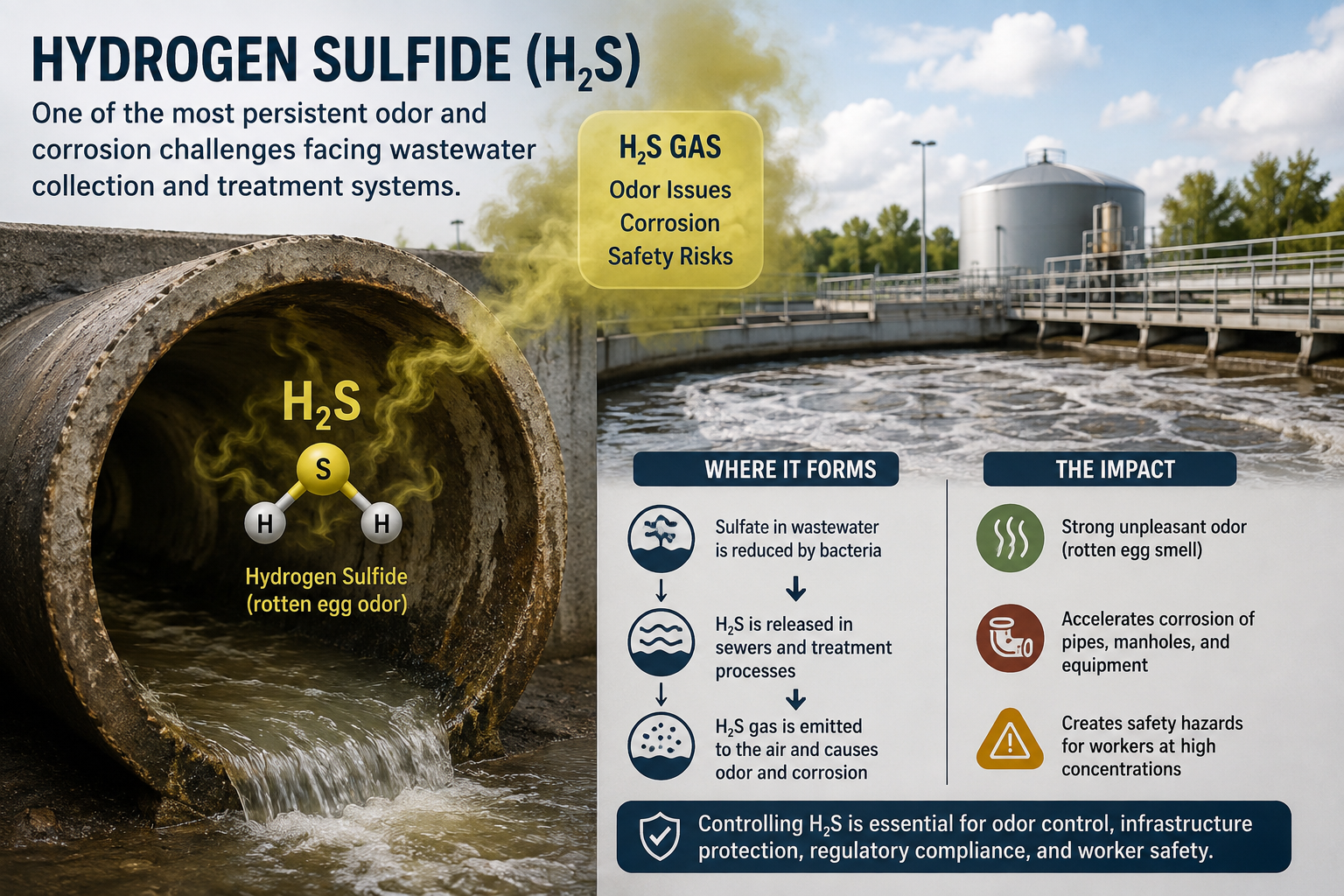
Hydrogen sulfide (H₂S) is one of the most persistent odor and corrosion challenges facing wastewater collection and treatment systems.
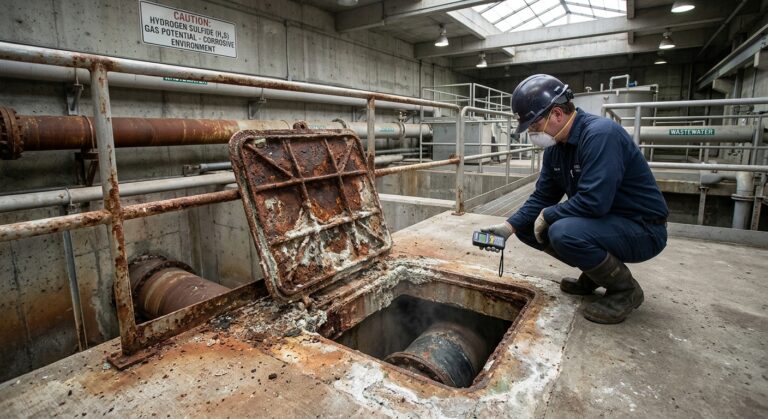
Operators encounter it in force mains, lift stations, wet wells, holding tanks, sludge systems, lagoons, industrial wastewater and other locations where wastewater can become septic. Beyond its characteristic rotten-egg odor, H₂S can contribute to worker-safety concerns and severe corrosion of concrete, metals and wastewater infrastructure.
One established method for managing sulfide formation is calcium nitrate dosing.
Calcium nitrate has been used successfully in wastewater systems because nitrate changes the biological conditions that allow sulfide to accumulate. However, it is not the only biological-process-based approach available.
Ecolo's BioStreme 201 BioBooster takes a fundamentally different approach. Rather than supplying nitrate as an alternative electron acceptor, BioStreme 201 is a micronutrient formulation designed to support naturally occurring facultative bacteria and improve the biological decomposition of organic waste without producing the same odorous by-products. BioStreme 201 is also designed to help manage broader wastewater parameters such as BOD, COD, suspended solids and sludge.
The important question, therefore, is not simply:
"Which product removes H₂S?"
A better engineering question is:
"What is causing sulfide and other odors in this wastewater system, and which biological intervention best addresses those conditions?"
Understanding the difference can help wastewater operators make a more informed decision.
1. Why Does Hydrogen Sulfide Develop in Wastewater?
H₂S problems generally begin before the gas reaches the air.
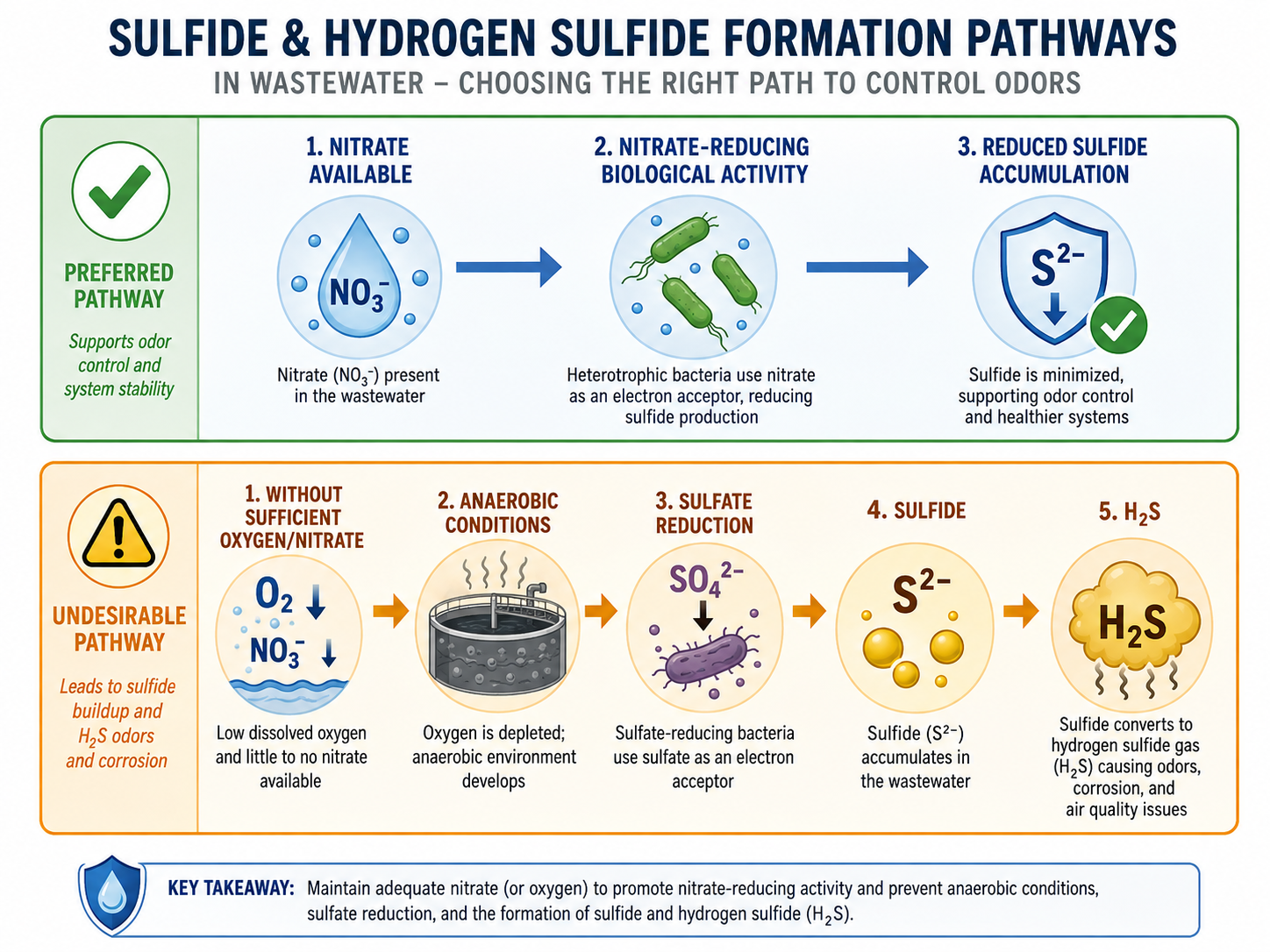
Wastewater contains organic material, sulfur compounds and microorganisms. When dissolved oxygen becomes depleted, biological conditions change. In sufficiently anaerobic environments, sulfate-reducing bacteria (SRB) can use sulfate as an electron acceptor while metabolizing organic material.
This process produces dissolved sulfide.
Depending on wastewater pH and other conditions, some of this sulfide exists as molecular H₂S. H₂S can then transfer from the wastewater into the headspace, particularly where turbulence, pumping or aeration encourages gas release.
The result can be:
- Rotten-egg odors
- Worker exposure concerns
- Odor complaints from neighboring properties
- Corrosion of metals and equipment
- Concrete deterioration through biogenic sulfuric acid corrosion
- Higher maintenance requirements
- Difficult working conditions around wet wells and enclosed structures
The U.S. Environmental Protection Agency has long recognized that sulfate reduction under anaerobic conditions contributes to sulfide and H₂S formation in sewer systems.
This is why effective H₂S management often starts by asking what is occurring inside the wastewater, rather than treating only the odor after it enters the air.
2. How Does Calcium Nitrate Control Hydrogen Sulfide?
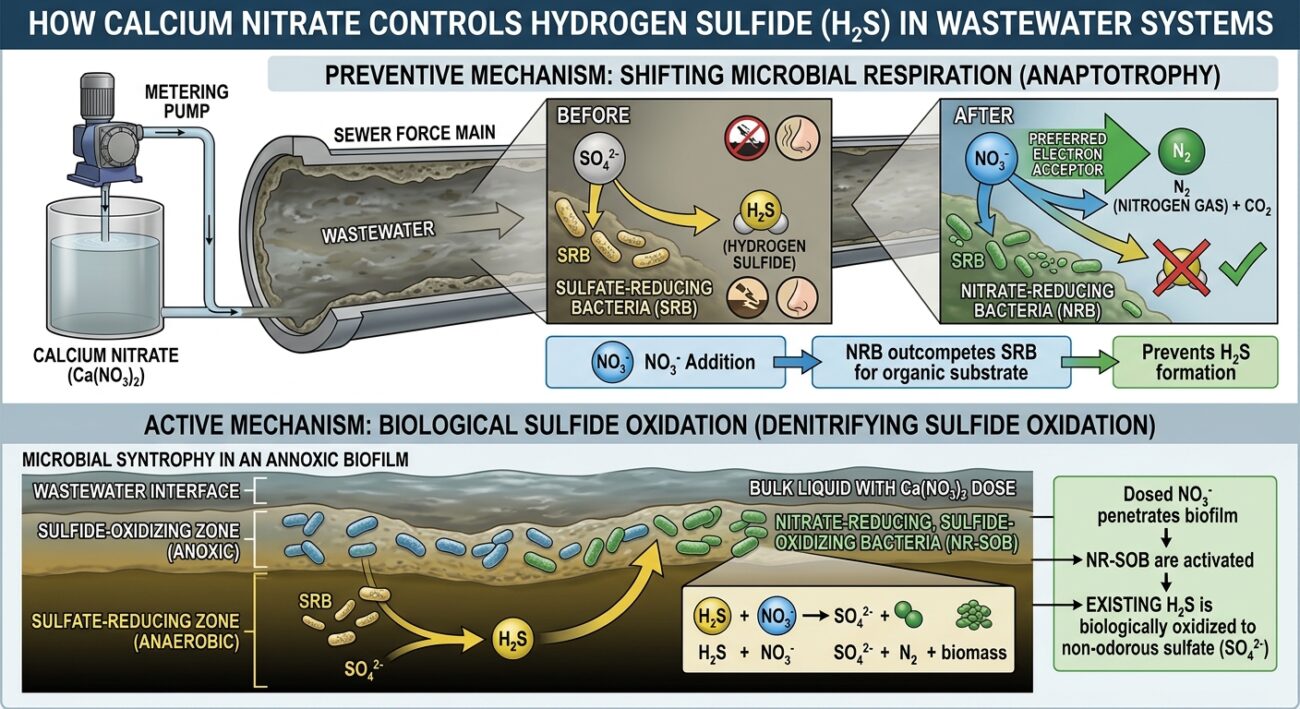
Calcium nitrate [Ca(NO₃)₂] provides nitrate to the wastewater.
Why is that important?
In an oxygen-deficient sewer or wastewater system, microorganisms need another electron acceptor to metabolize available organic matter.
Without oxygen or nitrate, sulfate can become an important electron acceptor for sulfate-reducing microorganisms, contributing to sulfide formation.
When sufficient nitrate is available, nitrate-reducing biological processes can compete with sulfate reduction. Nitrate can therefore help prevent sulfide accumulation.
Nitrate can also support nitrate-reducing sulfide-oxidizing bacteria, which can biologically oxidize existing sulfide.
In simplified terms:
Without sufficient oxygen/nitrate → anaerobic conditions → sulfate reduction → sulfide → H₂S
With properly controlled nitrate dosing:
Nitrate available → nitrate-reducing biological activity → reduced sulfide accumulation
EPA technical literature describes nitrate as a means of preventing sulfide buildup because nitrate reduction can occur preferentially to sulfate reduction under appropriate conditions.
Full-scale research has also demonstrated the potential effectiveness of this strategy. One sewer-network trial reported average H₂S levels at the treatment works inlet of approximately 0.24 mg/L during controlled nitrate dosing, compared with an average background concentration of 4.2 mg/L without nitrate dosing.
The exact result at another facility should not be assumed to be the same. Wastewater chemistry, biological activity, temperature, retention time, nitrate demand and hydraulic conditions all influence performance.
3. Why Calcium Nitrate Can Be Effective
Calcium nitrate has several characteristics that make it attractive for wastewater H₂S management.
It addresses sulfide formation biologically
Rather than simply covering the smell with fragrance, nitrate dosing changes the microbial environment responsible for sulfide generation.
It can work upstream
Calcium nitrate can be dosed into a collection system before wastewater reaches a problematic discharge point.
This can make it particularly useful for applications such as:
- Long force mains
- Rising mains
- Lift stations
- Septic wastewater
- Collection networks with long retention times
- Locations experiencing predictable H₂S formation
It can suppress sulfide before it becomes airborne
This distinction is important.
Capturing H₂S after it has entered the headspace is one strategy. Preventing or reducing sulfide formation in the liquid phase is another.
For some collection systems, prevention upstream can reduce the H₂S load reaching downstream facilities.
4. Calcium Nitrate Is Effective—but It Is Not Automatically the Best Answer for Every Site
Calling calcium nitrate "proven" does not mean it performs identically under every wastewater condition.
Nitrate dosing is a biological process and therefore depends on the microbial and hydraulic environment.
Research has shown, for example, that calcium nitrate performed poorly in an experimental system with very little biological growth. That finding reinforces an important point: the effectiveness of nitrate treatment depends on site conditions and biological activity.
There are several other considerations.
Continuous chemical demand
Nitrate is consumed within the wastewater. Effective treatment therefore requires sufficient residual nitrate through the critical portion of the system.
Chemical demand can vary considerably according to:
- Organic loading
- Wastewater temperature
- Retention time
- Sulfide concentration
- Biofilm activity
- Flow
- Seasonal conditions
Dosing optimization is critical
Too little nitrate may allow sulfide production to resume before the wastewater reaches the desired control point.
Excessive dosing increases operating cost and can unnecessarily increase nitrogen loading downstream.
Sulfide rebound can occur
Research has identified situations where sulfide concentrations rebound after nitrate becomes depleted.
One study found that nitrate dosing reduced sulfide but could lead to elemental sulfur accumulation; during subsequent nitrate-free periods, sulfur reduction contributed to renewed sulfide generation.
This does not mean nitrate dosing is ineffective. It demonstrates why dose, location, timing and wastewater retention time matter.
It primarily targets the sulfide problem
Wastewater odors are rarely caused by H₂S alone.
Facilities may simultaneously experience:
- Mercaptans
- Amines
- Volatile fatty acids
- Organic sewage odors
- Grease odors
- Protein decomposition odors
- Sludge odors
This is where comparing calcium nitrate with BioStreme becomes particularly useful.
5. What Is BioStreme 201?
BioStreme 201 BioBooster is Ecolo's biological-process-support formulation developed for applications including municipal wastewater, industrial wastewater, leachate lagoons, holding tanks, rendering, food processing and other biologically loaded wastewater environments.
Unlike calcium nitrate, BioStreme 201 does not work by simply adding nitrate.
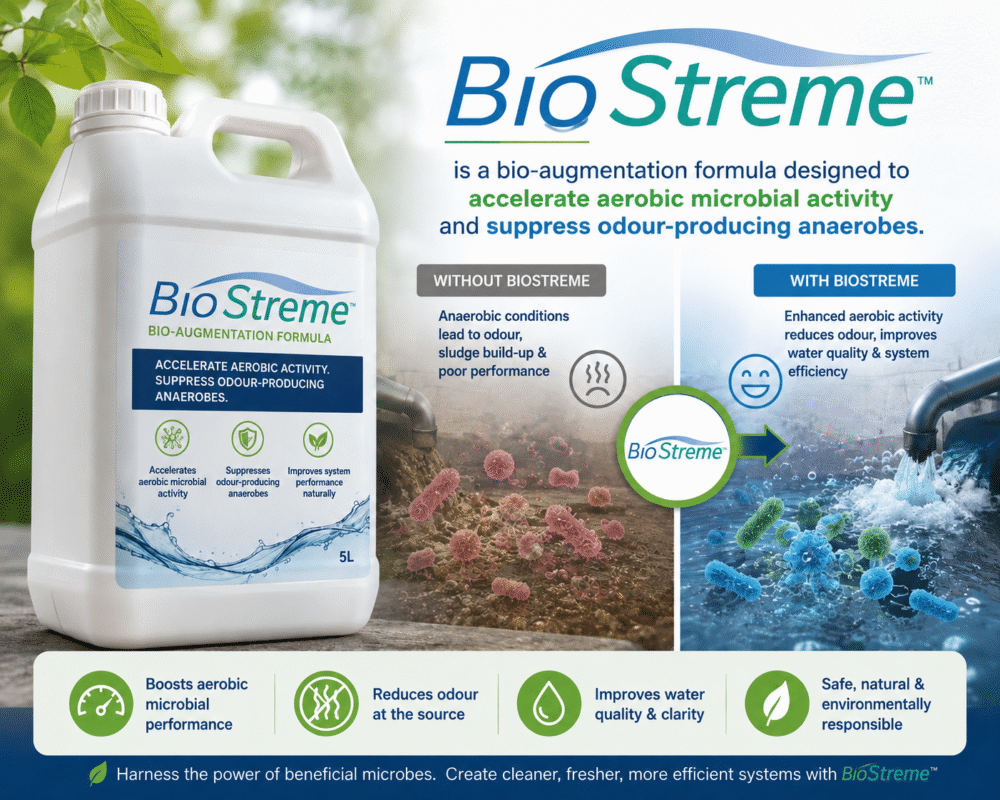
It is a concentrated micronutrient formulation designed to support effective populations of naturally occurring facultative bacteria.
BioStreme 201 contains a biodegradable blend of amino acids, vitamins, minerals, purines, pyrimidines and complex organic extracts. Importantly, the product itself does not contain bacteria. Instead, it provides nutrients intended to support beneficial microorganisms already present within the wastewater environment.
Ecolo's BioStreme 201 technical information identifies applications including municipal wastewater, bioreactors, leachate, rendering plants, food processing and pulp and paper operations. It is designed to address organic sewage, grease odors, mercaptans, amines and low levels of H₂S in open areas.
6. How Does BioStreme Approach Wastewater Odor Differently?
The key distinction is the biological objective.
Calcium nitrate primarily changes the available electron acceptor in an anoxic wastewater environment, helping prevent sulfate reduction and supporting sulfide oxidation.
BioStreme takes a broader biological-conditioning approach.
Its objective is to support high populations of naturally occurring facultative bacteria capable of aggressively degrading organic material without generating the same level of odorous by-products associated with undesirable anaerobic decomposition.
This matters because H₂S may be only one symptom of a broader biological imbalance.
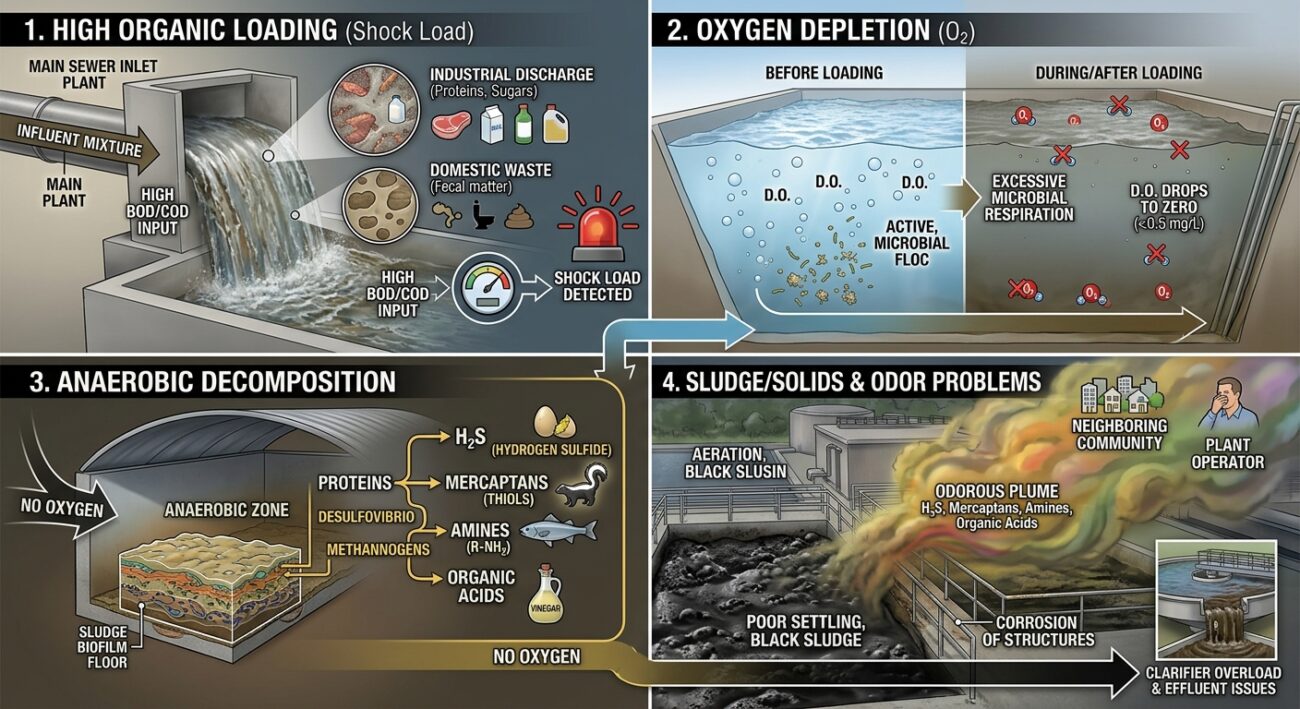
Consider a holding tank receiving high concentrations of organic material.
Operators might encounter:
High organic loading → oxygen depletion → anaerobic decomposition → H₂S + mercaptans + amines + organic acids + sludge/solids problems
In this situation, addressing only H₂S may reduce one important odor compound without necessarily addressing the broader organic-loading problem.
BioStreme is designed to influence that underlying biological process.
7. Calcium Nitrate vs. BioStreme: What Is the Difference?
Factor | Calcium Nitrate | BioStreme 201 |
Primary strategy | Nitrate dosing | Biological conditioning / micronutrient supplementation |
Main objective | Suppress sulfide formation and promote sulfide oxidation | Promote beneficial facultative biological activity and organic decomposition |
H₂S focus | Strong, specific sulfide-control application | Part of broader odor and biological management |
Adds nitrate? | Yes | No |
Contains bacteria? | No | No |
Targets organic loading? | Indirectly influences biological pathways | Specifically supports biological degradation of organic waste |
Broader odor spectrum | Primarily sulfide-focused | Organic sewage, mercaptans, amines, grease odors and low-level H₂S |
BOD/COD management | Not its primary purpose | Designed to help reduce BOD/COD and suspended solids |
Sludge management | Not its primary function | Designed to assist with sludge/solids management |
Typical strategy | Maintain adequate nitrate through the critical wastewater retention period | Condition the biological system and support facultative microorganisms |
Best fit | Defined sulfide generation in anaerobic collection systems | Wastewater with odor plus significant organic/biological loading |
The products therefore should not necessarily be viewed as equivalent chemicals competing to perform exactly the same reaction.
They represent different wastewater-management strategies.
8. When Might Calcium Nitrate Be the Better Approach?
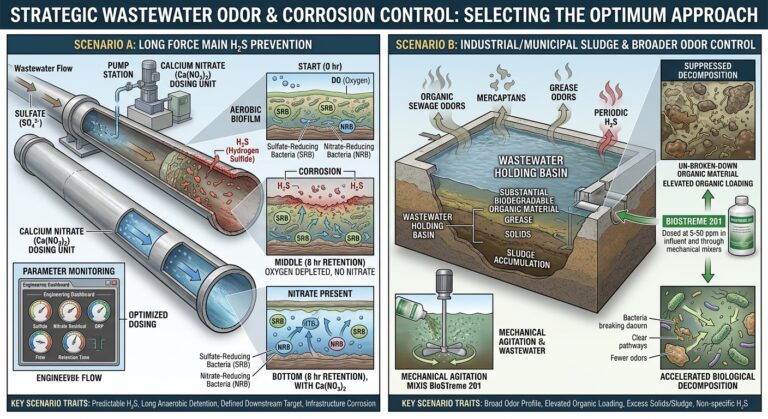
If testing establishes that the primary problem is predictable sulfide formation in a long anaerobic sewer or force main, controlled nitrate dosing may be highly appropriate.
For example:
A pumping station sends wastewater through a long force main. By the time the wastewater reaches the downstream discharge point, dissolved oxygen has been depleted and sulfide generation has become significant.
The primary operational target is:
Prevent H₂S from developing before the wastewater reaches the discharge point.
This is a classic situation where nitrate dosing deserves consideration.
The engineering team can monitor parameters such as sulfide, nitrate residual, ORP, flow and retention time and optimize dosing accordingly.
9. When Might BioStreme Be More Appropriate?
Now consider a different facility.
An industrial wastewater holding basin receives wastewater containing substantial biodegradable organic material, grease and solids.
Operators experience:
- Organic sewage odors
- Mercaptans
- Grease odors
- Periodic H₂S
- Elevated organic loading
- Excess solids or sludge accumulation
Here, the problem is broader than sulfide alone.
Supporting the wastewater's biological decomposition process may provide greater value than focusing exclusively on one odor molecule.
BioStreme 201 is specifically designed for this type of biological environment.
According to Ecolo's technical guidance, typical BioStreme 201 applications use approximately 5–50 ppm depending on organic loading, with municipal wastewater conditioning generally falling toward the lower portion of that range. The product should be introduced where it can mix completely with the wastewater, such as an influent pipe/channel or through mechanical agitation.
Because wastewater characteristics vary significantly, dosage should always be determined according to the actual application rather than treating these ranges as universal prescriptions.
10. The Difference Between Treating H₂S and Managing the Biological System
This is perhaps the most important distinction.
Imagine H₂S as a warning light.
One approach is to target the mechanism producing that particular warning.
Another is to examine the broader biological conditions causing multiple operational symptoms.
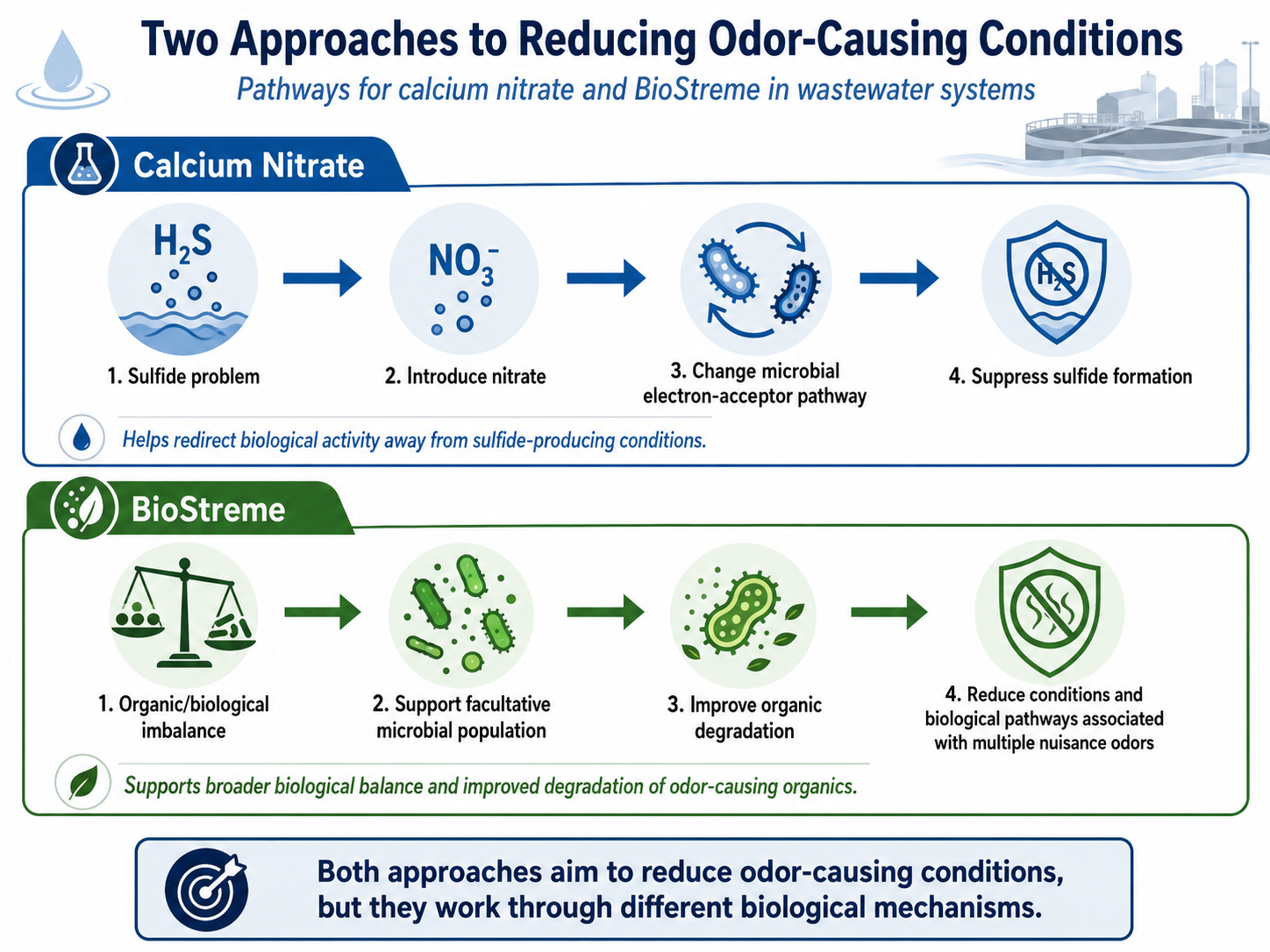
Calcium nitrate:
Sulfide problem → introduce nitrate → change microbial electron-acceptor pathway → suppress sulfide formation
BioStreme:
Organic/biological imbalance → support facultative microbial population → improve organic degradation → reduce conditions and biological pathways associated with multiple nuisance odors
Neither strategy should automatically be declared superior.
The correct treatment depends on what is actually happening in the wastewater.
11. What About H₂S That Has Already Escaped into the Air?
There is another important limitation to liquid-phase treatment.
Sometimes preventing H₂S generation is only part of the solution.
A wastewater treatment plant may have several odor sources simultaneously:
- Headworks
- Screens
- Grit removal
- Wet wells
- Sludge dewatering
- Equalization tanks
- Lagoons
- Exhaust vents
- Open channels
Once H₂S, mercaptans or other compounds have entered the air, an airborne odor-control system may also be required.
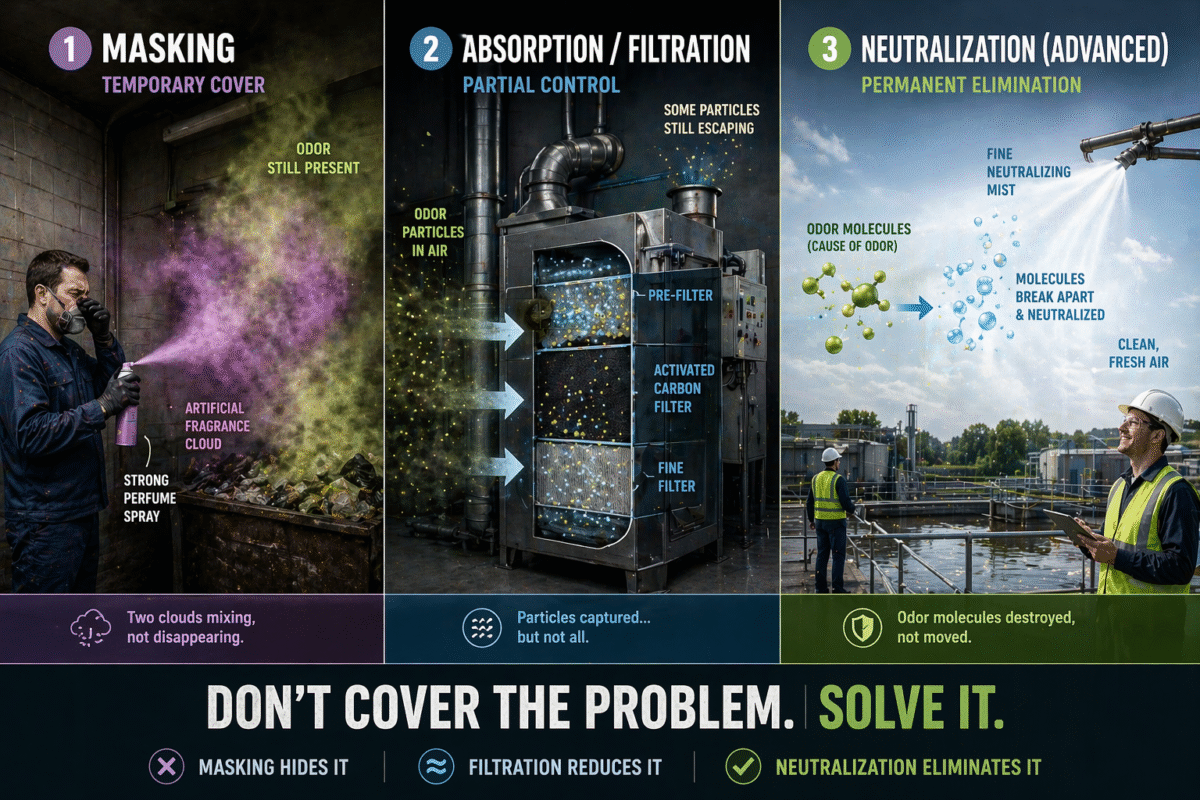
This is why Ecolo often evaluates odor problems in layers:
- Liquid phase: Manage the biological processes contributing to odor generation.
- Source/headspace: Capture or neutralize odors where they are released.
- Airborne/perimeter: Prevent residual odors from migrating toward workers, neighboring properties or communities.
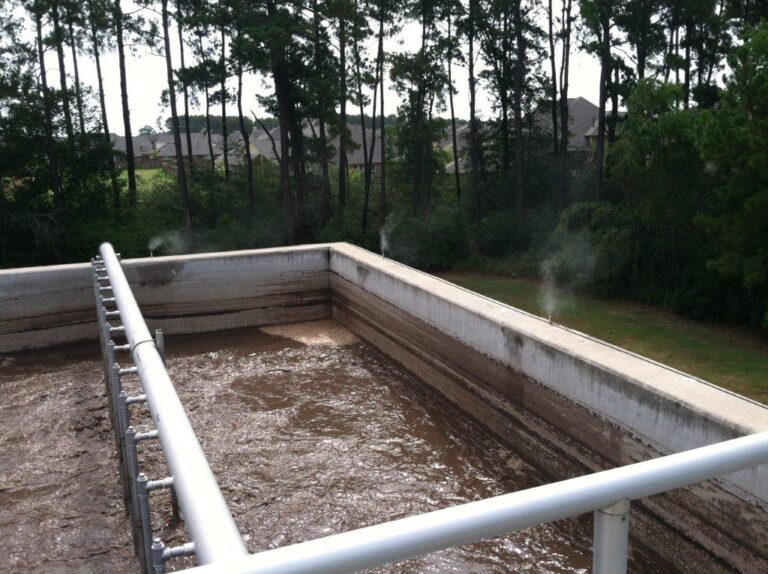
For example, BioStreme can be considered for biological treatment in the wastewater, while an appropriate AirSolution formulation can be applied through atomization, misting, fogging or duct treatment to address airborne odors.
This creates a more comprehensive strategy than expecting one treatment technology to solve every odor pathway.
12. Calcium Nitrate and BioStreme Should Be Evaluated by Total Treatment Cost
Chemical price per litre or kilogram does not provide a complete economic comparison.
Wastewater operators should instead consider the total cost of achieving the required result.
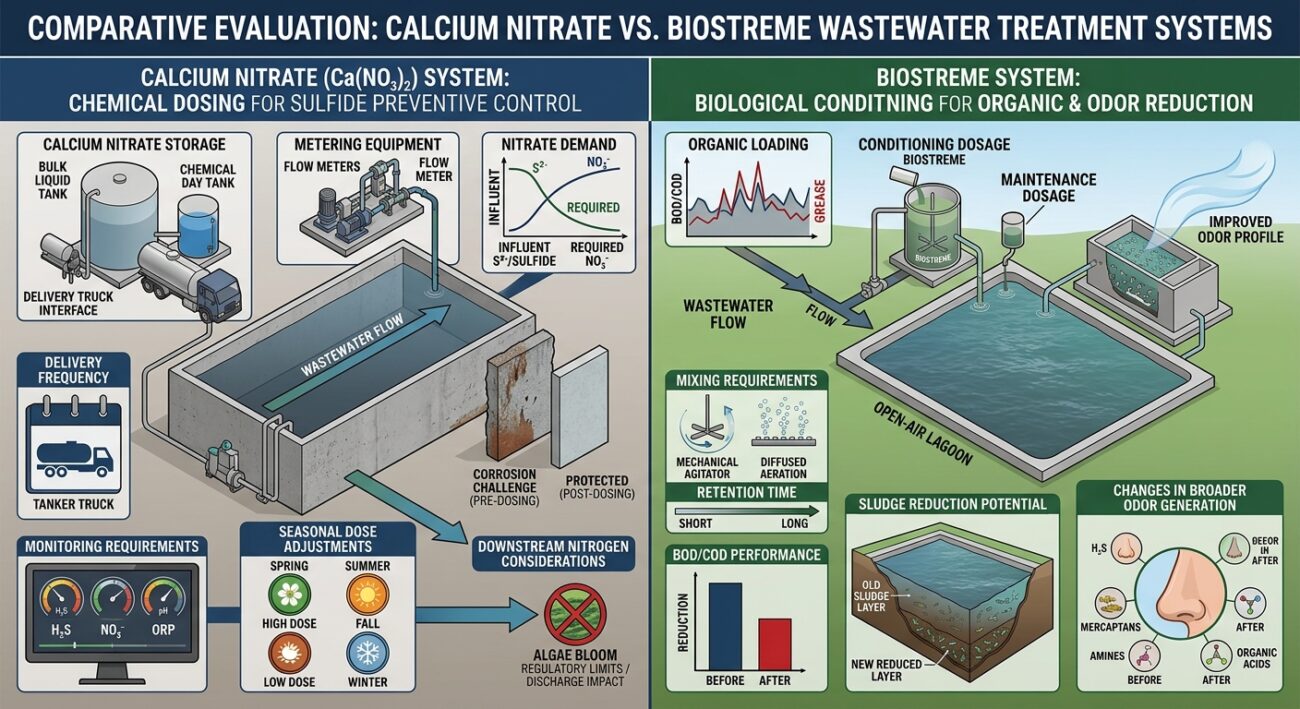
For calcium nitrate, evaluate:
- Required daily dosage
- Wastewater flow
- Nitrate demand
- Chemical storage
- Metering equipment
- Delivery frequency
- Monitoring requirements
- Seasonal dose adjustments
- Downstream nitrogen considerations
For BioStreme, evaluate:
- Organic loading
- Conditioning dosage
- Maintenance dosage
- Mixing requirements
- Retention time
- BOD/COD performance
- Sludge reduction potential
- Changes in broader odor generation
A product that costs less per unit can ultimately cost more if substantially greater quantities are consumed.
Conversely, a more expensive treatment is not automatically economically justified unless the broader operational benefits are measurable.
The appropriate metric is:
Cost per unit of successful treatment—not simply chemical purchase price.
13. Monitoring Is Essential Regardless of the Treatment Strategy
Odor treatment should be data-driven whenever possible.
For an H₂S-focused wastewater project, useful baseline and follow-up measurements can include:
- Dissolved sulfide
- Headspace H₂S
- pH
- ORP
- Dissolved oxygen
- Wastewater temperature
- Flow
- Hydraulic retention time
- BOD
- COD
- Suspended solids
- Sludge accumulation
- Odor complaints
For nitrate treatment, nitrate residual may also be important for determining whether sufficient nitrate remains at the critical downstream point.
For BioStreme applications, operators can track changes in organic loading, solids, sludge and overall odor conditions in addition to H₂S.
A controlled trial with baseline data is considerably more informative than judging treatment solely by whether an operator can smell an improvement.
14. A More Complete Approach to Wastewater Odor Control
Wastewater odor management is rarely a one-product problem.
The strongest strategy starts with identifying:
What compounds are present?
Is the primary problem H₂S, ammonia, mercaptans, amines, VOCs or a combination?
Where are they being generated?
Force main? Wet well? Holding tank? Headworks? Sludge system? Lagoon?
Why are they being generated?
Long retention time? Anaerobic conditions? High organic loading? Poor mixing? Insufficient aeration?
Where is treatment most effective?
Upstream liquid treatment? At-source treatment? Exhaust air? Facility perimeter?
Once these questions are answered, the treatment technology can be selected on technical rather than purely commercial grounds.
Calcium Nitrate or BioStreme: Which One Should You Choose?
Calcium nitrate has a well-established technical basis for controlling sulfide in wastewater and sewer systems. Under suitable conditions and with properly controlled dosing, it can be highly effective.
BioStreme is different.
BioStreme 201 is not simply "another calcium nitrate."
It is a biological-conditioning technology intended to support naturally occurring facultative microorganisms, improve decomposition of organic waste and manage a broader range of wastewater odors and operational parameters.
For a facility experiencing predominantly H₂S formation in a long anaerobic force main, nitrate dosing may be an appropriate targeted solution.
For a facility dealing with high organic loading, organic sewage odors, mercaptans, grease, sludge and periodic sulfide problems, BioStreme may provide a broader biological-management strategy.
And in complex facilities, liquid-phase biological treatment may need to be combined with airborne odor control.
The right answer begins with the wastewater—not the product.
Need Help Evaluating Your Wastewater Odor Problem?
Every wastewater system behaves differently. Flow, organic loading, retention time, temperature, pH, biological activity and the location of odor release can dramatically change which treatment strategy performs best.
Ecolo Odor Control Technologies Inc. can review your wastewater application, operating conditions and odor sources to help determine whether biological conditioning, airborne neutralization or a combined odor-control strategy is appropriate.
Contact Ecolo for a wastewater odor assessment, product recommendation or site-specific treatment approach.