Masking vs Removal: Why True Odour Control Means Elimination

1. The Odour Problem: A Universal Challenge
From industrial plants to restaurants, hotels, and homes, odour control is essential to comfort, compliance, and public health. Yet, one major misconception persists — that masking odours is the same as eliminating them.
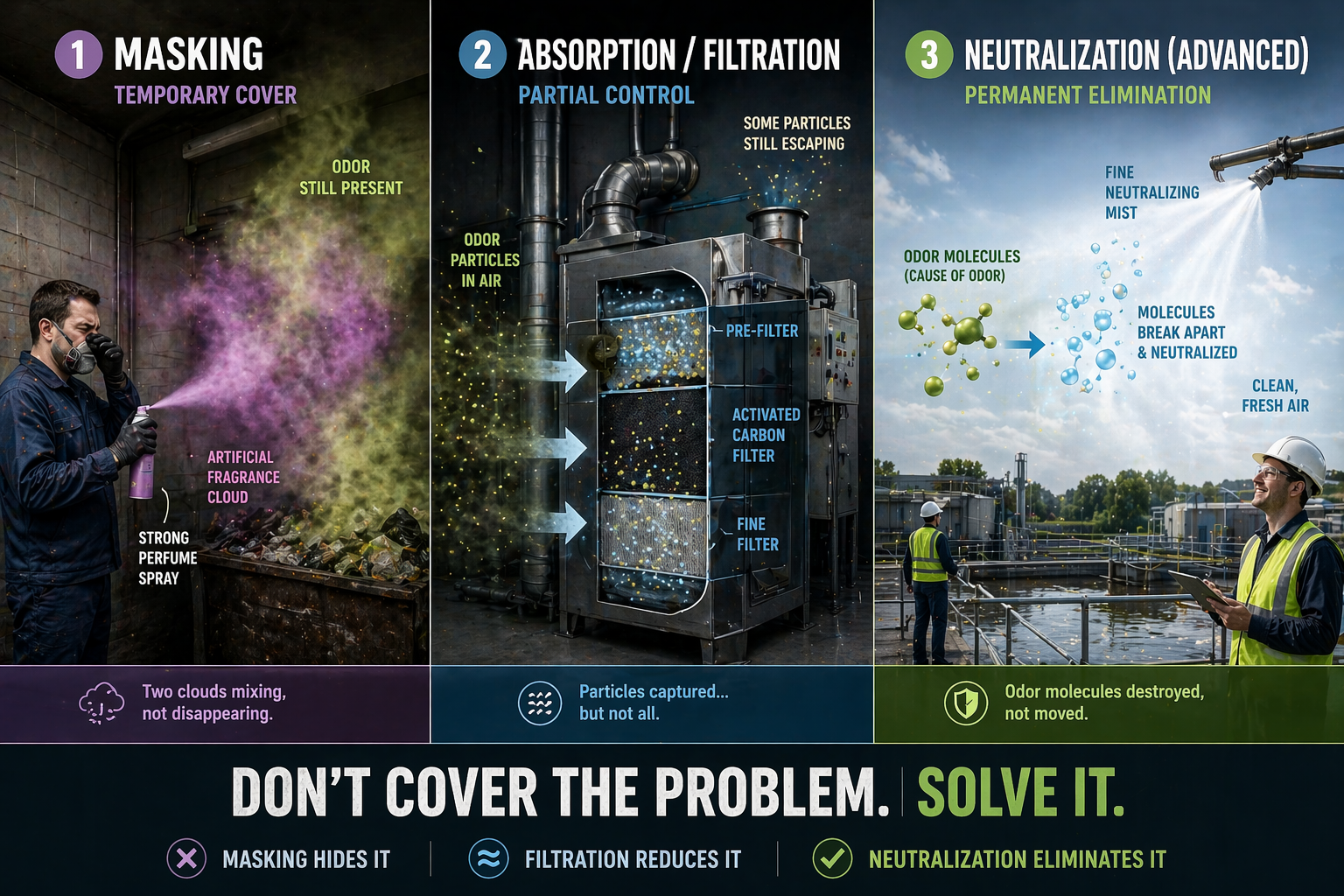
In reality, most air fresheners, perfumes, and sprays only cover up odours temporarily. Once the fragrance fades, the unpleasant smell returns because the root cause — the odour molecule — remains in the air or on surfaces.
True odour elimination involves chemical or biological neutralization — breaking down or transforming the odour molecule into a non-volatile, non-smelling compound.
Let’s explore the science, difference, and sustainability behind these two approaches and why modern facilities should move beyond masking.
2. Understanding Odour Masking
2.1 What Is Odour Masking?
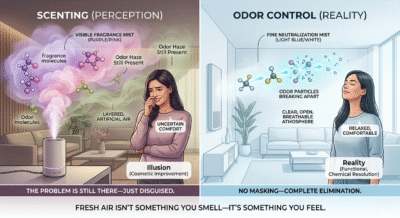
Odour masking refers to the use of fragrances or deodorants to cover up unpleasant smells without removing their source.
These products rely on olfactory interference — introducing stronger scents to overpower the existing odour so that it seems less noticeable.
Common examples include:
- Perfumed aerosols and sprays
- Plug-in air fresheners
- Scented candles or wax melts
- Scented HVAC diffusers without neutralizers
While they may create temporary relief, masking is cosmetic, not corrective.
👉 Reference: ScienceDirect – Mechanisms of Odour Perception and Masking
2.2 How Odour Masking Works
Masking relies on:
- Olfactory fatigue: The human nose becomes desensitized to odours after prolonged exposure.
- Dominant scent diffusion: Stronger fragrance molecules occupy more receptor sites in the nasal cavity.
- Psychological perception: The brain associates pleasant smells with cleanliness or freshness.
However, these methods only hide odour molecules — they don’t stop their emission, chemical activity, or potential health effects.
2.3 Problems with Masking Approaches
Issue | Impact |
Temporary effect | Odour returns once fragrance dissipates |
Chemical buildup | Can mix unpleasantly with existing odours |
VOC emissions | Many synthetic fragrances add more volatile organic compounds |
False sense of cleanliness | Hides hygiene or process issues |
Environmental burden | Often non-biodegradable or aerosol-based |
In other words, masking may smell nice — but it’s not clean, sustainable, or effective.
👉 Reference: U.S. EPA – Volatile Organic Compounds and Air Quality
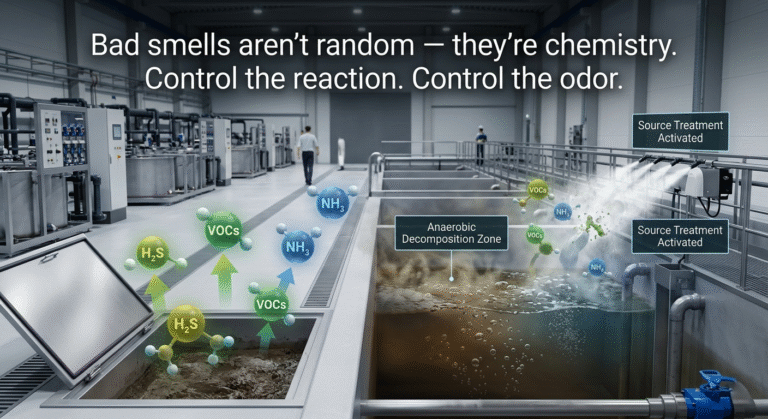
3. What True Odour Elimination Means
3.1 The Science of Odour Elimination
Odour elimination targets the root cause — the chemical structure of the odour molecule.
Instead of overpowering it, elimination technologies neutralize, oxidize, or biodegrade odorous compounds.
This process is called molecular neutralization.
It involves:
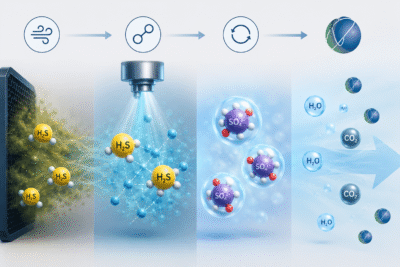
- Contact: The neutralizing agent meets the odour molecule in air or on surfaces.
- Reaction: Chemical bonding or oxidation alters its molecular structure.
- Transformation: The odour molecule becomes inert — typically a harmless salt, water, or CO₂.
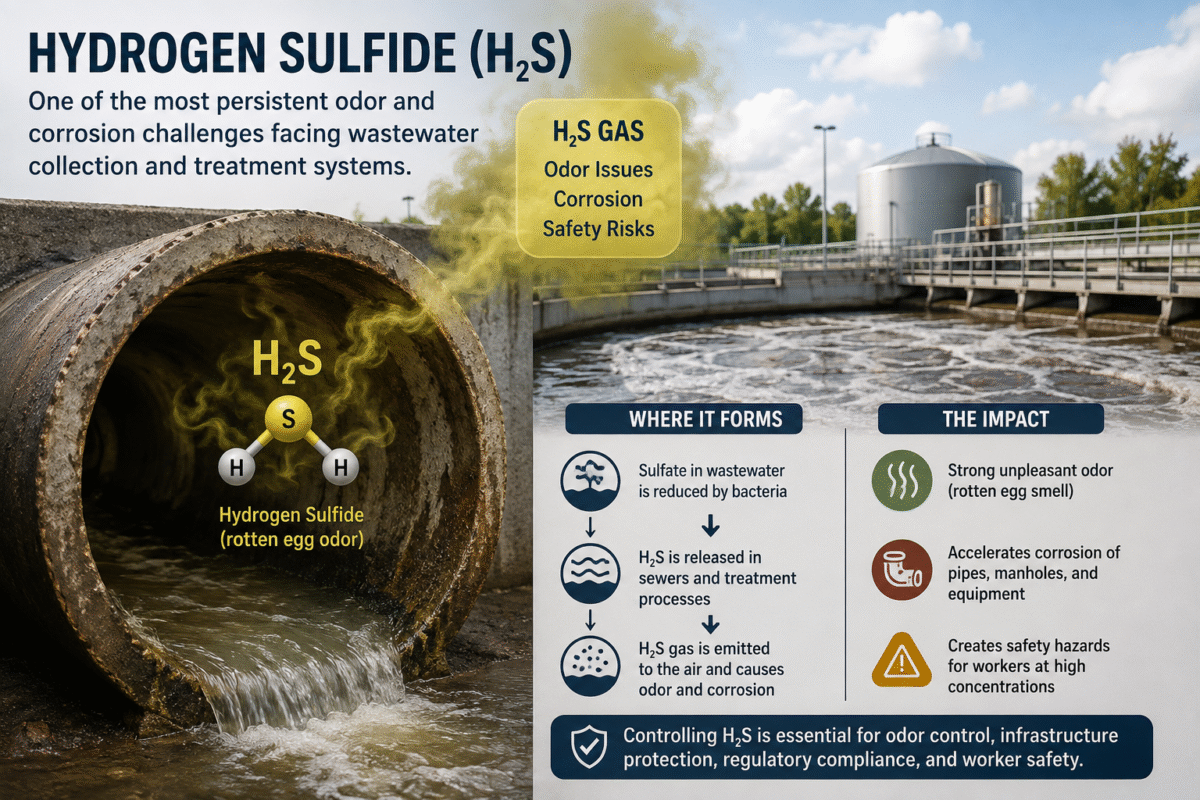
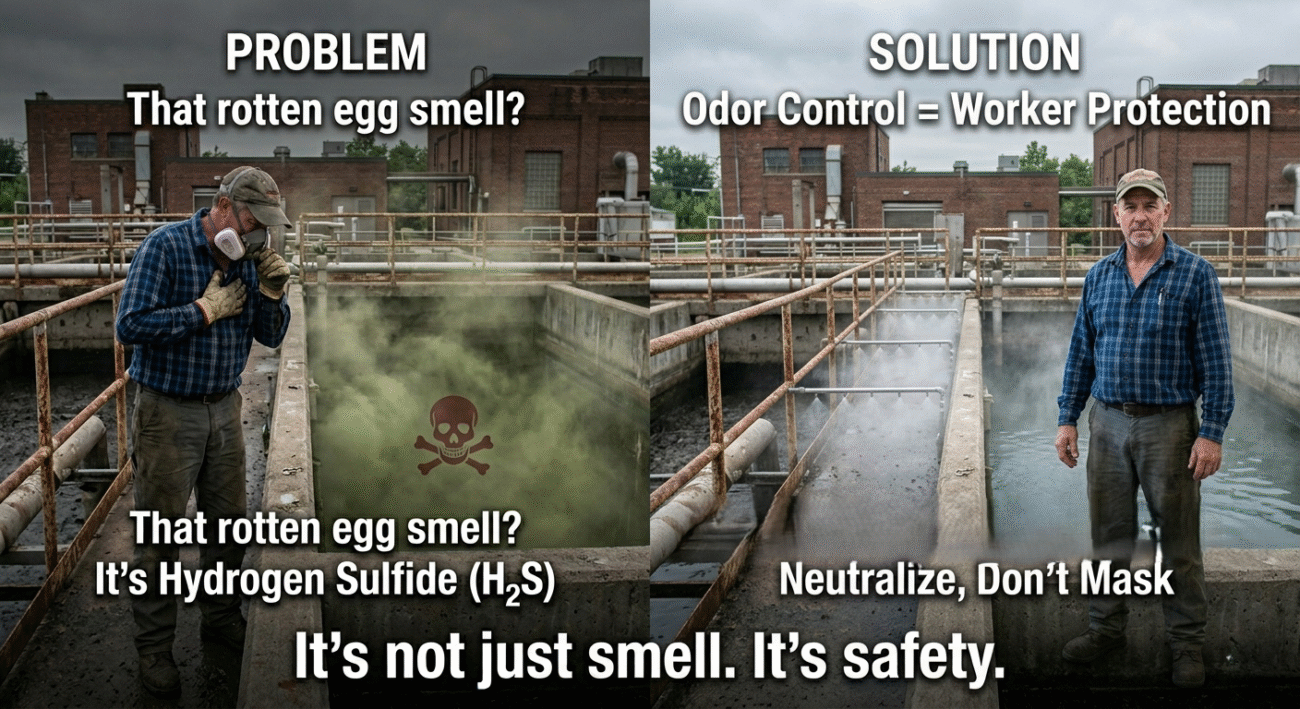
For example, hydrogen sulfide (H₂S) — responsible for “rotten egg” smells — can be chemically neutralized into non-volatile sulfates.
👉 Reference: ScienceDirect – Odour Neutralization Mechanisms
3.2 Methods of True Odour Elimination
Method | Mechanism | Typical Applications |
Chemical Neutralization | Reacts with odour molecules to form non-odorous compounds | AirSolution misting systems |
Bio-augmentation | Uses beneficial microbes to digest organic odours | BioStreme applications |
Adsorption | Activated carbon captures odour molecules | Air filtration units |
Oxidation | Ozone, hydroxyl radicals, or other oxidants break VOC bonds | Industrial exhaust systems |
Modern odour elimination systems combine several of these methods for maximum efficiency.
4. Key Difference: Masking vs Elimination
Aspect | Odour Masking | Odour Elimination |
Principle | Covers up existing smells | Neutralizes or removes odour molecules |
Duration | Short-term | Long-term or permanent |
Health Impact | May add VOCs or irritants | Improves air quality |
Sustainability | Often chemical or aerosol-based | Eco-certified, biodegradable |
Results | Temporary relief | Measurable, lasting freshness |
Example Technology | Plug-in air fresheners | AirSolution, BioStreme, GelTech |
When odour is managed through elimination rather than disguise, both air quality and environmental performance improve dramatically.
5. Why Odour Elimination Supports Indoor Air Quality (IAQ)
5.1 Odour Molecules = Air Contaminants
Odour molecules such as ammonia, hydrogen sulfide, and volatile fatty acids are not just nuisances — they’re pollutants that can irritate the eyes, lungs, and skin.
The World Health Organization (WHO) classifies odours from organic decay as key contributors to poor indoor air quality.
👉 Reference: WHO – Air Quality Guidelines (Chapter 9.3: Odour)
5.2 True Odour Elimination Improves Health & Productivity
- Reduces respiratory irritation and headaches
- Creates a cleaner, fresher environment
- Enhances mood and comfort
- Increases productivity and satisfaction in workplaces
- Supports compliance with indoor air quality standards (ASHRAE, ISO 16000)
Eliminating odours = eliminating contaminants = cleaner air for people and the planet.

6. Sustainable Solutions: The Future of Odour Control
6.1 Why Sustainability Matters
Traditional masking products often rely on:
- Aerosol propellants
- Petrochemical fragrances
- Non-recyclable plastic packaging
These not only contribute to VOC emissions but also undermine environmental goals.
In contrast, sustainable odour elimination systems:
- Use biodegradable ingredients
- Contain no CFCs or alcohols
- Are non-toxic and VOC-compliant
- Support LEED and WELL Building certification programs
👉 Reference: UL Solutions – Ecologo Certification Program
6.2 The Role of Certified Formulations
To be considered sustainable, odour control products should meet recognized eco-labels such as:
- UL Ecologo (North America)
- EU Ecolabel (Europe)
- IFRA-Certified Fragrance Safety (Global)
Ecolo’s AirSolution, BioStreme, and GelTech lines meet these criteria, ensuring:
- Minimal environmental footprint
- Verified biodegradability
Safe use in food, residential, and industrial environments

7. Case Study: Masking Failure vs Elimination Success
Scenario 1 – Masking Attempt
A restaurant experiencing fryer odours used perfumed diffusers.
Result: Odour returned within an hour, mixing with the fragrance and creating a “greasy perfume” smell. Staff and guests complained more.Scenario 2 – Elimination Approach
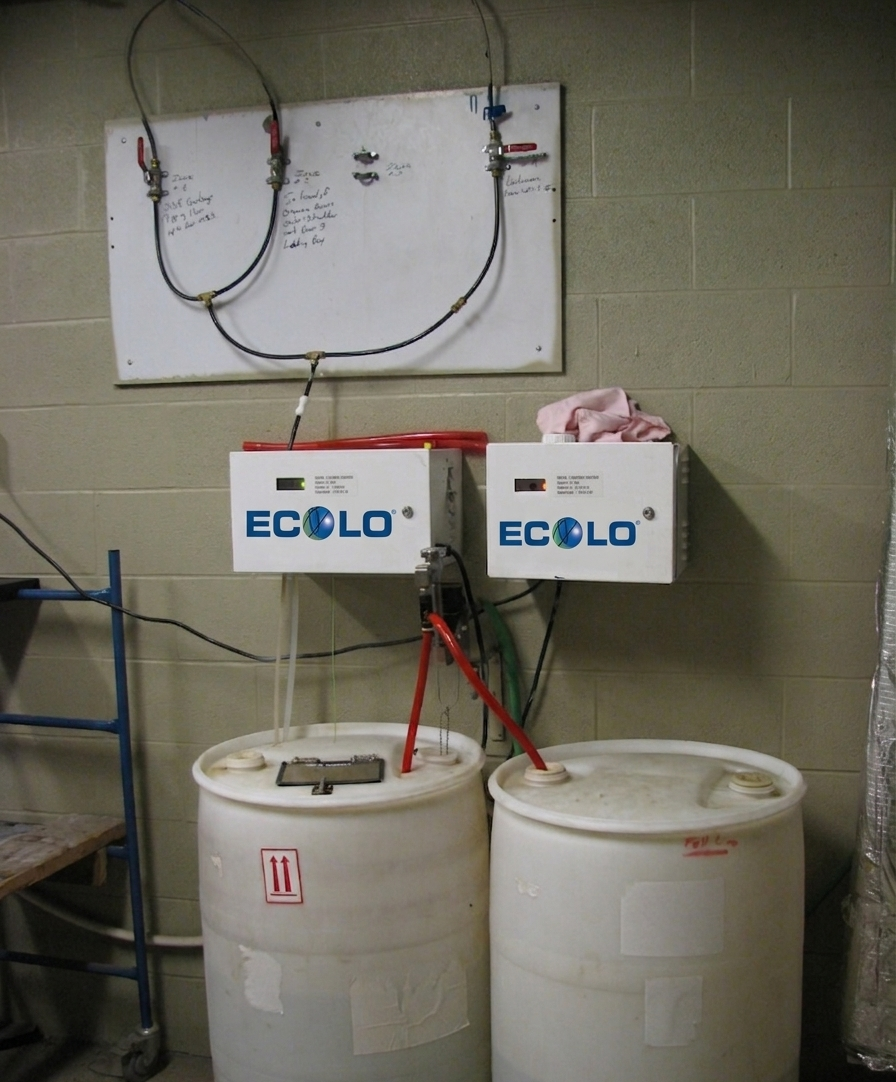
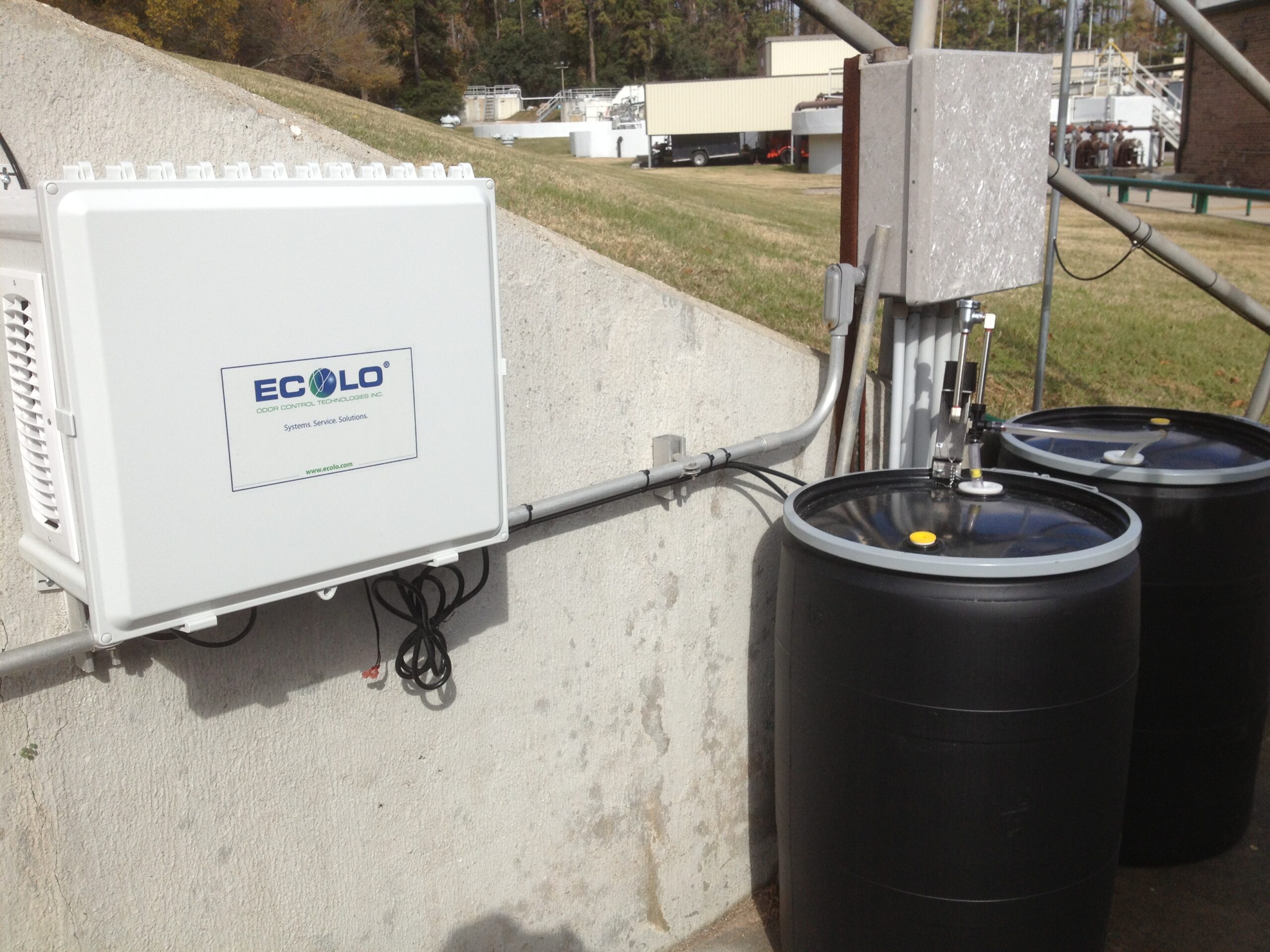
The same restaurant installed AiPro with XStreme 8700.
Result: Odour molecules neutralized on contact. Air smelled clean, not perfumed. Guest satisfaction rose, and HVAC cleanliness improved.This demonstrates the clear difference between surface-level masking and root-level removal.
8. Odour Elimination Technologies in Action
8.1 AirSolution: Chemical Neutralization
AirSolution uses water-based, biodegradable compounds that bond to odour molecules such as sulfur, amines, and fatty acids.
- Non-toxic and UL-certified
- Effective across wastewater, waste, and food industries
- Compatible with misting systems (AMC, AirPro)
8.2 BioStreme: Biological Source Treatment
BioStreme enhances microbial populations that digest organic matter — preventing odours before they form.
Used in:- Wastewater treatment plants
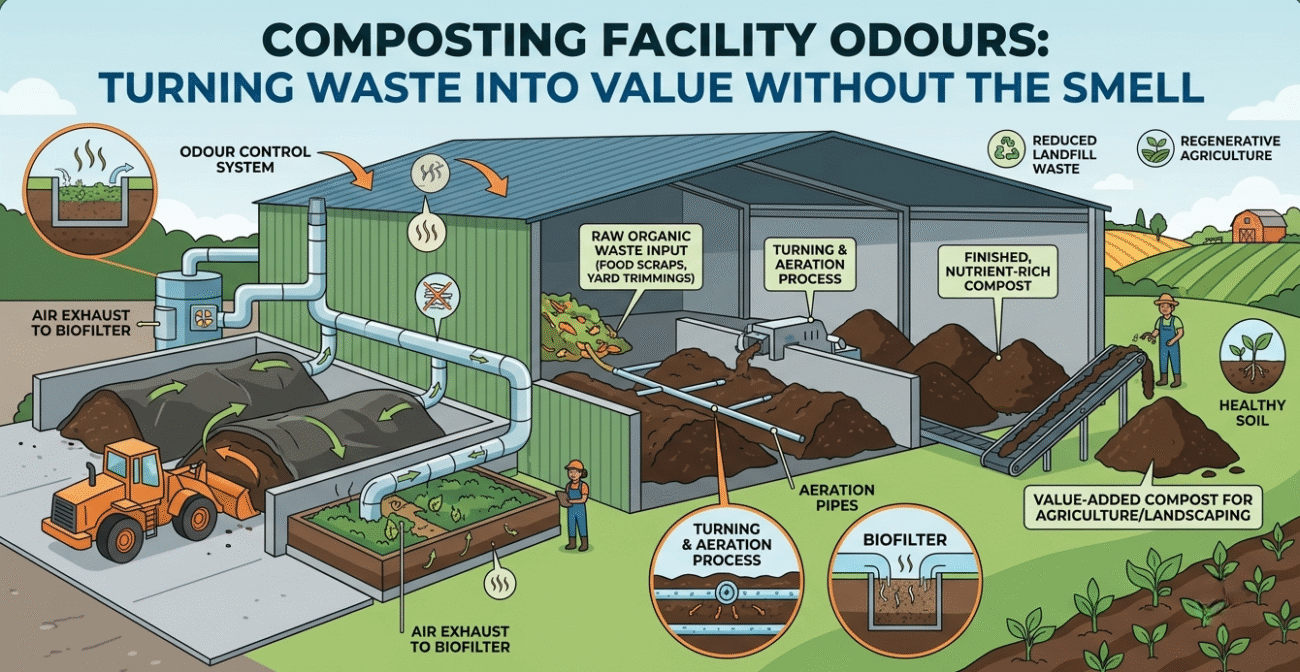
- Composting
- Organic waste collection
8.3 GelTech: Passive, Continuous Absorption
GelTech offers passive odour control for smaller spaces like:
- Garbage rooms
- Condos
- Hotels
- Pet areas
The gel’s slow-release vapour neutralizes odours safely without electricity or emissions.
👉 Reference: IFRA – Safe Use of Fragrance Ingredients
- Non-toxic and UL-certified
9. Common Myths About Odour Control
Myth
Reality
“If it smells good, the odour is gone.”
Fragrance masking only hides smells; molecules remain.
“All odour products work the same way.”
Only neutralizers or bio-agents truly eliminate odours.
“Natural scents are always safe.”
Even natural oils need IFRA certification for safe use.
“Odour control is purely aesthetic.”
Odour molecules affect air quality and health.
“Eco-friendly means less effective.”
Modern biodegradable neutralizers are both sustainable and powerful.
Dispelling these myths helps industries and consumers make smarter, more sustainable air-quality choices.
10. Measuring True Odour Elimination
10.1 Quantitative Methods
True elimination can be measured scientifically using:
- Dynamic olfactometry (EN 13725) – measures odour concentration in odour units (OU/m³).
- VOC monitoring sensors – track volatile compound levels.
- Gas chromatography – identifies odour compound breakdown.
Reduction rates above 80–95% are typical for well-engineered neutralization systems.
10.2 Qualitative Indicators
- Fresh, neutral air (not perfumed)
- Fewer odour complaints
- Extended filter and HVAC life
- Improved comfort and productivity
- Dynamic olfactometry (EN 13725) – measures odour concentration in odour units (OU/m³).

11. Odour Elimination Across Industries
Sector | Challenge | Sustainable Solution |
Wastewater & Sludge | H₂S, ammonia | BioStreme + AirSolution misting |
Food & Beverage | Grease and fermentation odours | XStreme misting + AirPro HVAC |
Hospitality & Residential | Pets, garbage, cooking | GelTech + AirSensory |
Industrial Processing | VOC emissions | Stack/duct injection with AirSolution |
Commercial Buildings | Stale air, mustiness | AirPro continuous IAQ scenting |
Each application benefits from tailored solutions that remove odours rather than mask them.
12. Environmental & Social Benefits of Elimination
12.1 Environmental Impact
- Lower chemical waste and VOC emissions
- Reduced reliance on aerosols and disposable air fresheners
- Alignment with ESG goals and ISO 14001 standards
12.2 Social & Business Value
- Better occupant experience
- Enhanced public perception of cleanliness
- Compliance with environmental and indoor-air regulations
- Cost savings from reduced cleaning and filter maintenance
👉 Reference: ISO 14001 – Environmental Management Systems
13. Why Sustainable Odour Elimination Is the New Standard
Governments and corporate sustainability programs increasingly require:
- VOC-free products
- Life-cycle transparency
- Eco-label certifications
Companies adopting true odour elimination technologies demonstrate leadership in:
- Environmental responsibility
- Employee health and safety
- Long-term operational excellence
This makes odour elimination not just a technical upgrade — but a strategic ESG investment.
14. How to Choose the Right Odour Control Solution
Criteria | Odour Masking Product | Odour Elimination System |
Effectiveness | Temporary | Long-term |
Safety | Often synthetic | Certified safe (IFRA, UL) |
Environmental Impact | VOCs, aerosols | Biodegradable |
Maintenance | Frequent re-application | Automated or slow release |
ROI | Low | High (fewer complaints, less downtime) |
When evaluating options, always check:
- Certification labels (UL Ecologo, IFRA, EPA Safer Choice)
- Product Safety Data Sheets (SDS)
- Compatibility with your ventilation or misting system
15. The Ecolo Advantage
Ecolo’s odour control technologies combine science, sustainability, and proven results across multiple industries.
Our Approach
- Eliminate, don’t mask, odours
- Use eco-certified neutralizers (AirSolution, BioStreme, GelTech)
- Provide engineered delivery systems (XStreme, AirPro)
- Support clients with training and data-driven optimization
Our Promise
True odour elimination that:
- Protects air quality
- Enhances comfort and perception
- Meets environmental regulations worldwide
16. Conclusion: Why Elimination Is the Only Sustainable Choice
Masking odours may provide instant gratification — but it’s a short-term illusion.
Only odour elimination delivers real, lasting results by addressing the molecular cause of unpleasant smells.
With certified, eco-friendly technologies like AirSolution, BioStreme, and GelTech, industries, hotels, and communities can:
- Remove odours safely
- Improve indoor air quality
- Support environmental sustainability
- Protect brand reputation and public wellbeing
True odour control means elimination — not disguise.
And in the age of sustainability, that distinction makes all the difference.