
Greenhouse Odour Control in Toronto & Ontario: Better Air Quality, Ventilation and Crop Protection

Greenhouse Odour Control in Toronto and Ontario
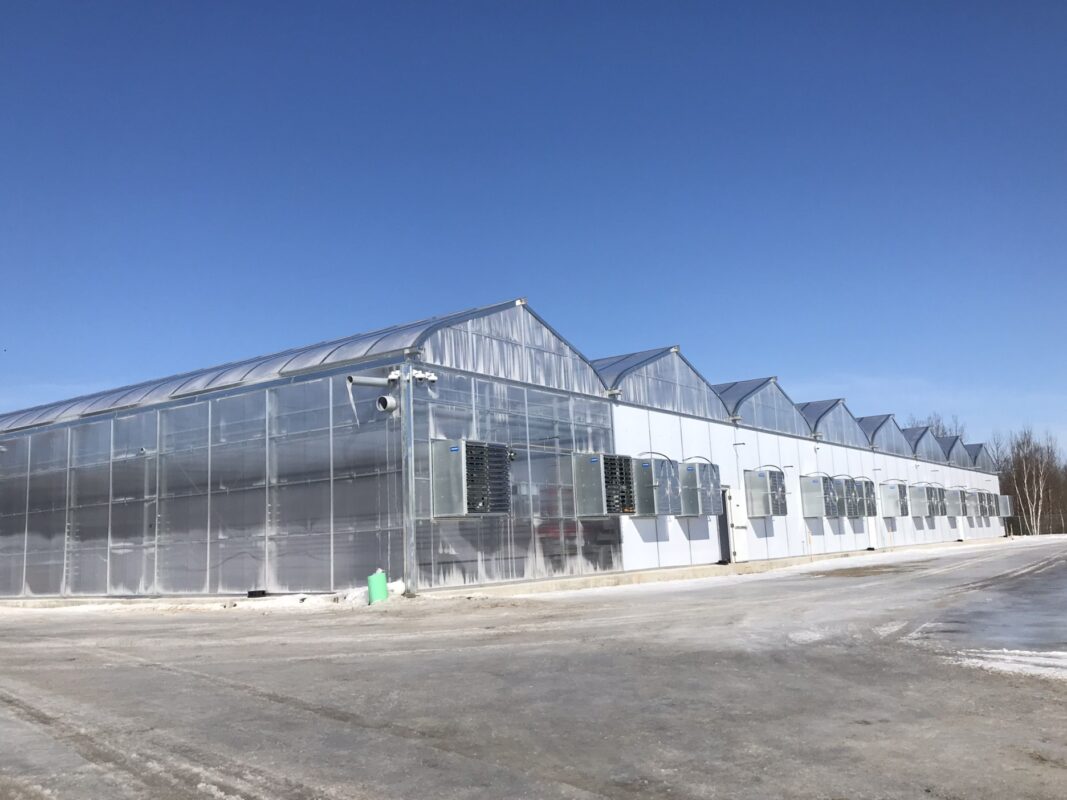
Ontario is home to one of Canada's most important greenhouse and controlled-environment agriculture sectors. From commercial greenhouse operations in the Greater Toronto Area to large agricultural facilities across Niagara, Hamilton, Leamington, Windsor and other parts of Southern Ontario, maintaining proper greenhouse air quality is essential for efficient operation.
Temperature, humidity, CO₂, ventilation and biological activity continuously interact inside a greenhouse. When these conditions become unbalanced, persistent organic odours can develop from fertilizers, compost, irrigation water, plant residues and microbial activity.
For Ontario greenhouse operators, odour is not only a comfort issue. Persistent greenhouse smells can indicate inadequate ventilation, excessive moisture, anaerobic activity or accumulating airborne compounds.
Professional greenhouse odour control in Ontario therefore requires more than simply adding fragrance or increasing ventilation. The objective should be to identify the source of the odour, control emissions and properly distribute an odour-neutralizing treatment throughout the affected area.
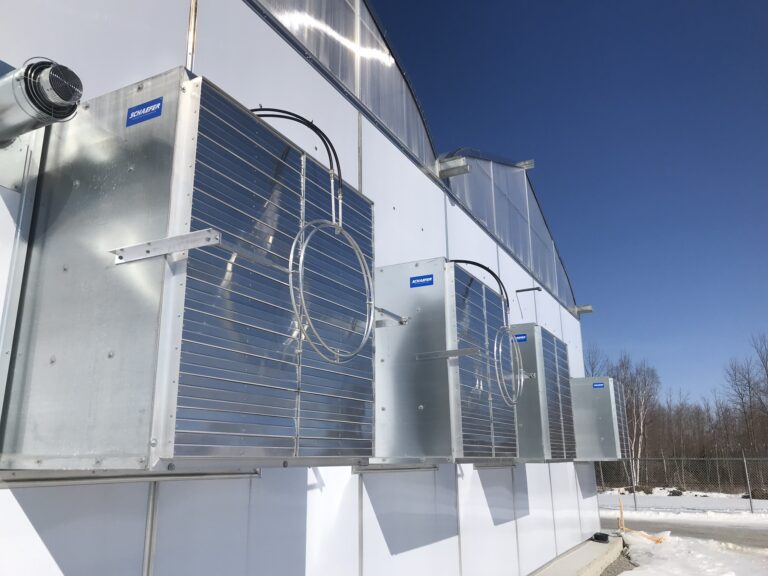
1. Understanding Greenhouse Air Quality in Ontario
The Greenhouse as a Controlled Microclimate
Every commercial greenhouse functions as its own microclimate.
Several environmental factors operate simultaneously:
- Temperature
- Relative humidity
- Carbon dioxide
- Irrigation
- Plant transpiration
- Fertilizer application
- Air circulation
- Microbial activity
- Ventilation
- Heating and cooling
Ontario presents additional seasonal challenges because greenhouse facilities must operate through significant temperature and humidity changes between winter and summer.
During colder months, facilities may reduce outside-air exchange to conserve heat. During warmer periods, ventilation requirements may increase significantly.
When airflow is insufficient, greenhouse operators can experience:
- Stagnant or humid air
- Persistent organic odours
- Ammonia accumulation
- Fertilizer smells
- Compost odours
- Increased condensation
- Microbial activity
- Musty air
- Worker discomfort
For this reason, greenhouse ventilation and odour control in Ontario should often be considered together.
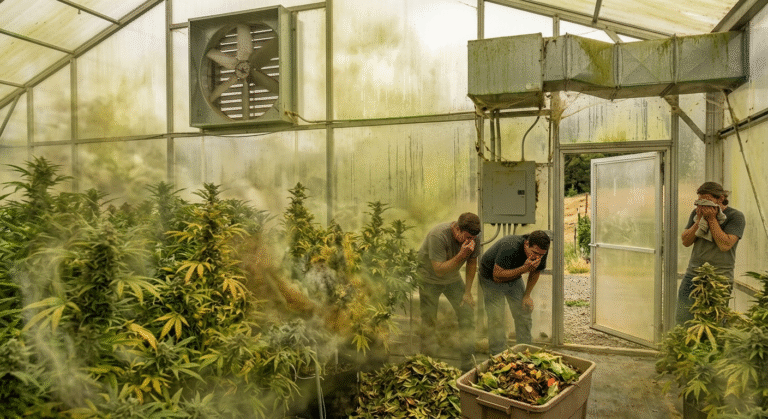
2. What Causes Odours Inside Ontario Greenhouses?
Greenhouse odours typically come from biological or organic processes rather than from one single source.
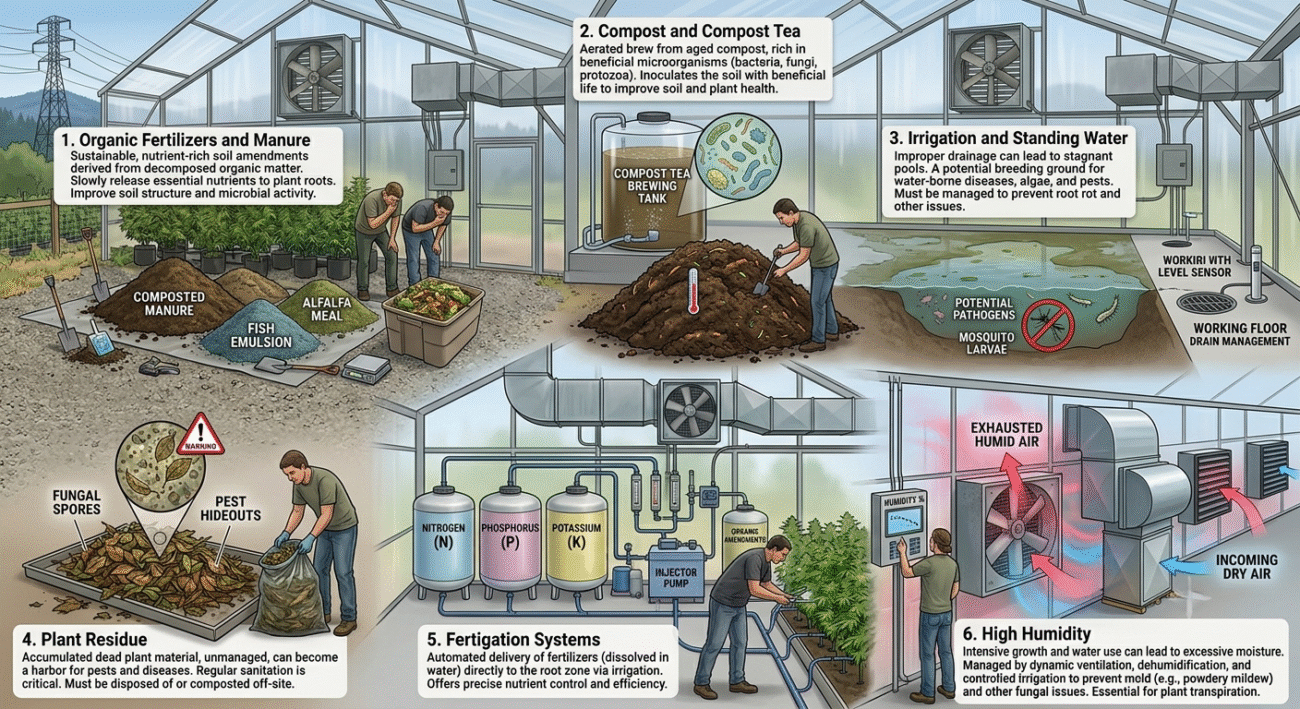
Common sources include:
Organic Fertilizers and Manure
Organic fertilizers, manure and compost products can release ammonia, volatile fatty acids and other odorous compounds during storage and application.
In enclosed greenhouse environments, these odours can become particularly noticeable when ventilation is reduced.
Compost and Compost Tea
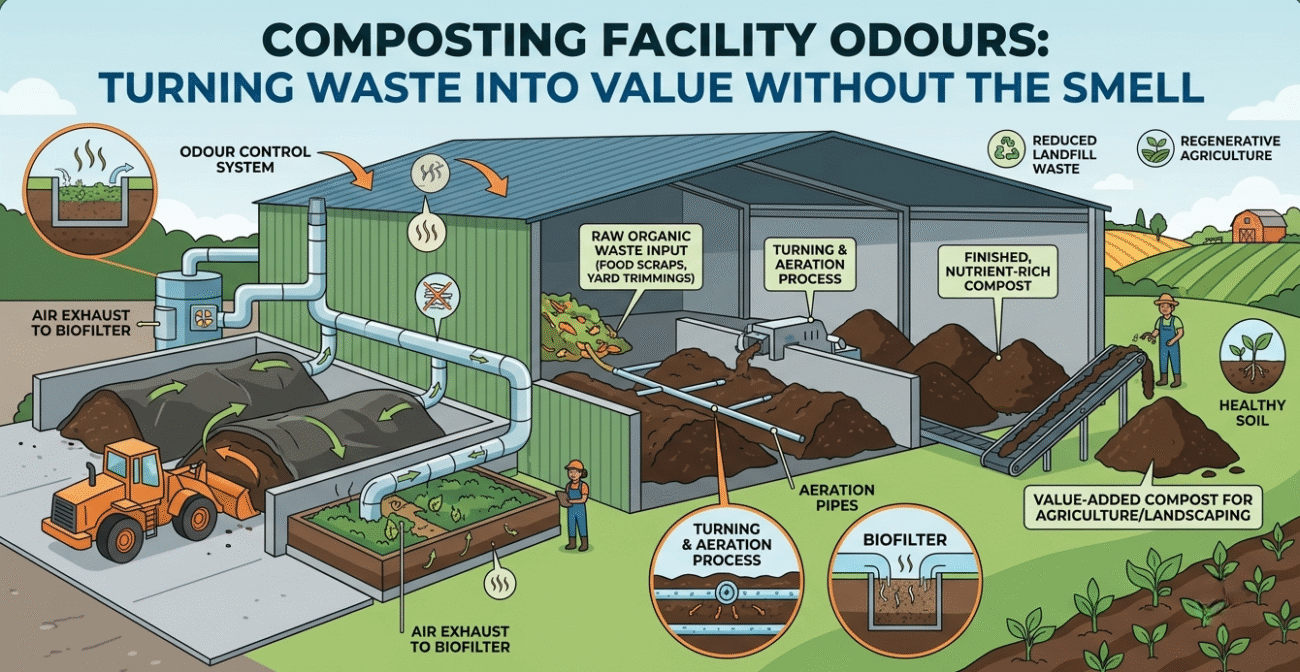
Composting materials naturally undergo biological decomposition. Under certain conditions, especially when oxygen levels are low, this activity can generate strong organic odours.
Irrigation and Standing Water
Standing water, drainage systems and recirculating irrigation systems may develop algae, biofilm or anaerobic conditions.
These areas can generate musty, earthy or sulfur-like odours.
Plant Residue
Leaves, stems, roots and other organic material left in wet environments begin decomposing and may contribute additional VOCs and odours.
Fertigation Systems
Fertilizer mixing tanks, nutrient tanks and fertigation equipment can become concentrated sources of agricultural odours.
High Humidity
Humidity itself does not necessarily create an odour, but excessive moisture can create conditions that encourage microbial growth and decomposition.
Identifying these sources is the first step when designing an effective greenhouse odour-control system in Toronto or Ontario.
3. Why Greenhouse Ventilation Alone May Not Solve Odour Problems
Ventilation is essential to greenhouse climate management, but airflow alone does not necessarily neutralize an odour.
Roof vents, exhaust fans, sidewall openings and mechanical ventilation systems move contaminated air from one location to another.
If an odour source remains active, increasing ventilation may simply discharge the smell outside the greenhouse.
This can become especially important for commercial greenhouses located close to:
- Residential neighbourhoods
- Commercial properties
- Public roads
- Schools
- Retail areas
- Other businesses
Greenhouses operating near Toronto, the GTA and densely developed areas of Southern Ontario may therefore benefit from addressing odours before they are discharged outdoors.
A comprehensive Ontario greenhouse odour management program can combine source treatment, airborne odour neutralization and strategic ventilation.
4. Greenhouse Humidity and Odour Management
Humidity management is another important part of maintaining good greenhouse air quality.
Excess moisture can contribute to:
- Condensation
- Mold development
- Microbial growth
- Anaerobic conditions
- Musty odours
- Wet organic matter
- Increased disease pressure
Proper environmental management should balance plant transpiration, temperature, ventilation and dehumidification according to the crop being grown.
Rather than treating odour and humidity as completely separate issues, Ontario greenhouse managers should evaluate the overall air-management system.
This makes it easier to identify whether an odour problem originates from the greenhouse atmosphere, irrigation infrastructure, organic material, waste storage or another specific process.
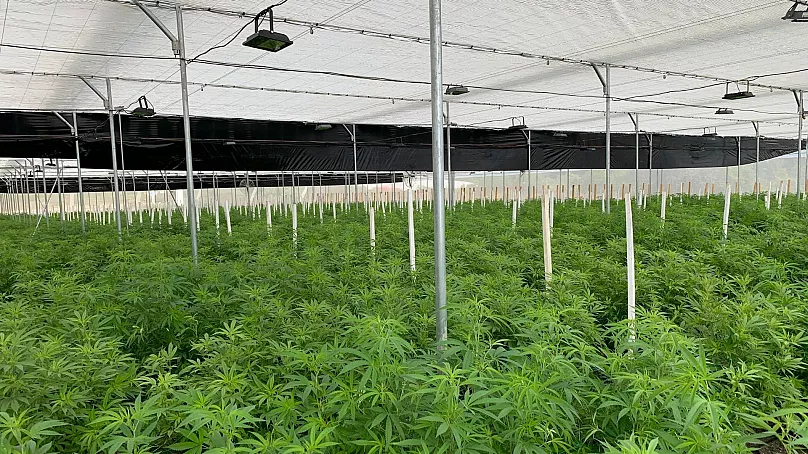
5. AirSolution for Greenhouse Odour Control
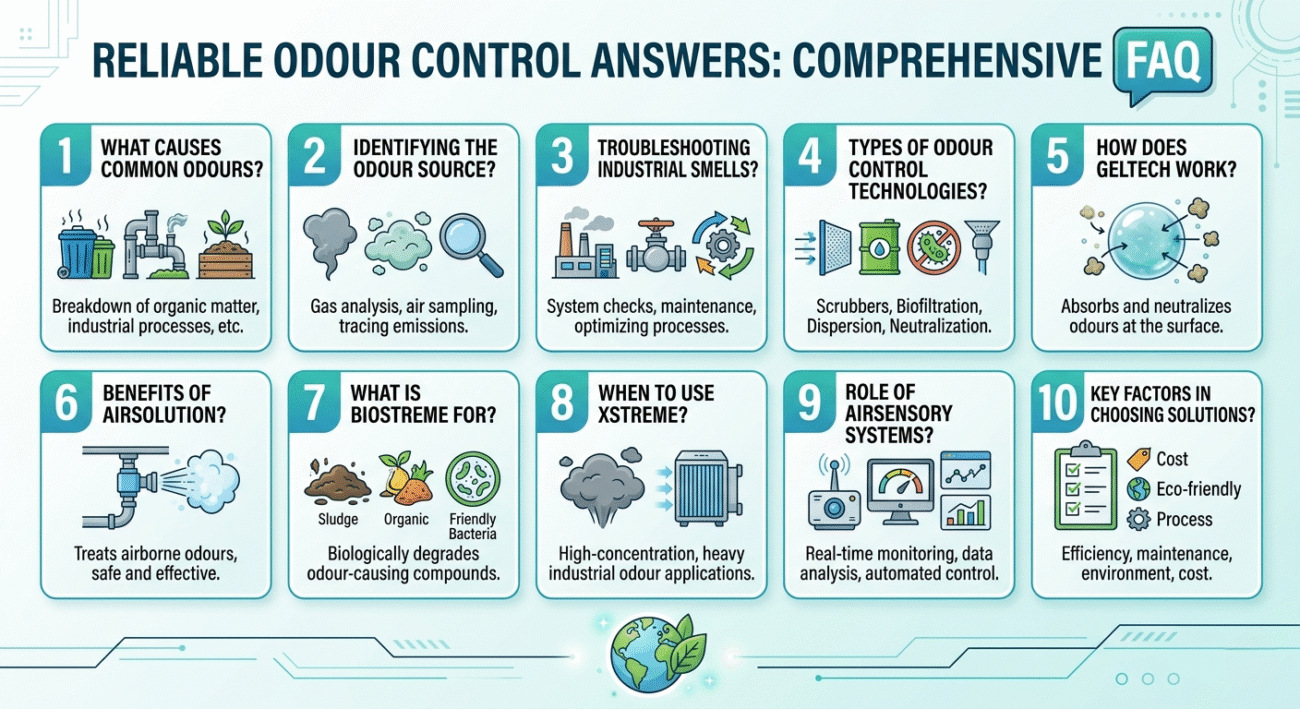
AirSolution is designed for airborne odour-control applications where odorous compounds need to be treated within the atmosphere or close to their source.
Depending on the greenhouse configuration, the solution can potentially be applied through:
- Misting systems
- Atomization equipment
- Spray systems
- Ventilation systems
- Duct injection
- Targeted treatment around odour sources
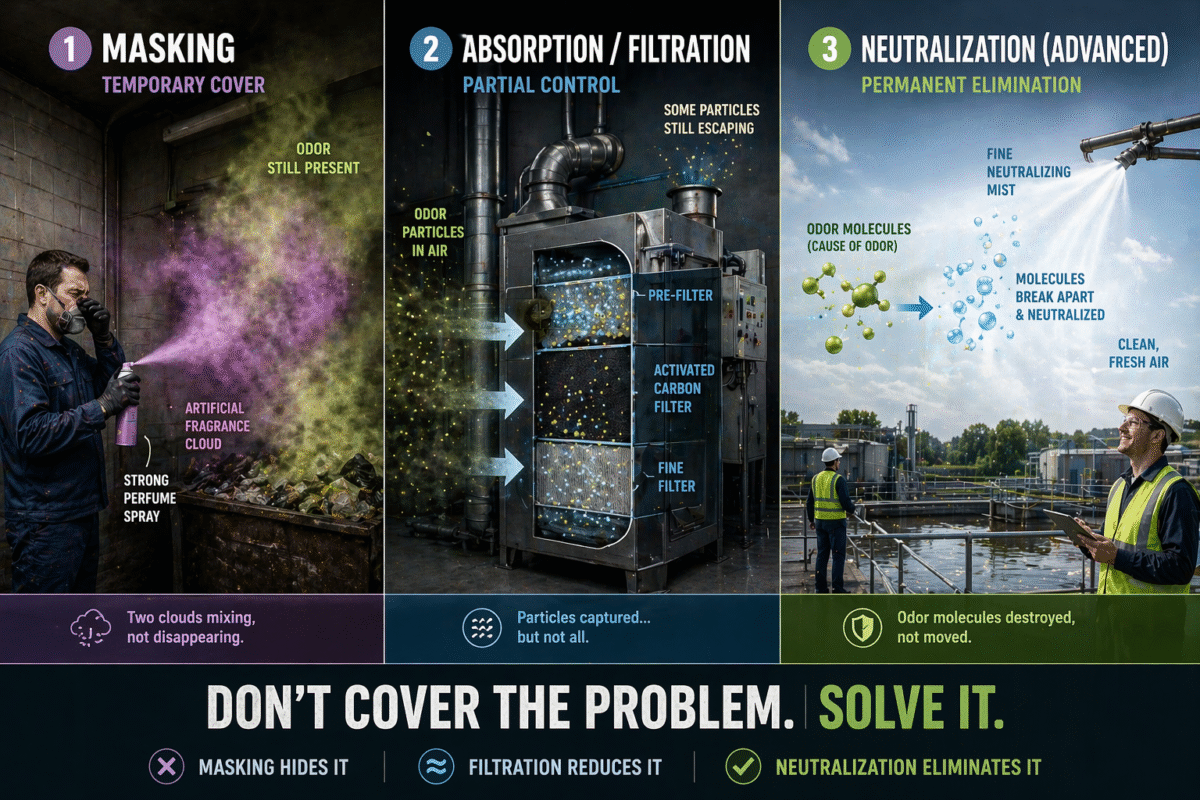
Instead of relying only on fragrance to cover an unpleasant smell, an odour-neutralizing program is designed to interact with the compounds responsible for the odour.
This approach can be useful for commercial greenhouse odour control in Ontario, particularly where fertilizer, compost, organic waste or other persistent odours are present.
6. XStreme for Difficult Greenhouse Odour Applications
Some greenhouse operations experience more concentrated or difficult odour conditions.
Examples may include:
- Waste collection areas
- Organic material storage
- Fertilizer preparation rooms
- Plant-waste processing
- Enclosed growing areas
- Strong decomposition odours
- Persistent VOC-related smells
For these applications, XStreme solutions can be evaluated based on the specific compounds and characteristics of the odour.
The correct solution, concentration and application equipment depend on factors including:
- Greenhouse size
- Odour source
- Odour intensity
- Ventilation rate
- Indoor or outdoor emission points
- Operating hours
- Temperature
- Humidity
- Available application equipment
This is why professional industrial and agricultural odour control in Ontario should normally begin with an application assessment rather than selecting a product based only on facility size.
7. How an Ontario Greenhouse Odour-Control System Can Work
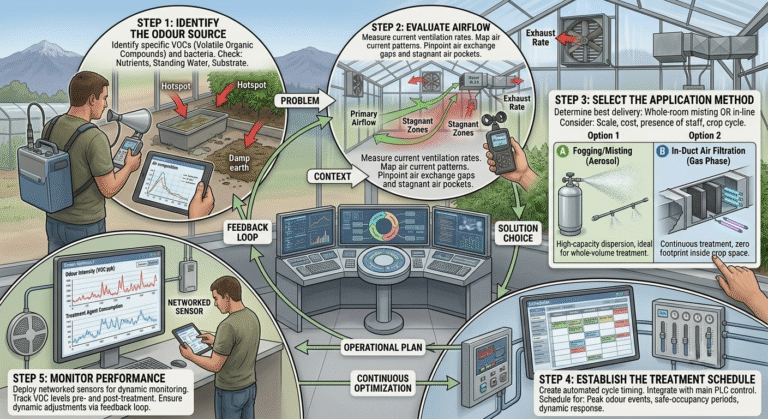
A typical greenhouse odour-control project can follow several steps.
Step 1: Identify the Odour Source
Potential problem areas can include:
- Compost containers
- Fertigation tanks
- Waste areas
- Irrigation systems
- Drainage zones
- Plant-processing rooms
- Propagation areas
- Greenhouse exhaust points
Understanding where the odour originates helps determine whether source treatment, airborne treatment or both are required.
Step 2: Evaluate Airflow
The greenhouse ventilation configuration should then be reviewed.
Important information includes:
- Greenhouse dimensions
- Ceiling height
- Number of ventilation zones
- Exhaust locations
- Fan capacity
- Air-handling equipment
- Operating schedule
Step 3: Select the Application Method
Depending on the facility, an odour-control solution may be distributed through a dedicated misting or atomization system.
Systems can also be positioned near high-odour areas or integrated into suitable ventilation infrastructure.
Step 4: Establish the Treatment Schedule
Treatment frequency depends on the application.
Continuous odour sources may require automated treatment at scheduled intervals, while seasonal or intermittent processes may only require treatment during production.
Step 5: Monitor Performance
Operators can track:
- Odour intensity
- Complaint frequency
- Worker feedback
- Treatment consumption
- Ventilation conditions
- Source activity
The program can then be adjusted to improve efficiency.
8. Organic Fertilizer and Compost Odour Control
Organic agriculture is increasingly important throughout Ontario, but organic materials can also create significant odour challenges.
Compost teas, manure and nitrogen-rich fertilizers can generate strong odours as organic matter decomposes.
A targeted treatment program may apply an appropriate AirSolution formulation around:
- Compost storage
- Fertilizer tanks
- Mixing stations
- Waste containers
- Processing areas
For material-level applications, BioStreme may also be considered where microbial treatment is appropriate.
Combining source treatment with airborne odour control can help prevent the smell from spreading throughout the greenhouse.
9. Irrigation, Standing Water and Musty Greenhouse Odours
Not every greenhouse odour originates from fertilizer.
Standing water and wet infrastructure can create musty or organic smells, particularly when biofilm or anaerobic conditions develop.
Greenhouse operators should inspect:
- Drainage channels
- Irrigation reservoirs
- Recirculation tanks
- Floor drains
- Water-storage areas
- Wet growing media
- Areas underneath benches
Removing the underlying contamination or stagnant water should remain an important part of the solution.
Airborne odour treatment can then help address residual smells within the greenhouse atmosphere.
10. Plant Waste and Trimming Area Odour Control
Plant material can become another significant source of greenhouse odour.
Leaves, stems, roots and rejected crops begin decomposing after removal, particularly when stored in warm, humid conditions.
Dedicated plant-waste areas may therefore benefit from targeted commercial odour control systems.
An atomization or misting system can be positioned near the waste zone to treat odorous air before it spreads throughout the rest of the facility.
This type of strategy can be particularly valuable for high-volume growing operations where organic waste is generated every day.
11. Worker Areas and Indoor Air Quality
Greenhouse air quality also affects the people working inside the facility.
Persistent fertilizer, compost and decomposition odours may reduce comfort and create an unpleasant working environment.
Areas commonly requiring attention include:
- Packing stations
- Employee work zones
- Propagation rooms
- Fertilizer preparation areas
- Waste rooms
- Loading areas
- Processing rooms
Maintaining cleaner-smelling air can improve the overall working environment while supporting a more professional facility.
For Toronto and Ontario operators with customers, inspectors, suppliers or visitors regularly entering the facility, indoor odour conditions can also influence how the operation is perceived.
12. Controlling Greenhouse Odours Before They Leave the Facility
Odour management becomes especially important when greenhouse emissions affect neighbouring properties.
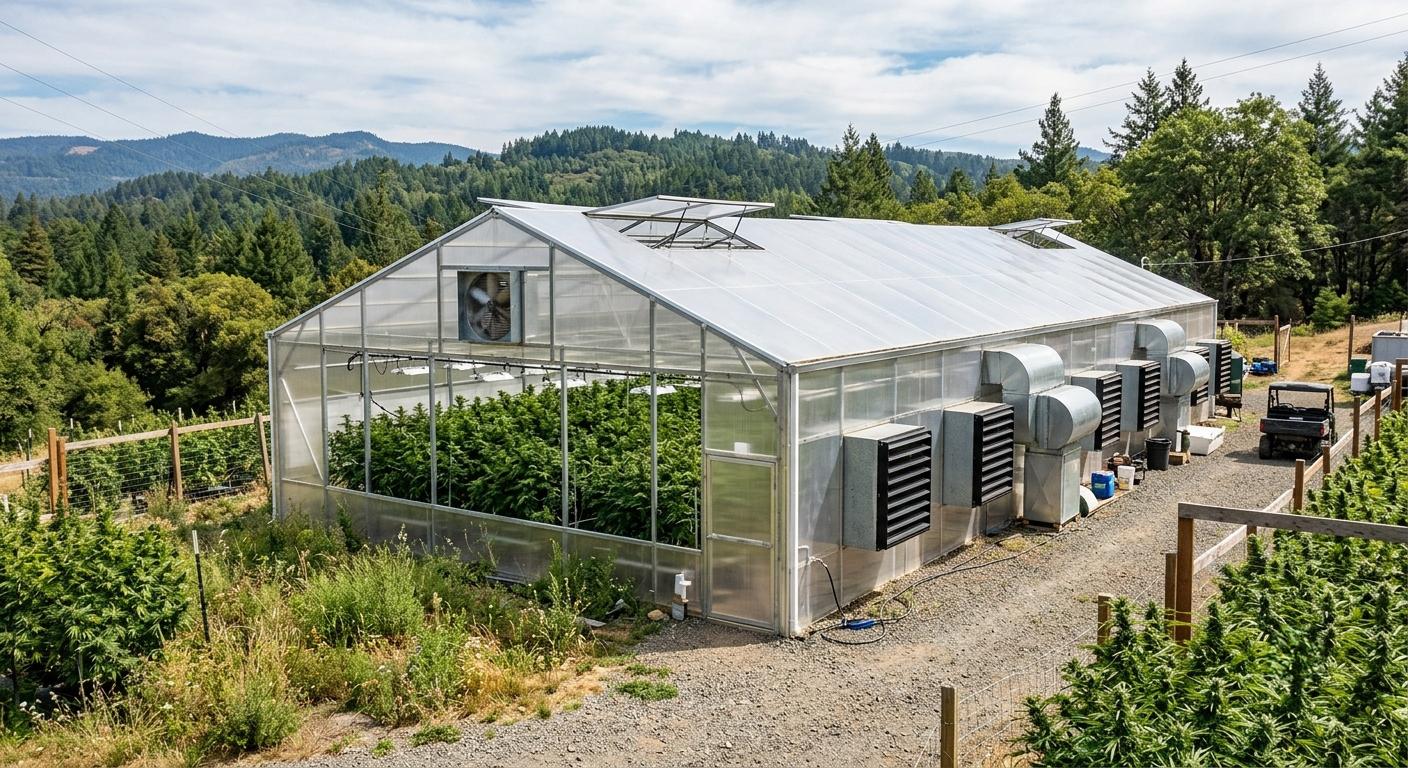
Large ventilation fans can move significant volumes of air outside a greenhouse.
If strong odours are present inside, those compounds can also be transported beyond the facility boundary.
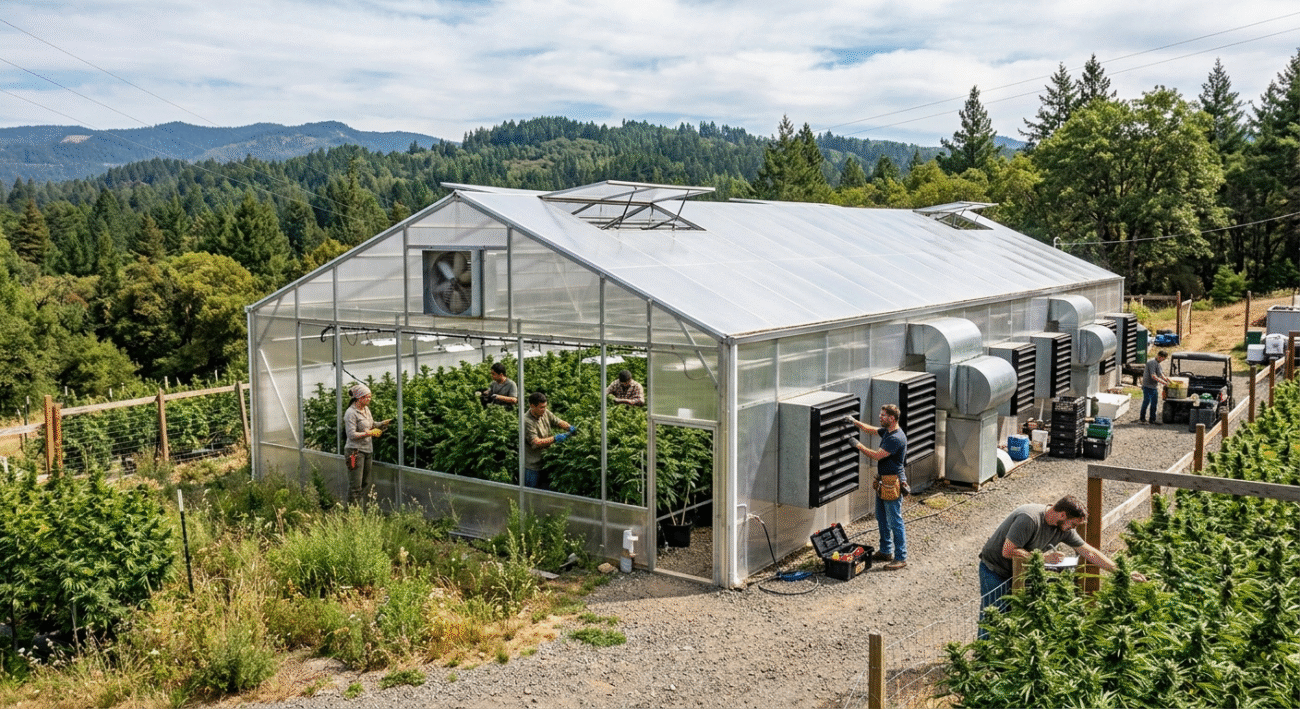
A properly designed greenhouse exhaust odour-control system can target contaminated air before or as it reaches an exhaust location.
This approach can be evaluated for commercial growing operations located near populated areas throughout:
- Toronto
- North York
- Scarborough
- Etobicoke
- Mississauga
- Brampton
- Vaughan
- Markham
- Richmond Hill
- Hamilton
- Niagara Region
- St. Catharines
- Niagara-on-the-Lake
- Windsor-Essex
- Leamington
- Kingsville
- Southwestern Ontario
13. Greenhouse Odour Control in the Greater Toronto Area
Greenhouses operating in the Greater Toronto Area (GTA) face different conditions from isolated agricultural operations.
Urban development means commercial growing facilities may operate much closer to neighbouring businesses and residential communities.
Odour control can therefore become important not only for the greenhouse itself but also for managing the facility's environmental footprint.
Common GTA applications include:
- Indoor growing facilities
- Commercial greenhouses
- Garden centres
- Vertical farms
- Plant nurseries
- Agricultural research facilities
- Cannabis cultivation facilities
- Hydroponic operations
A customized Toronto greenhouse odour-control solution can account for available ventilation infrastructure, treatment areas and the surrounding property.
14. Greenhouse Odour Control in Niagara and Southern Ontario
Niagara and Southern Ontario contain significant greenhouse, nursery and agricultural activity.
Operations in these areas can range from relatively small specialty growers to very large commercial facilities.
Because greenhouse configurations vary substantially, the treatment system should be sized according to actual operating conditions.
A greenhouse assessment may consider:
Factor | Why It Matters |
Greenhouse area | Determines overall treatment coverage |
Ceiling height | Affects total air volume |
Odour source | Determines product selection |
Odour intensity | Influences dosage and frequency |
Exhaust airflow | Helps determine application capacity |
Number of zones | Determines system layout |
Operating schedule | Determines chemical consumption |
Neighbour proximity | Influences emission-control strategy |
These factors are more useful than simply recommending one system for every greenhouse.
15. Integrating Odour Control With Existing Greenhouse Systems
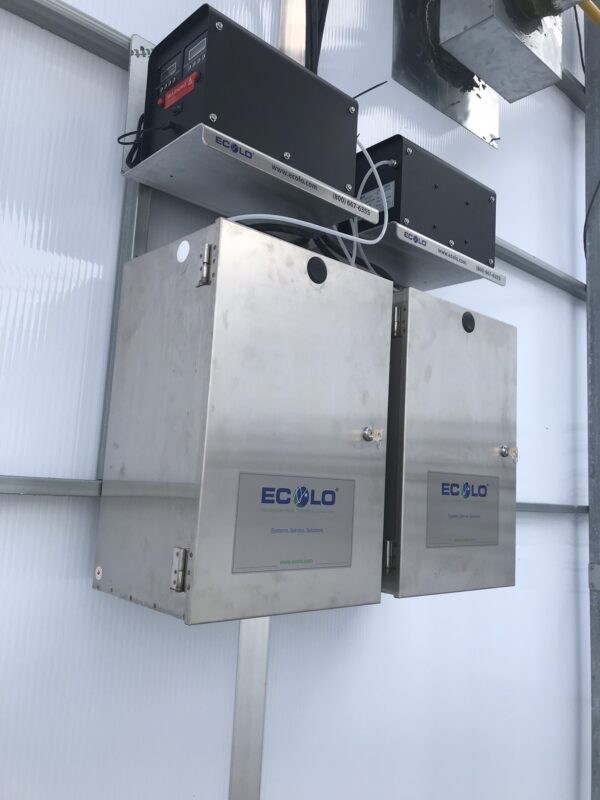
One advantage of professional odour-control technology is the ability to design the application around existing facility infrastructure.
Depending on the greenhouse, a system may work alongside:
- HVAC equipment
- Exhaust ventilation
- Greenhouse circulation fans
- Environmental control systems
- Misting equipment
- Irrigation infrastructure
- Timers
- Automated controllers
The objective is to distribute the selected odour-control solution efficiently while minimizing unnecessary product consumption.
Automated operation also allows greenhouse managers to coordinate treatment with periods when odours are most likely to be generated.
16. Improving the Sustainability of Greenhouse Odour Management
Modern greenhouse operations increasingly evaluate environmental performance alongside productivity.
An efficient odour-control program should therefore focus on applying the minimum effective amount of treatment directly where it is required.
Potential operational benefits include:
- Reduced chemical consumption
- Targeted application
- Automated dosing
- Reduced reliance on fragrance masking
- Better control of odour emissions
- Lower water consumption compared with excessive washing
- Improved workplace conditions
- Better neighbouring-community relations
This approach supports more sustainable agricultural odour management in Ontario.
17. Choosing the Right Greenhouse Odour-Control Solution
No two greenhouse facilities operate exactly the same way.
Before recommending an AirSolution, XStreme or BioStreme product, several questions should be answered:
What is causing the odour?
Is it fertilizer, compost, irrigation water, plant waste, ammonia, sulfur compounds or another source?
Where is the odour generated?
Is the problem located inside the growing area, around tanks, near waste containers or at the exhaust?
How large is the greenhouse?
Square footage alone is not enough. Ceiling height is also necessary to determine the approximate treatment volume.
How is the greenhouse ventilated?
Natural ventilation and mechanical exhaust systems require different application approaches.
Is the odour continuous or intermittent?
This affects treatment schedules and estimated solution consumption.
Are there neighbouring properties?
If external odour complaints are a concern, exhaust and perimeter treatment may need additional consideration.
Answering these questions allows a much more accurate Ontario greenhouse odour-control system to be designed.
18. Professional Greenhouse Odour Control Across Ontario
Ecolo Odor Control Technologies provides odour-control solutions for commercial, industrial, municipal and agricultural applications.
For greenhouse and controlled-environment agriculture applications, systems can be evaluated for:
- Organic odours
- Fertilizer smells
- Compost odours
- Plant-waste odours
- Ammonia-related odours
- Waste-storage areas
- Irrigation-related smells
- Indoor growing facilities
- Ventilation exhaust
- General greenhouse air quality
Solutions can be configured around the facility's actual odour source, air volume and ventilation system.
Greenhouse Odour Control Toronto, GTA and Ontario
If your greenhouse is experiencing persistent organic, fertilizer, compost or plant-waste odours, increasing ventilation alone may not fully solve the problem.
A properly designed odour-control strategy targets both the source of the smell and the contaminated air surrounding it.
Ecolo can evaluate greenhouse applications throughout Toronto, the Greater Toronto Area and Ontario and recommend the appropriate solution, concentration and application system based on the facility.
Whether the application involves a small indoor growing facility or a large commercial greenhouse, the first step is understanding:
- The source of the odour
- Facility dimensions
- Ventilation configuration
- Operating conditions
- Odour intensity
- Required treatment area
From there, an appropriate AirSolution, XStreme or BioStreme treatment program can be developed.
Looking for Greenhouse Odour Control in Ontario?
Contact Ecolo Odor Control Technologies to discuss greenhouse odour control, agricultural air treatment or commercial odour-control applications in Toronto and across Ontario.
Our team can review your application and help determine the most appropriate treatment strategy for your greenhouse, growing facility or agricultural operation.