Landfill Odor Control: 3 Effective Solutions for Waste Facilities

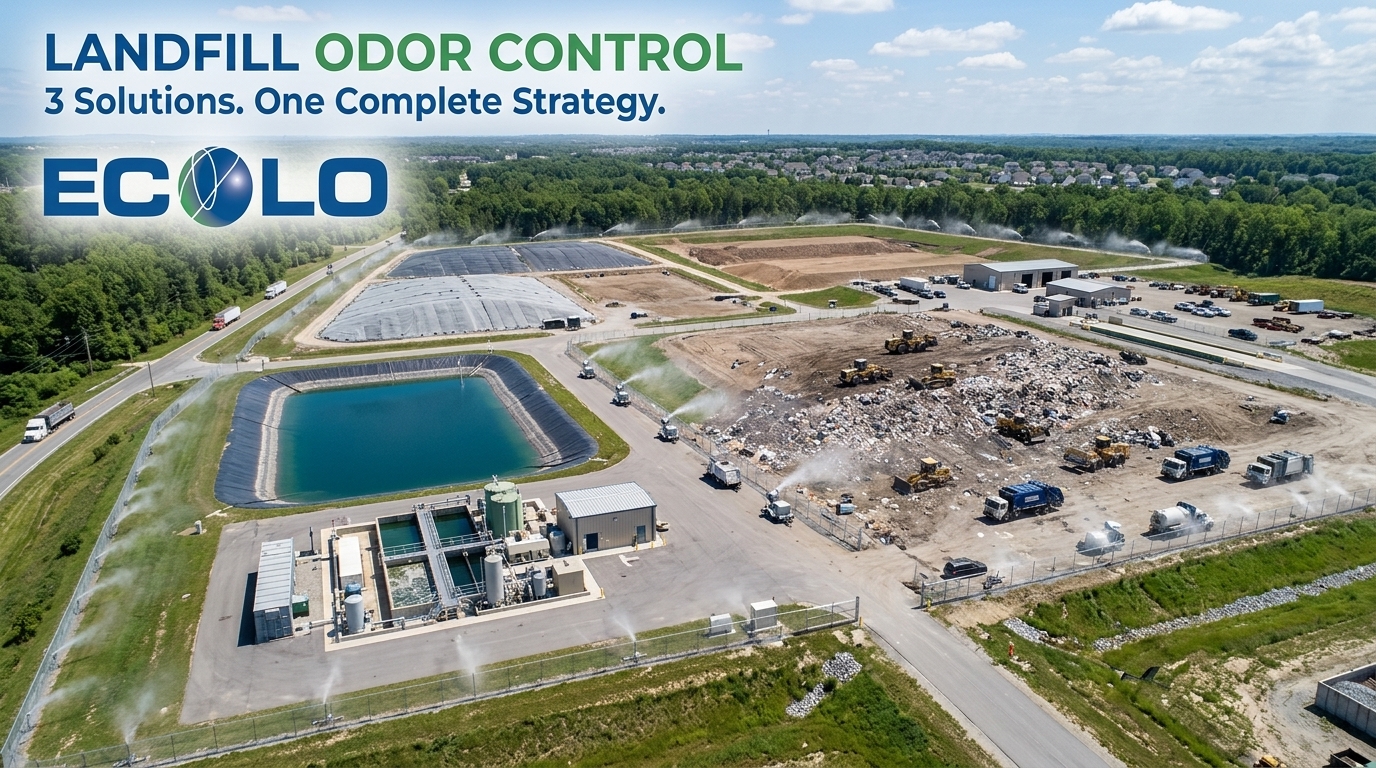
Landfill odor control is one of the most challenging aspects of modern solid waste management. From active working faces and waste-unloading areas to leachate ponds and facility boundaries, landfills can generate persistent odors that affect workers, neighboring communities, and the surrounding environment.
For landfill operators, odor is more than an unpleasant smell. Persistent odor complaints can create operational challenges, increase scrutiny from environmental authorities, and damage relationships with nearby residents and businesses.
The challenge is that landfill odors do not originate from a single source, and no single treatment method is appropriate for every situation.
At Ecolo Odor Control Technologies, we approach landfill odor management through three complementary strategies:
Airborne odor neutralization using AirSolution 9149.
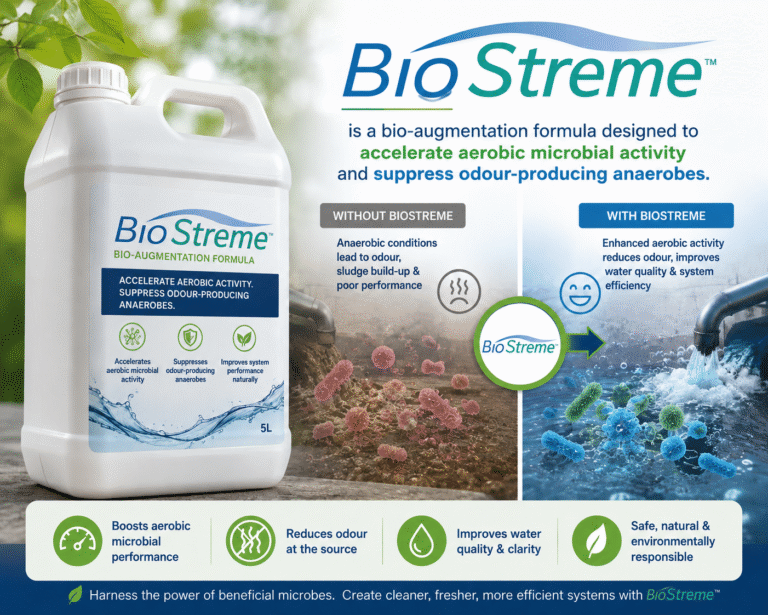
Direct waste-surface treatment using BioStreme 111F.
Biological leachate treatment using BioStreme 101.
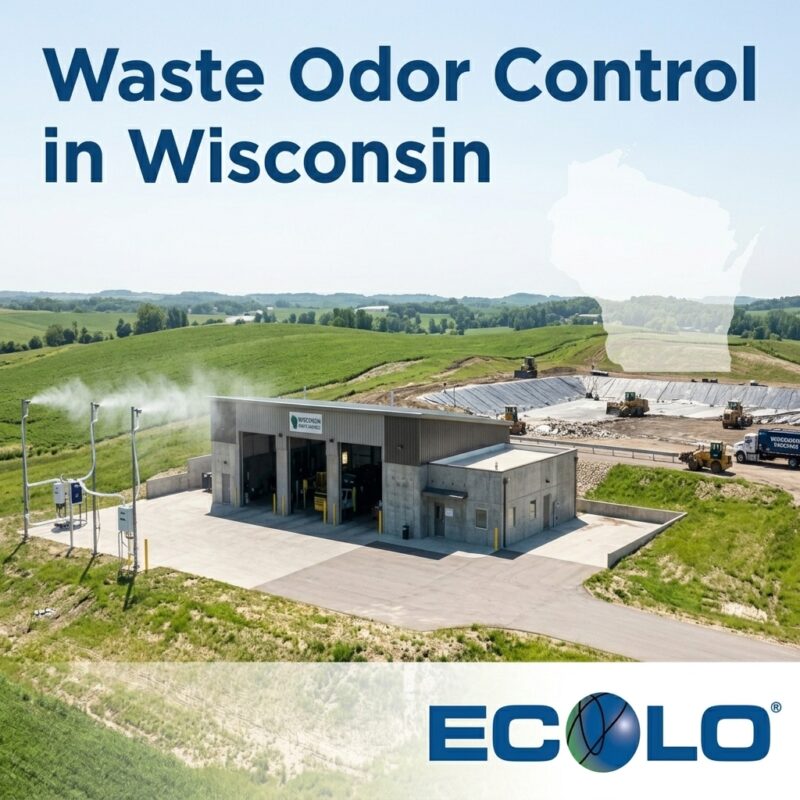
These technologies can be applied individually or combined into a comprehensive odor-control program using automated misting, direct spraying, mobile atomization, and perimeter treatment systems.
The objective is straightforward: control odors where they originate, treat them when they enter the air, and reduce their migration beyond the facility boundary.
1. Why Do Landfills Produce Strong Odors?
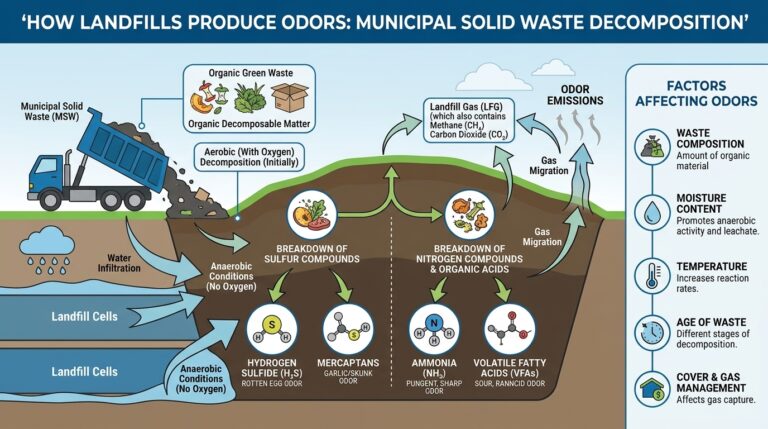
Landfills receive a complex mixture of municipal solid waste, food waste, organic materials, industrial residuals, and other decomposable substances.
As these materials break down, they can release a variety of odorous compounds.
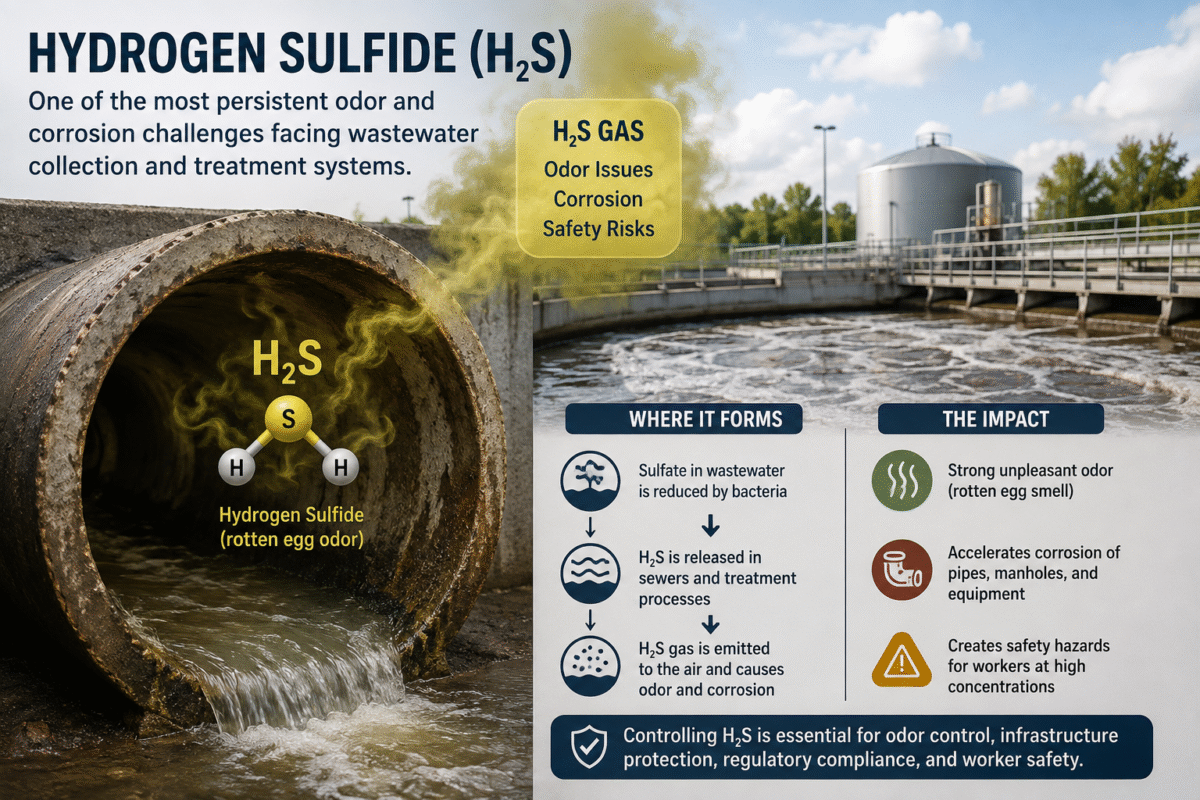
Hydrogen Sulfide (H₂S)
Hydrogen sulfide is commonly associated with a rotten-egg smell.
It can form under oxygen-deficient conditions when sulfur-containing compounds are biologically transformed.
Potential sources include leachate systems, wastewater, and anaerobic zones within waste deposits.
In addition to its unpleasant odor, H₂S can create serious safety concerns at elevated concentrations.
Mercaptans
Mercaptans are sulfur-containing organic compounds that can produce strong, unpleasant odors even at low concentrations.
They can contribute to odors associated with decomposing waste and certain industrial materials.
Ammonia and Amines
Nitrogen-containing organic materials, particularly protein-rich waste, can generate ammonia and amines during decomposition.
These compounds may contribute sharp, pungent, or fish-like odors.
Volatile Fatty Acids
Organic decomposition can also generate volatile fatty acids, including acetic, propionic, and butyric acids.
These compounds contribute sour, rancid, and unpleasant smells commonly associated with decomposing organic material.
Because landfill emissions often contain multiple compounds, effective odor management requires a treatment strategy suited to the waste characteristics and operating conditions.
2. Where Do Landfill Odors Originate?
Before choosing an odor-control system, operators need to identify the areas responsible for the greatest emissions.
Active Working Face
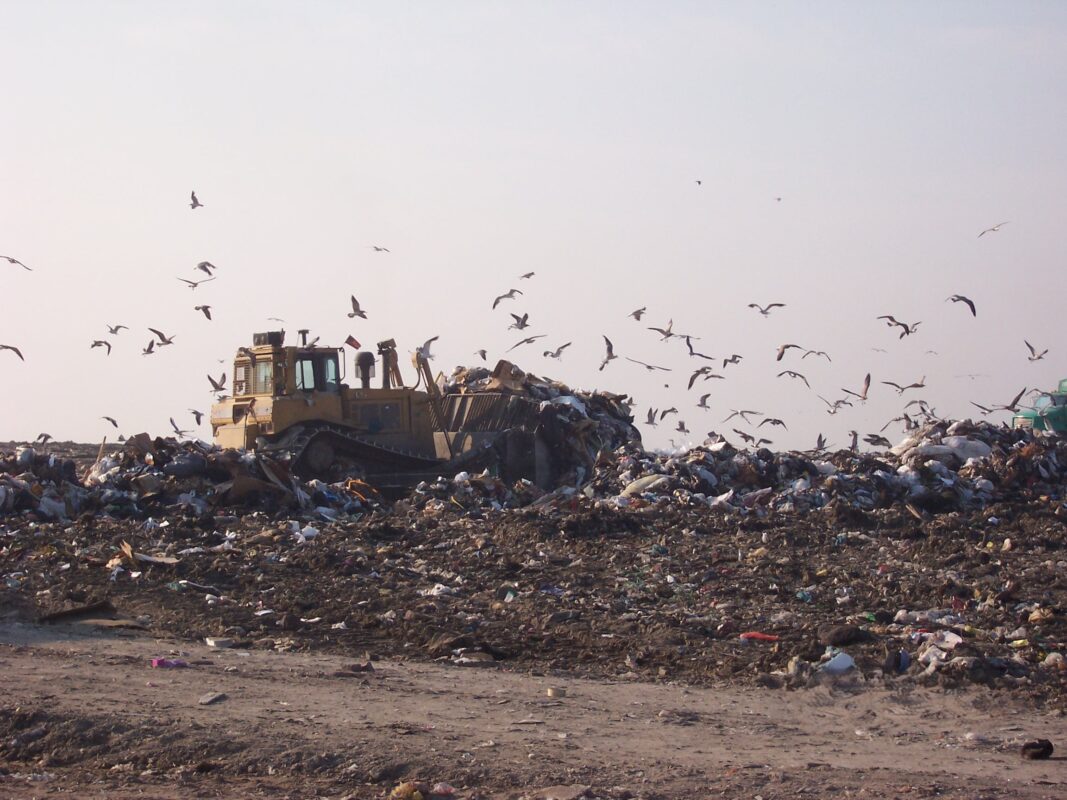
The active working face is frequently one of the most important odor-generating locations.
Fresh municipal solid waste is unloaded, spread, compacted, and covered throughout the day.
These activities can release odors directly into the surrounding atmosphere.
Odor emissions may increase during:
Truck unloading
Waste spreading and compaction
Excavation or relocation of older waste
Daily cover operations
High-volume waste deliveries
Hot weather
Because the working face moves as landfill operations progress, odor-control equipment may need to be repositioned or adjusted.
Transfer and Tipping Areas
Transfer stations and waste-unloading areas can experience concentrated odor releases when large quantities of waste are handled in a relatively short period.
Open containers, compactors, loading bays, and temporary waste storage can all contribute to the problem.
Leachate Ponds and Collection Systems
Landfill leachate is produced when liquid moves through waste and carries dissolved and suspended materials.
Leachate ponds, storage tanks, sumps, and collection systems can generate significant odors, particularly when organic loading and anaerobic conditions contribute to decomposition.
Waste Storage and Processing Areas
Temporary waste piles, sorting operations, material recovery areas, and rejected waste storage can develop localized odor hotspots.
Trucks, Containers, and Equipment
Waste collection vehicles, compactors, trailers, and containers can retain organic residue and contaminated liquids.
Without appropriate cleaning and odor management, these areas can become persistent sources of unpleasant smells.
Facility Perimeters
Even when odors originate inside the landfill, the greatest concern may be where they travel.
Wind can carry airborne compounds toward neighboring homes, businesses, parks, and recreational facilities.
This makes perimeter odor control particularly important for facilities located close to sensitive receptors.
3. Solution One: AirSolution 9149 for Airborne Landfill Odor Control
Best suited for: Active working faces, unloading zones, facility perimeters, and airborne odor migration.
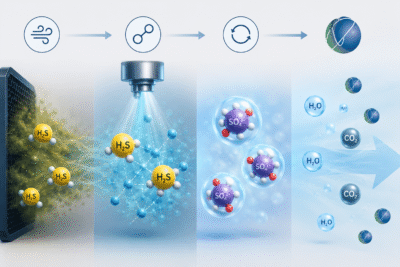
AirSolution 9149 is an Ecolo odor-counteractant formulation recommended in our landfill treatment strategy for outdoor and airborne odor-control applications.
Unlike conventional fragrances that primarily attempt to cover unpleasant smells, AirSolution technology is designed to counteract malodorous compounds.
The treatment is delivered into the surrounding air through properly designed misting or atomization equipment.
How AirSolution 9149 Is Applied
AirSolution 9149 can be used with:
Automated perimeter misting systems
A network of nozzles can be installed along selected facility boundaries.
These nozzles distribute a fine mist into the air, creating a treatment zone between the landfill and nearby receptors.
Working-face misting
Treatment nozzles can be positioned near active waste-handling operations to address odors released during unloading, spreading, and compaction.
Mobile misting and atomization
Mobile systems can provide treatment where fixed equipment is impractical or where the active odor source changes location.
Temporary treatment systems
Temporary misting may be appropriate during excavation, waste relocation, maintenance, or other short-term operations that create unusually high odor emissions.
Why Automated Treatment Matters
Landfill odor generation is not constant.
Emissions can change throughout the day depending on waste deliveries, operating activities, temperature, and weather conditions.
An automated misting system can be programmed to operate during processing hours, periods of increased odor generation, or other designated intervals.
This reduces reliance on manual spraying and supports more consistent treatment.
The appropriate nozzle spacing, operating frequency, dilution, and treatment area should be determined through a site-specific assessment.
4. Solution Two: BioStreme 111F for Direct Waste-Surface Treatment
Best suited for: Solid waste surfaces, temporary waste piles, compactors, containers, transfer areas, and contaminated equipment.
Airborne treatment is important, but some odor problems are best addressed directly at the material or surface producing the smell.
This is where BioStreme 111F can provide another treatment option.
BioStreme 111F is recommended for direct application to solid waste and contaminated surfaces where organic residue and decomposing material contribute to odors.
Typical Applications
BioStreme 111F can be applied to:
Active working-face surfaces
Temporary waste storage piles
Transfer station floors
Compactors
Waste containers and bins
Loading zones
Equipment surfaces
Other contaminated waste-handling areas
How Direct Treatment Works
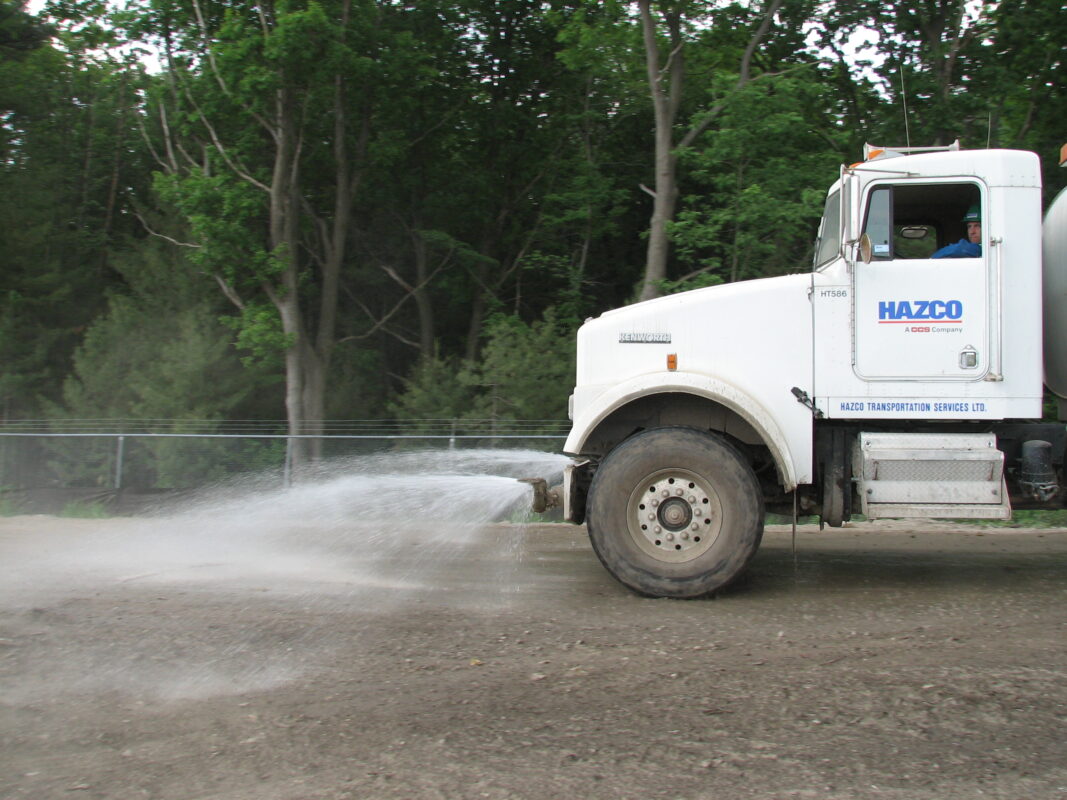
Instead of distributing the treatment primarily into the surrounding air, BioStreme 111F is applied directly to the affected material or surface.
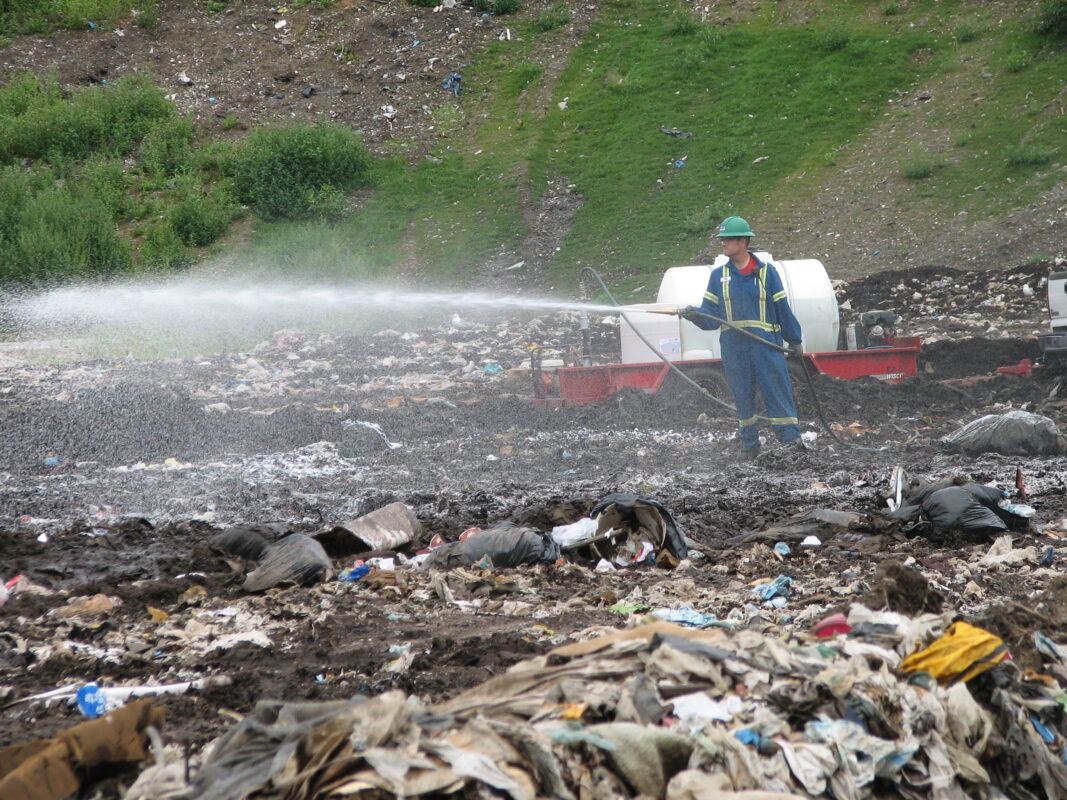
Application methods can include spraying, washdown, and targeted surface treatment.
This approach is particularly useful where odor is concentrated in organic residues, waste deposits, or contaminated equipment.
For example, a transfer station may experience persistent odors from waste residue accumulating around compactors and loading areas.
An airborne misting system may help manage odors in the surrounding space, while direct treatment can address the contaminated surfaces themselves.
Why Targeted Application Is Important
Not every square meter of a landfill requires the same treatment intensity.
Applying product to the highest-priority surfaces and waste-handling areas can help reduce unnecessary chemical consumption.
For operators, this means treatment can be focused on the areas that contribute most significantly to the odor problem.
5. Solution Three: BioStreme 101 for Landfill Leachate Treatment
Best suited for: Leachate ponds, holding tanks, collection pits, sumps, and wastewater systems.
Some of the strongest odors at a landfill may originate from the liquid phase rather than the waste surface.
Leachate can contain substantial concentrations of organic material and other compounds generated during waste decomposition.
Under unfavorable biological conditions, this can contribute to persistent odors.
Ecolo recommends BioStreme 101 in the attached landfill treatment program as a biological treatment option for leachate and organic wastewater applications.
Biological Odor Management
BioStreme technology is intended to support biological degradation of organic material and help manage odor generation at the source.
This is different from treating odors after they have entered the atmosphere.
The objective is to improve the conditions contributing to odor formation within the leachate or wastewater system.
Where BioStreme 101 Can Be Applied
Potential applications include:
Leachate ponds
Storage tanks
Collection pits
Sumps
Wastewater holding systems
Leachate pumping and transfer systems
Depending on the application, treatment may be introduced directly into the liquid or through a scheduled dosing arrangement.
Why Leachate Treatment Should Be Considered Separately
Consider a landfill experiencing odors from both its active working face and a leachate lagoon.
A perimeter misting system may help treat airborne odors moving toward neighboring properties.
However, it does not directly change the conditions within the leachate pond.
Likewise, a liquid-phase biological treatment does not automatically address every odor released during truck unloading and waste compaction.
The two approaches can complement one another.
AirSolution 9149 addresses airborne odors, while BioStreme 101 is intended to address odor generation associated with the leachate system.
Treatment recommendations should account for leachate volume, organic loading, retention time, and operating conditions.
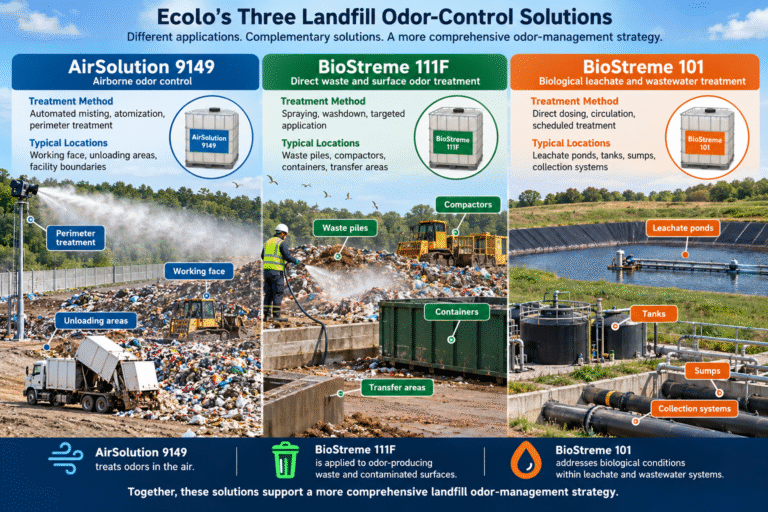
6. Comparing Ecolo's Three Landfill Odor-Control Solutions
Product Primary Application Treatment Method Typical Locations AirSolution 9149 Airborne odor control Automated misting, atomization, perimeter treatment Working face, unloading areas, facility boundaries BioStreme 111F Direct waste and surface odor treatment Spraying, washdown, targeted application Waste piles, compactors, containers, transfer areas BioStreme 101 Biological leachate and wastewater treatment Direct dosing, circulation, scheduled treatment Leachate ponds, tanks, sumps, collection systems The key distinction is where the treatment takes place.
AirSolution treats odors in the air.
BioStreme 111F is applied to odor-producing waste and contaminated surfaces.
BioStreme 101 addresses biological conditions within leachate and wastewater systems.
Together, these solutions support a more comprehensive landfill odor-management strategy.
7. Choosing the Right Odor-Control Equipment
Selecting the correct product is only part of the solution.
The delivery system determines where treatment is applied, how consistently it operates, and how effectively it reaches the target area.
Automated Misting Systems
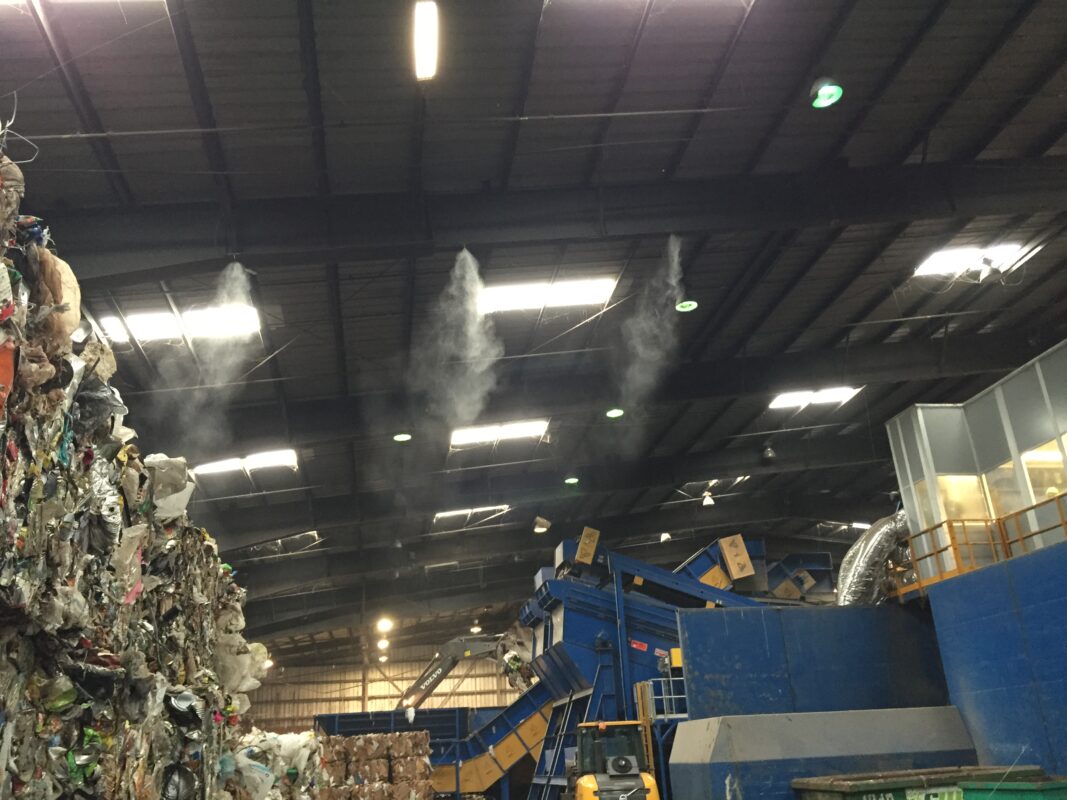
Automated misting equipment can distribute odor counteractants through networks of strategically positioned nozzles.
Ecolo's AMC technology can support fixed misting applications, including landfill perimeters and selected working areas.
These systems can be configured around operating schedules and treatment requirements.
They are particularly useful where odor sources remain in relatively predictable locations.
Mobile Atomization Systems
Mobile systems provide flexibility for large and changing treatment areas.
Potential applications include:
Active landfill cells
Excavation projects
Temporary waste storage
High-odor unloading operations
Emergency odor events
For facilities with moving working faces, mobile treatment can supplement permanent systems.
Direct Spraying Equipment
Direct spraying equipment can be used to apply BioStreme 111F to waste piles, contaminated surfaces, and equipment.
The application method should provide suitable contact with the affected material without unnecessary product use.
Leachate Dosing Systems
For leachate treatment, the equipment may include dosing pumps, injection points, circulation systems, or other arrangements appropriate to the pond or tank.
The dosing strategy should be selected according to wastewater characteristics and treatment objectives.
8. Case Study: Municipal Landfill Odor Control in Ontario, Canada
A municipal landfill in Ontario experienced persistent odor complaints from neighboring residents and nearby recreational facilities.
The facility needed an approach that could improve odor conditions while accommodating normal landfill operations.
Previous attempts to divert odors using high-powered fans had not provided sufficient control.
Localized deodorizing applications had also proved inadequate.
The Challenge
The landfill required a treatment system that could:
Reduce odors reaching nearby properties
Operate during regular processing hours
Address airborne emissions along a critical boundary
Reduce dependence on manual intervention
Support continued facility operations
Ecolo's Approach
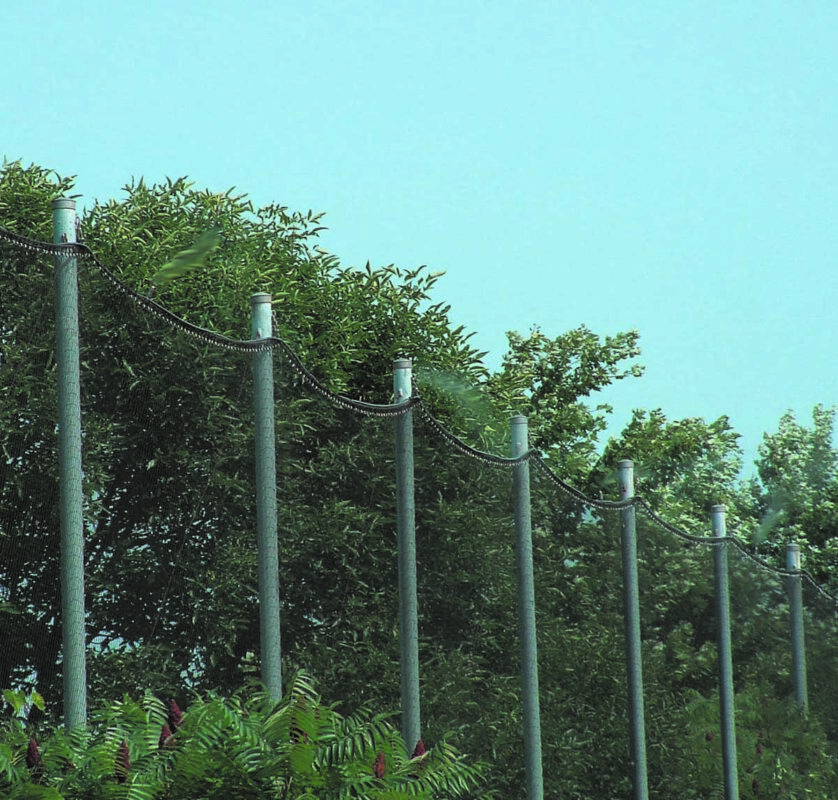
An automated misting system was installed along approximately 1,400 feet of perimeter fencing.
The installation included:
61 misting nozzles
One controller and pump assembly
A 500-gallon solution supply tank
Automated operating cycles
Treatment positioned between the landfill and neighboring properties
The system was programmed to operate for 30 seconds ON and 5 minutes OFF.
Its operating schedule covered 6:00 AM to 10:00 PM, Monday through Friday.
The historical case study used a legacy Ecolo AirStreme formulation, rather than the current AirSolution 9149 recommendation.
Reported Results
According to the documented case study:
The automated misting system was considered effective and cost-efficient.
The landfill manager reported a clear improvement in odor conditions.
Community odor complaints were greatly reduced.
The facility continued using the odor-control program after installation.
This example demonstrates how a targeted perimeter treatment strategy can help manage odor migration without attempting to treat every area of a landfill equally.
The important lesson is that nozzle positioning, operating schedules, and treatment location can be just as important as product selection.
9. Why Perimeter Odor Control Matters for Landfills Near Communities
Many landfills operate near residential neighborhoods, commercial properties, roads, or recreational areas.
Even when a facility follows appropriate waste-handling practices, unfavorable weather conditions can carry odors beyond the property boundary.
Wind direction is particularly important.
A treatment system installed on the wrong side of a landfill may provide limited value when the odor plume moves toward sensitive receptors elsewhere.
This is why perimeter odor-control design should consider:
Prevailing wind direction
Seasonal weather patterns
Nearby residential properties
Distance to sensitive receptors
Facility layout
Waste-handling locations
Operating hours
Historical odor complaints
The objective is to position treatment where it can intercept odor migration most effectively.
Perimeter misting should complement appropriate waste handling, cover practices, landfill-gas management, and other required environmental controls—not replace them.
10. An Integrated Odor-Control Program for a Large Landfill
Consider a municipal landfill receiving substantial quantities of mixed waste every day.
The facility has an active working face, temporary storage areas, leachate ponds, truck-washing facilities, and residential properties near its boundary.
Instead of relying on one product, Ecolo can develop a multi-layer treatment strategy.
Stage 1: Working-Face Odor Control
Use AirSolution 9149 through strategically positioned misting equipment to treat airborne odors released during unloading, spreading, and compaction.
Stage 2: Direct Waste Treatment
Apply BioStreme 111F to selected waste piles, contaminated surfaces, compactors, and other odor-generating areas.
Stage 3: Leachate Treatment
Evaluate BioStreme 101 for leachate ponds, holding tanks, sumps, and wastewater collection systems where biological conditions contribute to odor generation.
Stage 4: Perimeter Protection
Install automated misting equipment along critical property boundaries, especially those facing nearby communities.
Stage 5: Event-Based Treatment
Increase or adjust treatment during activities that may produce higher odor emissions, including:
Excavation
Waste relocation
Heavy deliveries
Equipment cleaning
High-temperature periods
Unfavorable wind conditions
Stage 6: Monitoring and Optimization
Track odor complaints, operating conditions, treatment consumption, and weather patterns.
Where appropriate, use H₂S monitoring, field observations, and other measurement methods to evaluate treatment performance.
This approach allows the odor-control program to evolve as facility operations change.
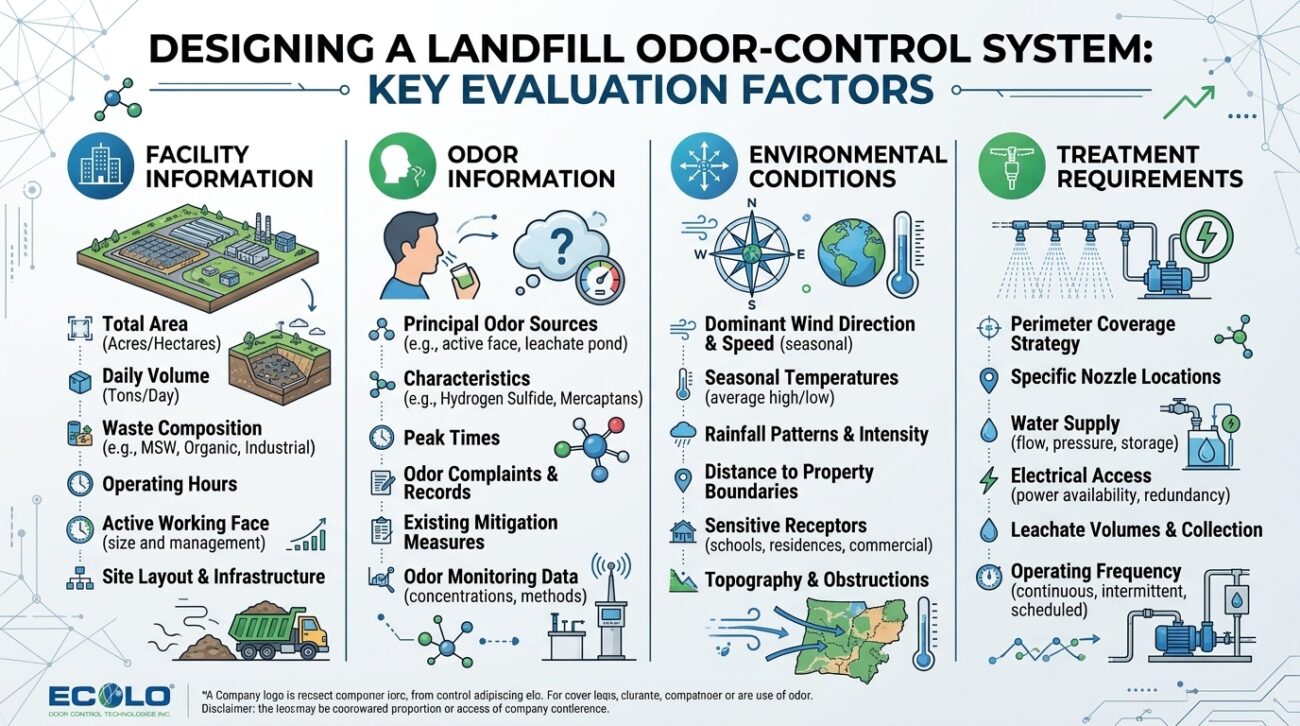
11. What Information Is Needed to Design a Landfill Odor-Control System?
Every landfill is different.
Before recommending a system, Ecolo evaluates several important factors.
Facility Information
Total landfill area
Daily incoming waste volume
Waste composition
Operating hours
Active working-face dimensions
Facility layout and access roads
Odor Information
Principal odor sources
Odor characteristics
Times when odor is strongest
Complaint history
Existing odor-control measures
Available odor-monitoring data
Environmental Conditions
Prevailing wind direction
Seasonal temperatures
Rainfall patterns
Distance to residential or commercial properties
Sensitive receptors near the facility
Treatment Requirements
Required perimeter coverage
Potential nozzle locations
Available water supply
Electrical availability
Equipment access
Leachate volumes
Required operating frequency
With this information, Ecolo can recommend suitable products, equipment configurations, application methods, and preliminary treatment schedules.
Where appropriate, a controlled trial can help confirm performance before full-scale implementation.
12. Why Landfill Operators Should Consider a Multi-Layer Strategy
Landfill odor management becomes more challenging when facilities rely on a single treatment method for every problem.
A perimeter misting system may help reduce off-site odor migration but may not fully address odors from contaminated equipment.
Direct surface treatment may improve localized waste odors but may not adequately manage emissions from a large leachate pond.
Biological leachate treatment may help reduce odor generation in liquid systems but cannot replace airborne treatment around the active working face.
Combining technologies provides greater flexibility.
A multi-layer approach can help facilities:
Address multiple odor sources
Improve control of airborne odor migration
Target high-priority waste surfaces
Manage odor generation within leachate systems
Adapt treatment to changing operations
Reduce unnecessary chemical application
Respond more effectively to weather-related odor events
Support better relationships with neighboring communities
The goal is not to apply more product everywhere.
The goal is to apply the appropriate treatment in the appropriate location.
13. Frequently Asked Questions About Landfill Odor Control
What is the most effective way to control landfill odors?
The most appropriate approach depends on the odor source.
Working-face odors may require airborne treatment, while contaminated waste surfaces may benefit from direct spraying. Leachate odors may require biological or other liquid-phase treatment.
Many facilities benefit from combining multiple methods.
Can landfill odors be controlled without masking them with fragrance?
Yes. Odor-control technologies can be designed to counteract malodorous compounds rather than relying exclusively on fragrance.
Effective treatment depends on selecting an appropriate formulation and providing sufficient contact with the odor source or airborne compounds.
How do landfill misting systems work?
Misting systems distribute a diluted odor-control formulation through strategically positioned nozzles.
They can be installed near working faces, unloading areas, or facility perimeters.
Automated controllers allow the treatment schedule to be adjusted according to operational requirements.
Can odor-control systems operate automatically?
Yes. Automated misting systems can be programmed to operate during selected hours or treatment cycles.
This can reduce the need for continuous manual application.
What is the difference between landfill perimeter misting and direct waste treatment?
Perimeter misting treats airborne odors moving toward property boundaries.
Direct waste treatment applies the formulation to waste material or contaminated surfaces where odors originate.
Can leachate treatment help reduce landfill odors?
Yes, where leachate is contributing to odor generation, an appropriate liquid-phase treatment program may help address the source.
Product selection and dosing should account for leachate characteristics and site conditions.
How much does a landfill odor-control system cost?
Costs depend on treatment area, system type, nozzle count, piping, automation, chemical consumption, operating frequency, and installation requirements.
A site-specific assessment is needed to develop a meaningful estimate.
14. Partner With Ecolo for Landfill and Solid Waste Odor Control
Ecolo Odor Control Technologies is a Canadian company with decades of experience developing odor-control solutions for municipal, industrial, commercial, and environmental applications.
We work with landfill operators, waste management companies, environmental contractors, and municipalities to identify practical treatment strategies for challenging odor sources.
Our landfill odor-control approach combines:
AirSolution 9149 — Airborne odor neutralization and perimeter misting.
BioStreme 111F — Direct treatment of solid waste and contaminated surfaces.
BioStreme 101 — Biological treatment of leachate and organic wastewater systems.
Automated and mobile application equipment — Delivery technologies designed around facility requirements.
Whether your landfill is experiencing complaints from neighboring communities, managing odors at the working face, or dealing with persistent leachate odors, our team can help evaluate the application.
Let's Build the Right Odor-Control Strategy for Your Landfill
Every landfill has its own operating conditions, waste characteristics, weather patterns, and neighboring receptors.
A successful odor-control program should reflect those differences.
Contact Ecolo Odor Control Technologies to discuss your landfill odor challenges, request a technical consultation, or explore a site-specific treatment program.
We also welcome collaboration with waste management contractors, environmental engineering firms, and service providers interested in incorporating professional odor-control technologies into their projects.
Ecolo Odor Control Technologies Inc.
Website: www.ecolo.com | www.ecolofresh.com
Email: info@ecolo.com
Control odors at the source. Treat them in the air. Protect the surrounding community.