
Maintenance & Optimization: Maximizing Odour System Life

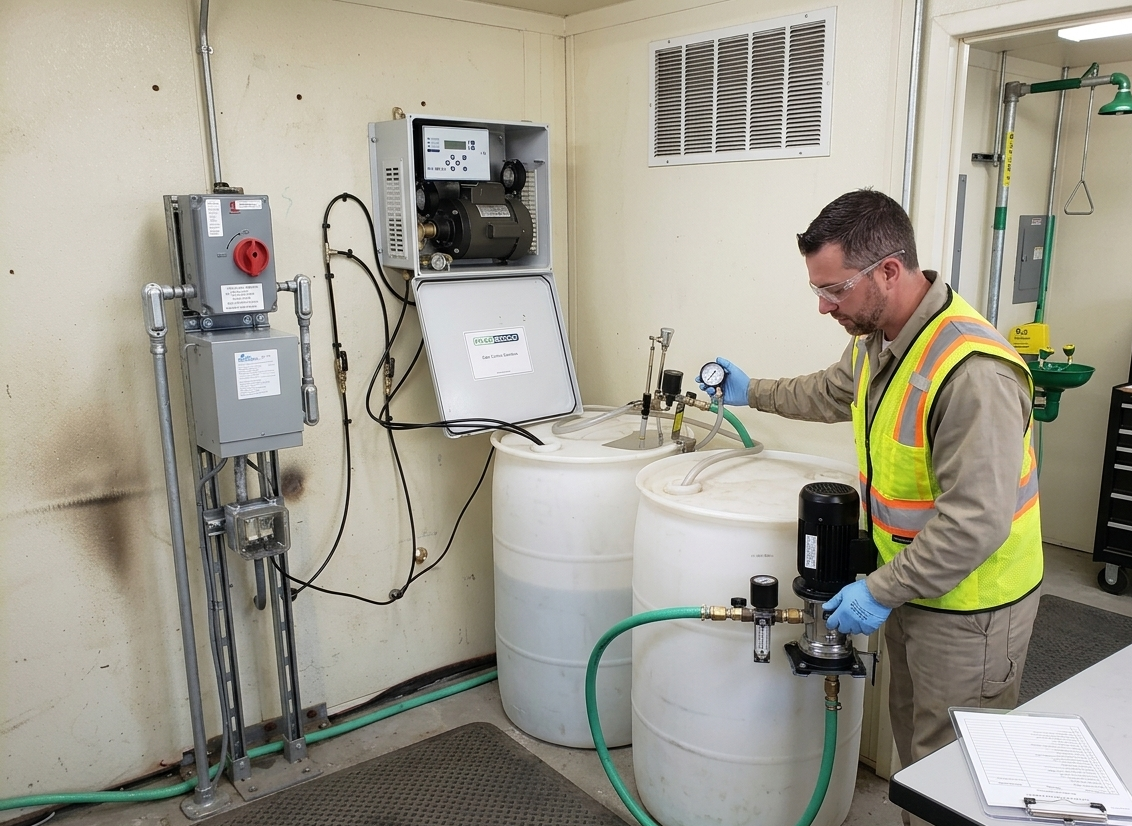
Odour control systems are vital assets in industries ranging from wastewater treatment and food processing to greenhouses and solid waste management. They keep facilities compliant, protect public health, and preserve community trust.
Yet, even the most advanced odour systems—whether biological, chemical, or mechanical—require ongoing maintenance and optimization to perform at peak efficiency. Without it, system degradation can lead to reduced odour capture efficiency, increased energy use, and shortened equipment life.
This comprehensive guide explores the best practices in maintenance odour control, covering filter replacement, calibration, system cleaning, and performance optimization strategies that keep your equipment reliable and your air clean.
1. Why Maintenance Matters in Odour Control
1.1 Odour Systems as Operational Assets
An odour control system is not a set-and-forget solution—it’s an integral part of your facility’s environmental infrastructure. Whether you’re using chemical scrubbers, biofilters, or misting systems, performance depends on routine inspection, calibration, and component upkeep.
Without proper maintenance, you risk:
- Reduced neutralization effectiveness
- Clogged nozzles or air diffusers
- Increased pressure drops in filters
- Chemical overdosing or underdosing
- Corrosion or scaling from untreated vapours
These issues don’t just affect system lifespan—they can trigger regulatory violations, complaints, or production downtime.
👉 Reference: U.S. EPA – Odor Control Technologies and Maintenance Guidelines
1.2 The True Cost of Neglected Maintenance
Poorly maintained odour control systems often result in:
- Reduced treatment efficiency: Chemical or biological systems lose reactivity.
- Higher operating costs: Overuse of neutralizing agents or energy.
- Unplanned downtime: Equipment failure or clogging.
- Odour complaints: Regulatory risk and community impact.
The financial impact extends beyond repair costs—it includes lost productivity, brand damage, and potential penalties for air quality violations.
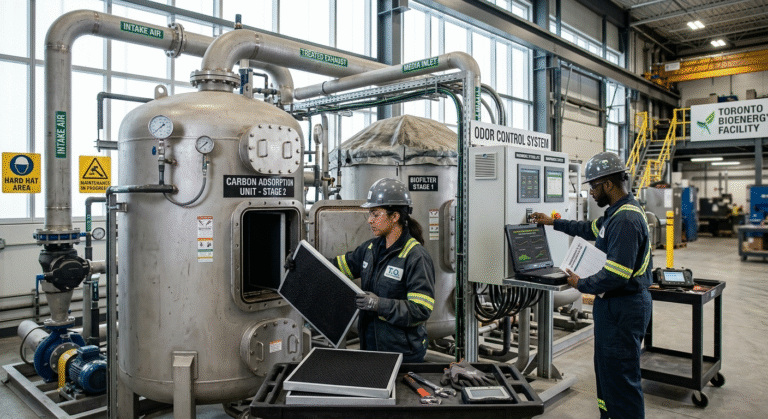
2. Understanding the Components of an Odour Control System
Before optimizing performance, it’s critical to understand the key components and their maintenance needs.
System Type | Core Components | Maintenance Focus |
Chemical scrubbers | Pumps, pH control, mist eliminators, demisters | Chemical concentration, nozzle cleaning |
Biofilters | Media bed, humidifiers, blowers | Media moisture, microbial health |
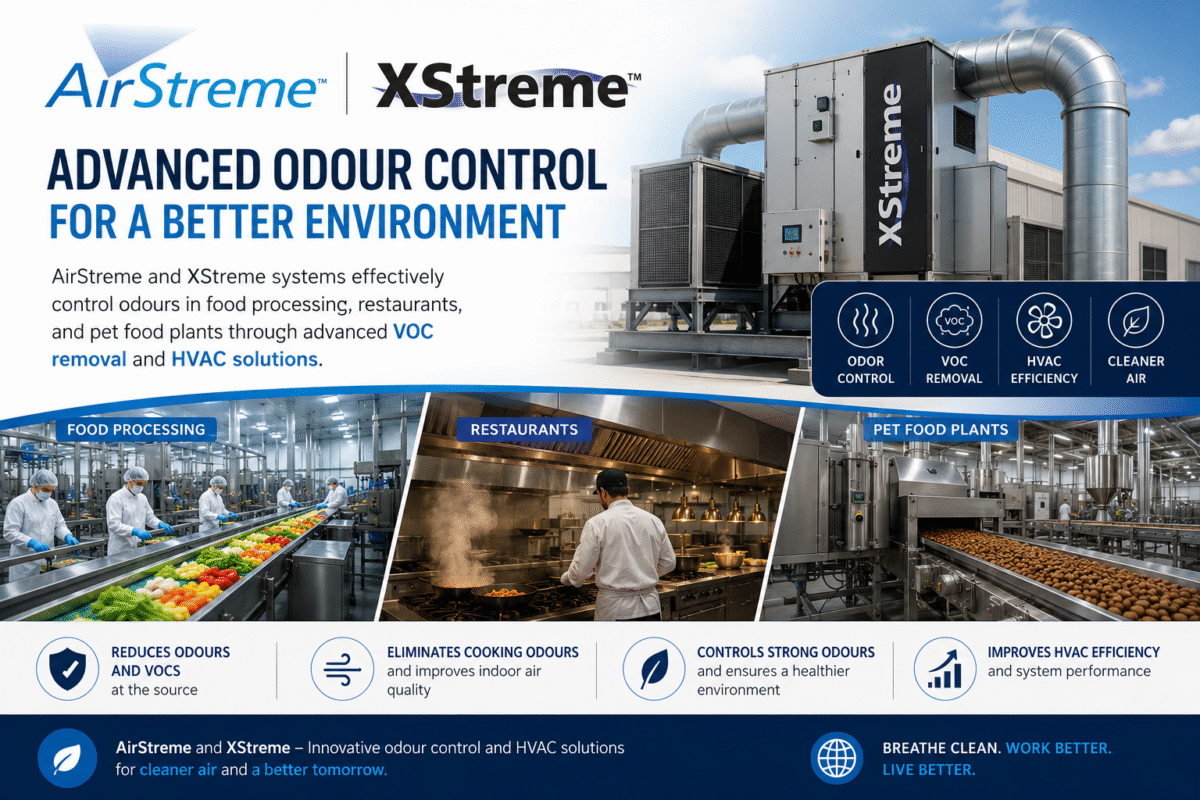
Misting systems (XStreme) | Nozzles, filters, pumps, hoses | Pressure balance, nozzle cleaning |
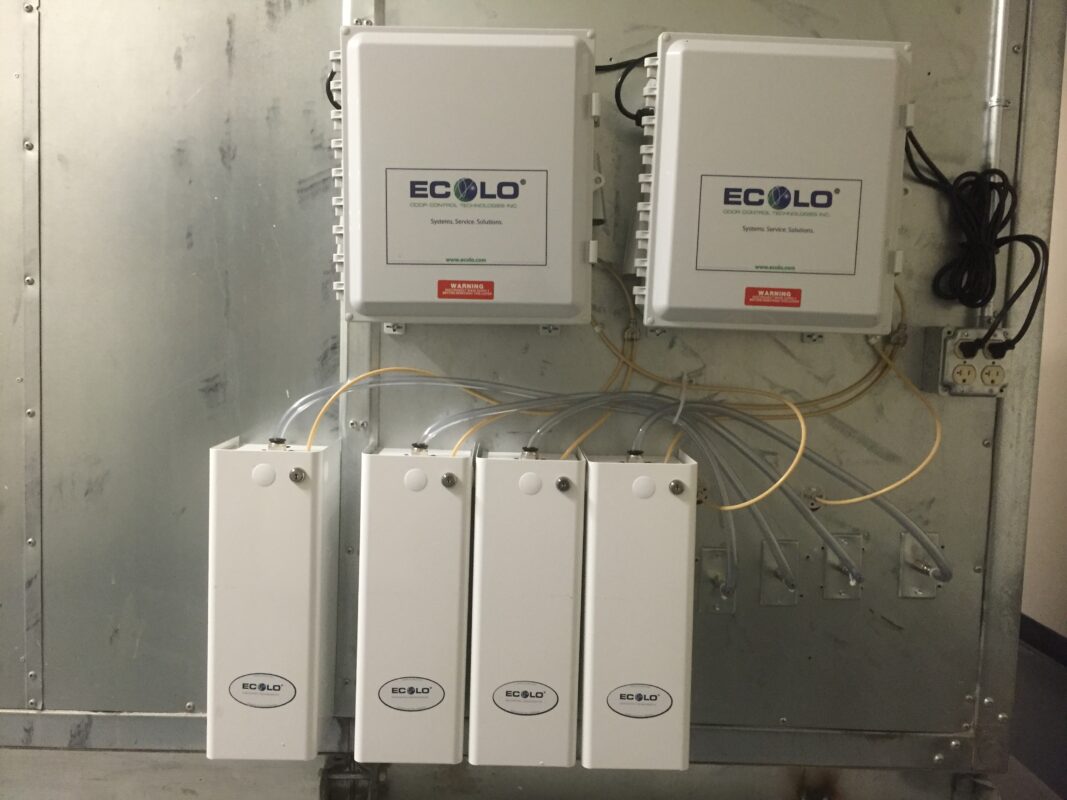
Odour neutralizers (AirSolution) | Dosing tanks, mixing systems | Chemical dilution, flow rate |
Biological additives (BioStreme) | Feed systems, dosing pumps | Consistent microbial dosing |
Each element contributes to total system efficiency. Maintenance ensures these parts operate synergistically.
3. Scheduled Maintenance: Building a Preventive Program
3.1 Daily and Weekly Checks
Daily inspections help identify issues before they escalate.
- Verify pressure and flow rates in misting or dosing systems.
- Check for leaks or drips around pump seals and fittings.
- Inspect chemical or neutralizer levels (e.g., AirSolution tanks).
- Confirm filter pressure drop readings remain within specifications.
- Observe any unusual odours—they often indicate performance decline.
👉 Reference: ASHRAE – Preventive Maintenance for Air Handling and Ventilation
3.2 Monthly Maintenance
Perform a more detailed review:
- Clean or replace intake filters and mist nozzles.
- Flush dosing lines with clean water.
- Test pump calibration to confirm flow accuracy.
- Inspect corrosion-prone parts in scrubbers or biofilter casings.
- Log system readings for trend tracking.
3.3 Quarterly and Annual Maintenance
Quarterly servicing ensures deeper optimization:
- Replace activated carbon filters or scrubber media as per design life.
- Verify sensor calibration (H₂S, NH₃, VOC).
- Review airflow and pressure differentials across duct systems.
- Conduct chemical performance tests (neutralizer concentration).
- Audit biological systems for media condition and microbial activity.
Annual maintenance should include comprehensive system cleaning, inspection of seals and gaskets, and data analysis to optimize long-term performance.
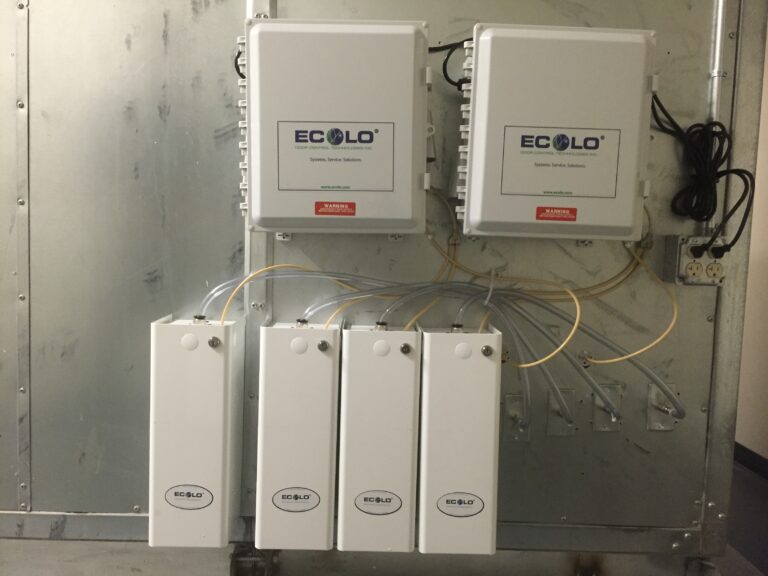
4. Filter Replacement: The Foundation of Maintenance Odour Control
4.1 Why Filters Are Critical
Filters act as the first line of defence, trapping particulates, droplets, and aerosolized compounds before they enter sensitive components. Over time, filters become saturated, increasing pressure drops and reducing airflow efficiency.
Symptoms of clogged or exhausted filters:
- Reduced odour neutralization effectiveness
- Increased back pressure in ducts
- Overworked fans or pumps
- Noticeable odour leakage
4.2 Filter Replacement Intervals
Typical replacement intervals vary based on system type and operating conditions:
Filter Type | Recommended Replacement Frequency |
Pre-filters / mesh screens | Monthly or as needed |
Activated carbon filters | 3–6 months (monitor via pressure drop) |
HEPA or fine filters | Every 6–12 months |
Chemical scrubber media | Annually or upon efficiency drop |
Regular filter replacement improves airflow, odour capture, and energy efficiency.
👉 Reference: IFMA – Facility Maintenance Best Practices
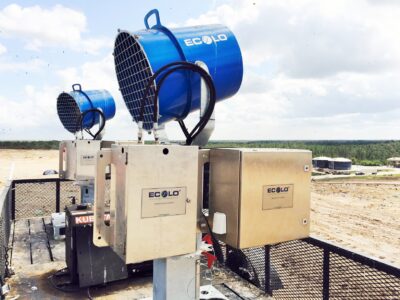
5. Optimizing System Performance
5.1 Calibration and Flow Control
Proper dosing and flow control ensure consistent odour removal.
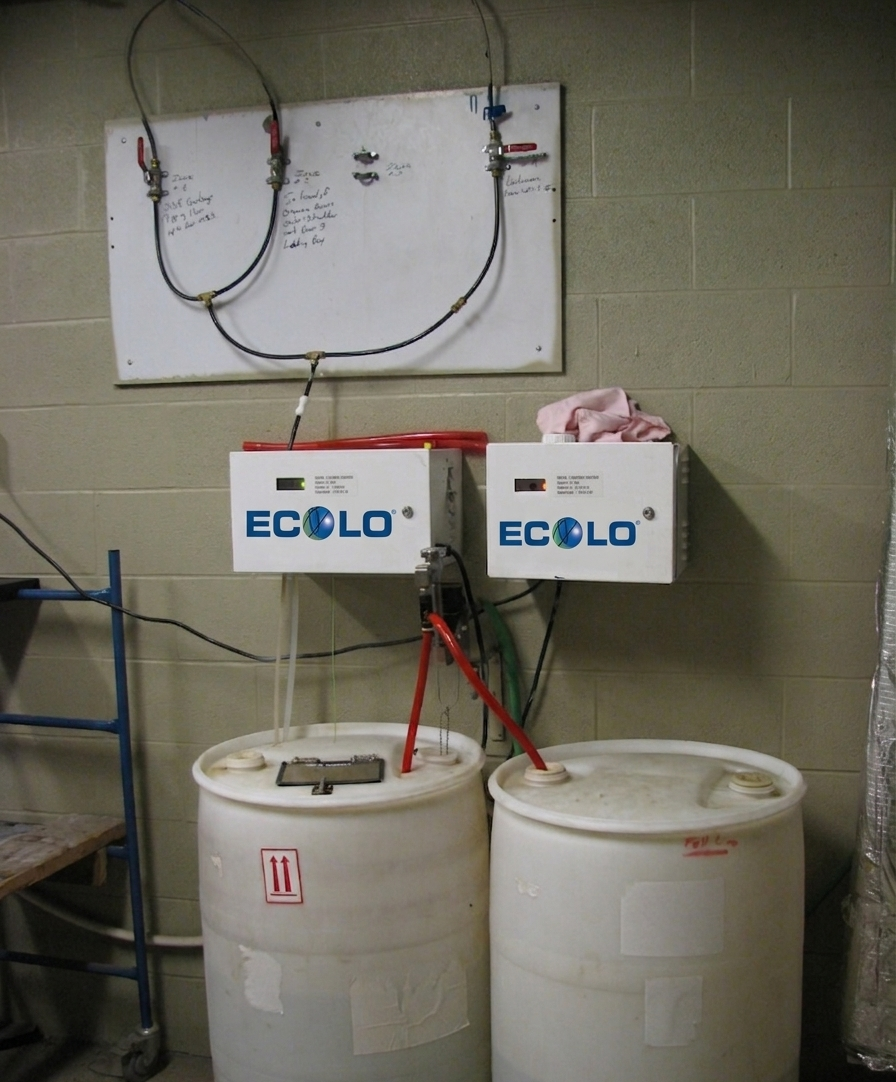
- Use flow meters to calibrate neutralizer injection (e.g., AirSolution systems).
- Adjust misting pressure to optimize droplet size in XStreme systems.
- Calibrate pH control systems in chemical scrubbers regularly.
Even a 10% deviation in dosing can reduce effectiveness by 30% or more.
5.2 Cleaning and Descaling
In misting or humidifying systems, mineral buildup and residue can block nozzles or lines.
- Use soft water or install inline descalers.
- Clean mist nozzles weekly with a mild acid rinse (citric or phosphoric).
- Flush pumps and lines with clean water at least monthly.
This ensures consistent atomization, droplet size, and even distribution.
5.3 Monitoring Biological Health
For bio-augmentation systems like BioStreme, microbial health directly affects odour suppression.
- Check for oxygen levels in tanks or compost beds.
- Ensure temperature remains within biological tolerance (20–40°C).
- Reapply product if microbial activity drops (indicated by odour rebound).
Optimizing biological balance ensures long-term system stability.

6. Data-Driven Maintenance: Using Metrics for Optimization
6.1 Key Performance Indicators (KPIs)
Tracking measurable data helps predict issues before they occur.
KPI
Target Range
Purpose
Pressure differential (filters)
<150 Pa
Indicates clogging
Pump pressure
±10% of spec
Ensures atomization consistency
Neutralizer dosing rate
±5%
Prevents waste or underperformance
Odour units (OU/m³)
<500
Compliance and performance indicator
Energy consumption
Stable
Detects inefficiency or leaks
6.2 Remote Monitoring and Smart Controls
Modern odour control systems like XStreme now integrate with IoT sensors and SCADA systems, enabling:
- Real-time monitoring of flow, pressure, and humidity.
- Automatic alerts for filter clogging or low tank levels.
- Data analytics to predict maintenance needs.
👉 Reference: ScienceDirect – Smart Monitoring in Air Pollution Control
- Real-time monitoring of flow, pressure, and humidity.
7. Extending Equipment Lifespan Through Optimization
7.1 Reducing Corrosion and Wear
Corrosive gases (H₂S, ammonia, VOCs) degrade metal surfaces and seals. Regular AirSolution misting helps neutralize acidic compounds before they cause corrosion.
Additionally:
- Inspect for condensation near ducts or fans.
- Apply protective coatings to high-risk components.
- Use stainless-steel or PVC components in humid environments.
7.2 Balancing Airflow
Unbalanced airflows cause uneven mist distribution and odour bypass.
- Conduct airflow mapping annually.
- Adjust fan speed and vent louvers.
- Recalibrate misting line spacing for even coverage.
This improves odour neutralization and prevents system strain.
8. Common Maintenance Mistakes to Avoid
Mistake
Impact
Ignoring filter replacement schedules
Reduced airflow and efficiency
Using unapproved cleaning agents
Corrosion or biofilm disruption
Overdosing chemical neutralizers
Wasted product and residue buildup
Skipping microbial dosing cycles
Anaerobic odour resurgence
Operating without data logs
No performance trend tracking
Preventive maintenance is always cheaper and safer than reactive repair.
- Inspect for condensation near ducts or fans.
9. Training and Documentation
9.1 Staff Training
Operators should understand not just how to maintain systems, but why. Training should cover:
- Odour chemistry basics
- Equipment cleaning procedures
- Safe chemical handling
- Biological system reactivation
Certified maintenance teams reduce error rates and improve safety compliance.
9.2 Documentation and Record-Keeping
Maintain detailed logs of:
- Filter replacements and chemical refills
- Pump calibrations
- Sensor readings
- Service reports
These records support ISO 14001 and environmental audit compliance.
👉 Reference: ISO – Environmental Management and Documentation Requirements
10. The Role of Manufacturers and Service Partners
Partnering with your odour system manufacturer or service provider ensures long-term success.
Service contracts often include:
- Scheduled maintenance visits
- Filter and chemical supply programs
- System calibration and performance audits
- Training and certification updates
Working with experts helps optimize costs and ensures consistent system reliability.
11. Case Study: Wastewater Odour System Optimization
Facility: Municipal wastewater treatment plant (300,000 population equivalent)
System: Combination of chemical scrubbers and misting units
Challenge: Rising odour complaints and high neutralizer consumption
Action:
- Replaced pre-filters and calibrated dosing pumps
- Cleaned misting nozzles and adjusted droplet size
- Introduced BioStreme dosing into headworks tank
- Conducted airflow balancing with XStreme misting lines
Results:
- 40% chemical savings
- 85% odour reduction
- Stable pH and reduced corrosion in exhaust ducts
- Extended filter life from 4 to 9 months
This shows how maintenance plus optimization translates directly into cost efficiency and system longevity.
12. Sustainability and Energy Efficiency
Odour control systems optimized for maintenance consume less energy, water, and chemical resources.
Sustainability benefits:
- Lower carbon footprint via energy-efficient misting
- Reduced chemical waste with precise dosing
- Improved equipment lifespan reduces manufacturing demand
- Compliance with green building standards (LEED, ISO 14001)
👉 Reference: UN Environment – Sustainable Industrial Operations
13. Future of Odour System Optimization
Emerging technologies are transforming odour control maintenance into a predictive science.
Innovations include:
- AI-driven maintenance predicting filter saturation and dosing needs.
- IoT-linked misting systems that adapt to VOC or humidity fluctuations.
- Self-cleaning nozzles for automatic scale prevention.
- Cloud-based reporting dashboards for environmental managers.
Facilities that adopt smart maintenance tools will enjoy longer system lifespans and superior regulatory compliance.
14. Maintenance Checklist Summary
Frequency | Task | Notes |
Daily | Check pressures, levels, and leaks | Record readings |
Weekly | Flush misting lines, inspect nozzles | Prevent clogging |
Monthly | Replace filters, calibrate pumps | Review energy use |
Quarterly | Audit system performance | Adjust dosing |
Annually | Replace major media, inspect structure | Rebalance airflow |
Consistency builds reliability—and reliability protects both performance and compliance.
15. Conclusion: Maintenance Is Optimization
Effective maintenance odour control isn’t about fixing failures—it’s about preventing them. Regular filter replacement, system optimization, and data-driven upkeep ensure that your odour systems—whether biological, mechanical, or hybrid—perform at their full potential year after year.
By investing in proactive maintenance:
- You extend system lifespan
- You reduce operational costs
- You maintain compliance
- You protect brand and environmental integrity
Odour control systems are the silent guardians of your facility’s air quality. Keep them clean, calibrated, and optimized — and they’ll keep your air clean, too.