
Odour Management in Wastewater Treatment Plants: From Headworks to Lagoons


Odour control in wastewater treatment plants (WWTPs) is no longer simply a “nuisance mitigation” task—it is a core operational, community-relations and regulatory concern. From raw influent headworks to sludge dewatering areas, from aeration basins to open lagoons, every stage of the process has odour potential. Without a structured strategy, facilities risk regulatory non-compliance, corrosion damage, and community complaints.
In this article, we’ll walk you through a full-plant approach: headworks → primary treatment → aeration/activated sludge → sludge handling → final effluent ponds/lagoons. We will highlight the key odour mechanisms (with particular attention to H₂S and sulphide generation), and show how combining a biological odour control solution (such as BioStreme) with a surface treatment / neutralizer system (such as AirSolution) can deliver an integrated approach that covers both surface/air-phase odours and underlying microbial balance.
1. Understanding Wastewater Odour Mechanisms
1.1 What causes wastewater odour?
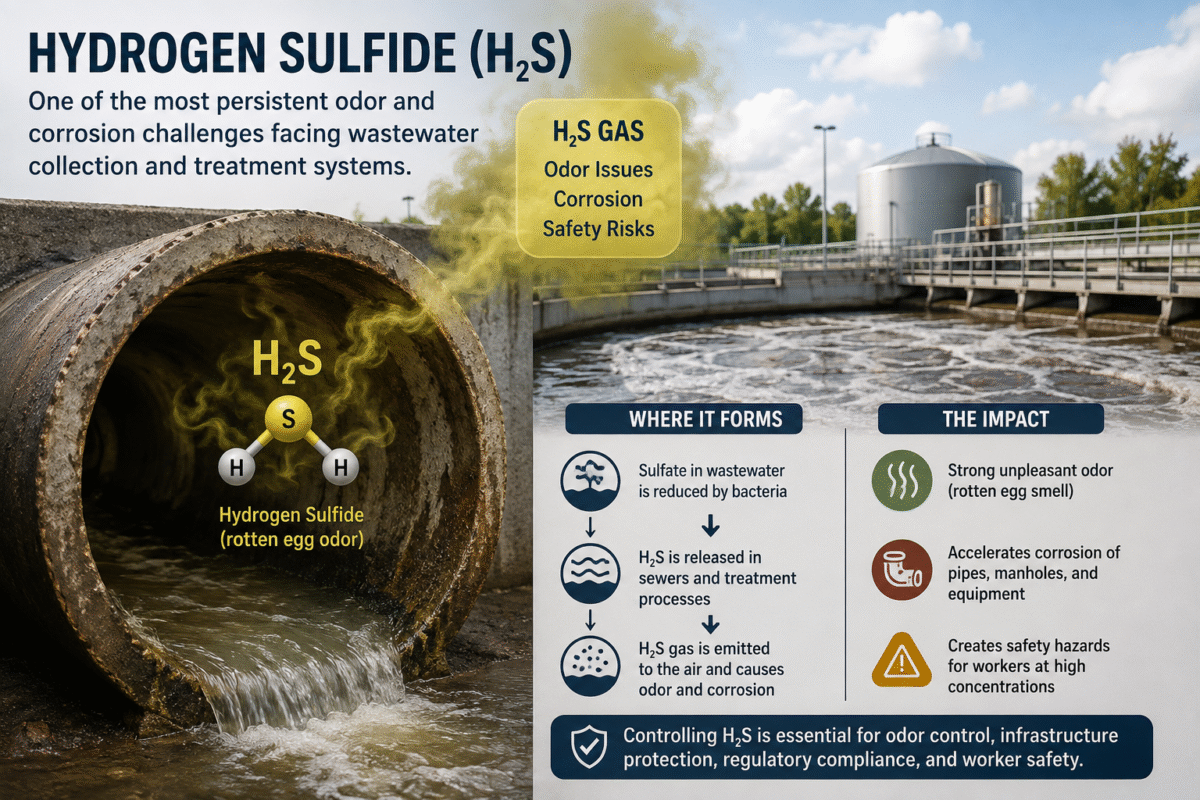
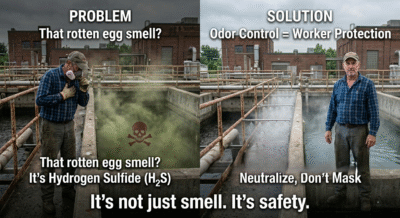
At WWTPs, the odour profile typically includes hydrogen sulfide (H₂S), mercaptans, ammonia, volatile fatty acids (VFAs), and amines. Among these, H₂S stands out as the most common culprit for the characteristic “rotten egg” smell. parklink.com.au+2PubMed+2
1.2 Role of anaerobic conditions and sulphate-reducing bacteria (SRB)
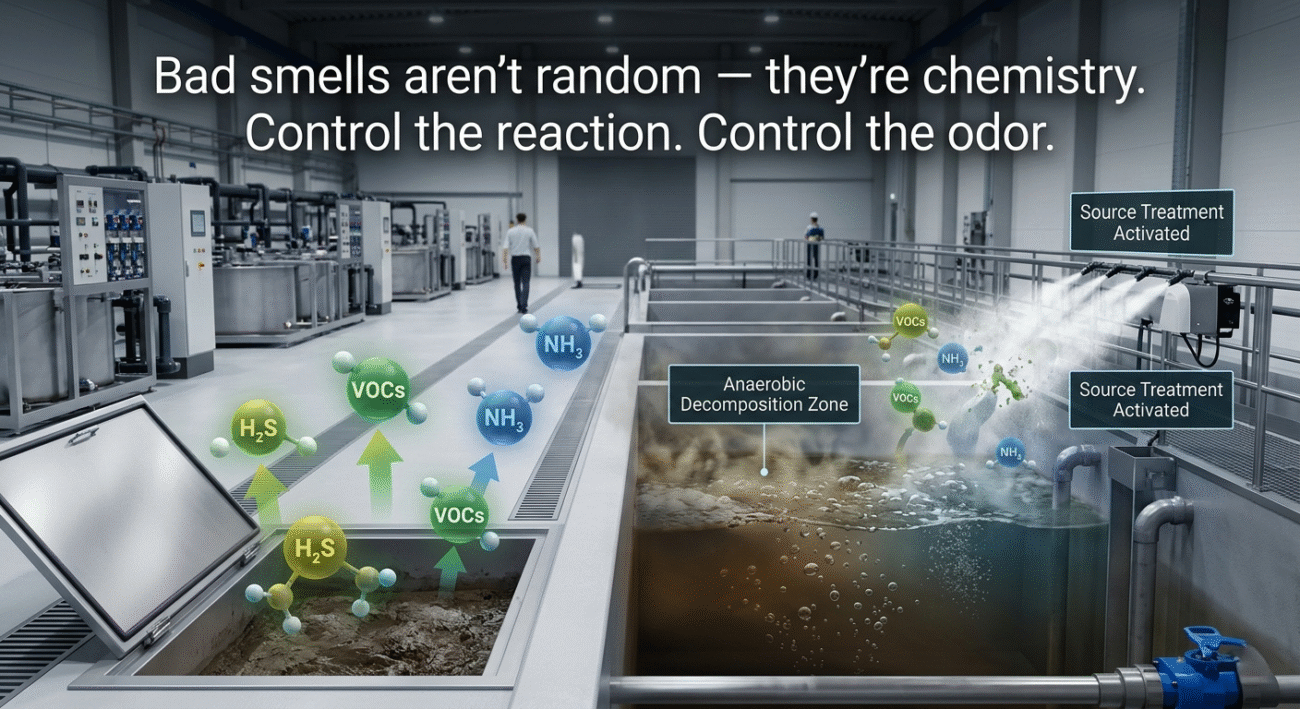
When conditions in wastewater become anaerobic—such as in stagnant zones, sludge blankets, or un-aerated basins—sulphate-reducing bacteria (SRB) utilise sulphate and organic matter to produce sulphide ions, which convert to H₂S gas when pH and other factors permit. ebsbiowizard.com+1
1.3 Sludge, aeration, and H₂S emissions
Sludge accumulation and poor mixing can create pockets of anaerobic conditions. Aeration controls this—but if aeration is inconsistent, or sludge return loads are too high, H₂S generation and stripping can occur. A study found that H₂S emissions in certain units were high enough to pose health risks. Nature
1.4 Odour from open surfaces, lagoons, and air-water interface
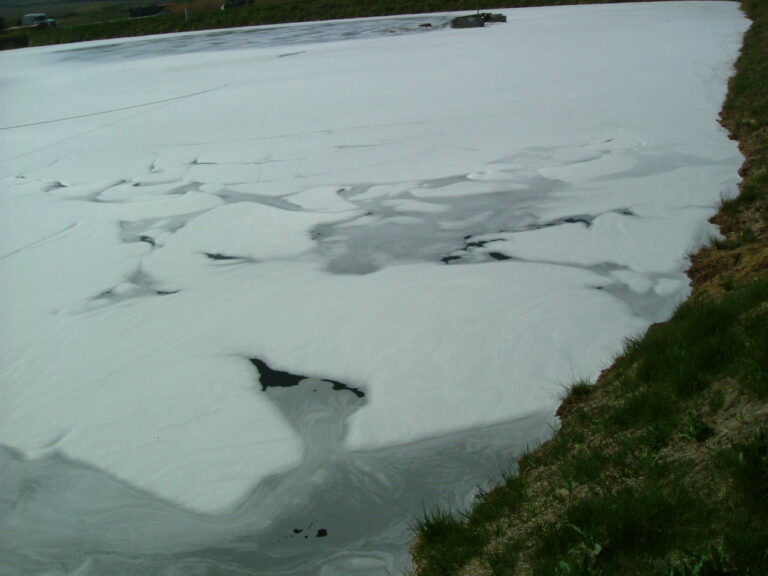
Large open surfaces—such as final effluent ponds, aerated basins, or lagoons—allow odourants to escape to the atmosphere via air-water mass transfer. Emission rates correlate with surface area, aeration method, DO (dissolved oxygen) levels, and stripping potential. Nature
1.5 Corrosion and secondary impacts
Beyond smell, H₂S and other reduced sulphur compounds contribute to corrosion of infrastructure (concrete, metal), backups, and maintenance issues. Effective odour control is thus part of asset-protection strategy. teamaquafix.com
2. A Stage-by-Stage Odour Management Framework
Keywords: wastewater odour, aeration, sludge
2.1 Headworks & Influent Channels
Risk factors: Screening, grit removal, primary flow surge, stagnant channels. Odours may emanate from trapped solids, long detention times, or recirculated flows.
Strategies:
- Enclose or ventilate channels.
- Maintain flow velocity to avoid sedimentation.
- Use upstream dosing or chemical neutralisation if required.
- Introduce biological stimulants (ex: BioStreme) to enhance aerobic breakdown.
2.2 Primary Clarification / Sludge Thickening
Risk factors: Organic load, scum and sludge blanket, light aeration. If primary clarifier remains anaerobic in parts, sulphide may form.
Strategies:
- Ensure adequate hydraulic design and sludge withdrawal frequency.
- Monitor sludge blanket levels.
- Apply surface neutraliser mist (AirSolution) at vents or weirs to capture odour release.
- Supplement with aerobic biological product (BioStreme) to reduce organics early and limit downstream odour.
2.3 Aeration / Activated Sludge Basins
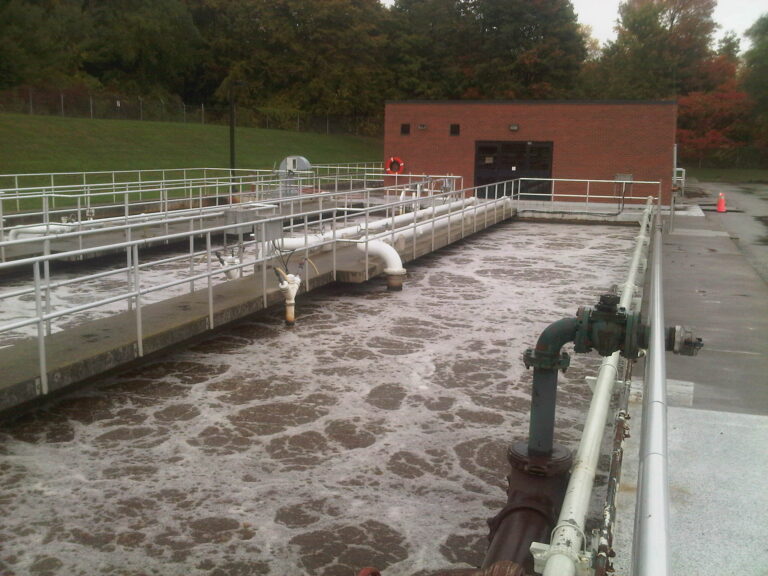
Risk factors: Aeration failure, overdosing, return sludge imbalance. Poor DO (<1 mg/L) or over-recycled sludge can cause anaerobic micro-zones.
Strategies:
- Use fine bubble diffusers to maximise O₂ transfer and reduce anaerobic pockets. Wikipedia+1
- Maintain dissolved oxygen levels above threshold.
- Deploy BioStreme nutrient/enhancer downstream of aeration to stabilise microbial population and avoid SRB dominance.
- At air exhaust points or covered zones, use AirSolution misting/atomising system for odour capture.
2.4 Secondary Clarification & Sludge Handling
Risk factors: Sludge storage under low oxygen, thick sludge layer, dewatered sludge cake odours.
Strategies:
- Rapid sludge removal schedules.
- Dewatering and drying zones ventilated and treated (AirSolution) for odour capture.
- Use BioStreme dosing in sludge holding tanks to biologically stabilise sludge and limit odour precursor formation.
2.5 Digesters, Sludge Storage & Lagoons
Risk factors: Highly anaerobic environments, large surface area lagoons, seasonal stratification. H₂S formation often peaks here.
Strategies:
- Cover lagoons or apply oxygenation where feasible.
- Use biological dosing (BioStreme) to shift microbial balance away from SRB.
- For open surface lagoons, apply AirSolution surface diffusion/misting to retard odour release and treat escaping gases.
Monitor H₂S concentrations and ambient odour levels; target <1 ppm where possible. Nature+1
3. Introducing BioStreme + AirSolution: A Combined Approach
Keywords: BioStreme, AirSolution, wastewater odour
Combining biological treatment and surface/air-phase neutralisation gives WWTPs a multi-layered odour defence. Let’s break down how the two products complement each other.
3.1 BioStreme (201/202) – Biological Odour Control
BioStreme is a biological odour control solution tailored to wastewater operations. Through nutrient blends, microbial stimulation, or engineered microbial additives, BioStreme aims to:
- Enhance aerobic/ facultative microbial activity.
- Suppress sulphate-reducing bacteria (SRB) in key zones.
- Reduce odour precursor compounds (e.g., sulfide, VFAs) at their source.
- Improve sludge stability and reduce odour-generating backlogs.
By addressing the root cause of odour (i.e., anaerobic/sulphide formation), BioStreme reduces reliance on downstream chemical dosing and enhances plant performance and odour resilience.
3.2 AirSolution (9100) – Surface Treatment & Air-Phase Neutralisation
AirSolution is a complementary solution focused on air/surface physics:
- High-performance misting or atomising systems deliver odour-neutralising chemistry into the air space at vents, open tanks, clarifier weirs, sludge holding rooms.
- Targeted neutralisation of escaping gases (H₂S, mercaptans, VFAs) via chemical bonding or oxidation.
- Reduces odour breakthrough events and community impact—even if upstream biological control is still stabilising.
3.3 Why Combined Use Works
- Upstream (BioStreme): Reduces odour source formation under water or sludge.
- Mid/Downstream (AirSolution): Captures escaping odours at air-water interface or ventilation points.
- Redundancy & resilience: Even if biological control lags, you have air-phase mitigation; even if misting cannot access certain subsurface zones, bio treatment stabilises those zones.
Cost efficiency: Biological control reduces chemical dosing; surface neutralisation reduces required coverage and intensity of misting by reducing load.

4. Practical Implementation and Best Practices
4.1 Intake & Headworks Strategy
- Deploy BioStreme dosing early in influent channels to pre-empt sulphide formation.
- Vent screening and grit basins; place AirSolution atomiser near air exhaust to neutralise smell at source.
4.2 Aeration Basin & Secondary Treatment
- Confirm DO targets and ensure fine bubble aeration.
- Dosing BioStreme at influent and return sludge lines helps stabilise microbial ecology.
- AirSolution misting at exhaust ducts or open clarifier edges can neutralise escape gases.
4.3 Sludge Handling, Storage & Dewatering
- Tanks or hoppers where sludge holds should receive BioStreme to suppress anaerobic zones.
- Dewatering areas may be ventilated with AirSolution misting/spray to cleanse odourous aerosols.
4.4 Open Lagoons and Effluent Ponds
- Large surface area = increased risk of H₂S and odour emission. Nature
- Consider floating diffusers, covers, or AirSolution surface misting to form a ‘blanket’ of neutralisation.
- Periodic BioStreme dosing in lagoon influent or bypass recirculation zones keeps sulphide formation in check.
4.5 Monitoring, Feedback & Optimization
- Use H₂S sensors (headworks, sludge tanks, lagoons) to track performance.
- Track odour complaints, maintenance logs, chemical usage.
- Adjust BioStreme dose or frequency based on sludge age, loading variability.
Optimize AirSolution misting intensity and placement based on real-time airflow and exhaust patterns.


5. Case Study Snapshot (Illustrative)
Municipal WWTP (50 MLD) facing H₂S complaints from sludge dewatering and final effluent lagoon.
- Initiated BioStreme dosing in sludge holding tanks at 2 kg/day for 4 weeks.
- Installed AirSolution 9100 misting at lagoon perimeter vents and dewatering building exhaust.
Results after 3 months: - H₂S sensor readings reduced by ~65%.
- Odour complaints dropped by 80%.
- Chemical neutraliser usage reduced by 40%.
Maintenance hours saved in dewatering building.
- Initiated BioStreme dosing in sludge holding tanks at 2 kg/day for 4 weeks.
6. ROI and Operational Benefits
- Reduced chemical costs: biological treatment reduces chemical consumption downstream.
- Lower maintenance: fewer emergency interventions for odour events.
- Enhanced community relations: fewer complaints and improved plant image.
- Extended asset life: less corrosion and less structural degradation from sulphide attack.
- Regulatory compliance: improved odour mitigation supports permit adherence and avoids fines.
7. Challenges & Mitigation
- Variability of load: High shock loads may overwhelm BioStreme; mitigation: surge equalisation or phased dosing.
- Large open surfaces: Lagoons may require significant coverage; mitigation: combined cover, aeration, and misting.
- Access constraints: Mist or meter installation in remote zones; use remote dosing and monitoring systems.
- Integration with operations: Must align with plant processes (sludge age, return sludge ratio, DO targets); ensure cross-functional team involvement.
8. Future Trends in Odour Management
- Advanced sensors & IoT for real-time H₂S and odour monitoring.
- Bioaugmentation and microbiome engineering to shift microbial communities.
- Hybrid systems combining passive, biological, and chemical layers.
- Recent research on integrated oxidant/biological control achieving 99% H₂S removal. RSC Publishing
- Focus on sustainability: low-chemical, low-energy odour control solutions.
9. Conclusion
Effective odour management in wastewater treatment plants demands a holistic, multi-stage strategy—from headworks to lagoons. The core odour mechanisms (H₂S generation, anaerobic sludge, open surface stripping) require both biological remediation and air-phase neutralisation. By combining a biological odour control solution like BioStreme (targeting sludge and microbial balance) with a surface/air neutraliser system like AirSolution (targeting escaping odour gases), plant operators can achieve substantial reductions in odour emissions, improve asset life, reduce chemical consumption, and enhance community and regulatory outcomes.
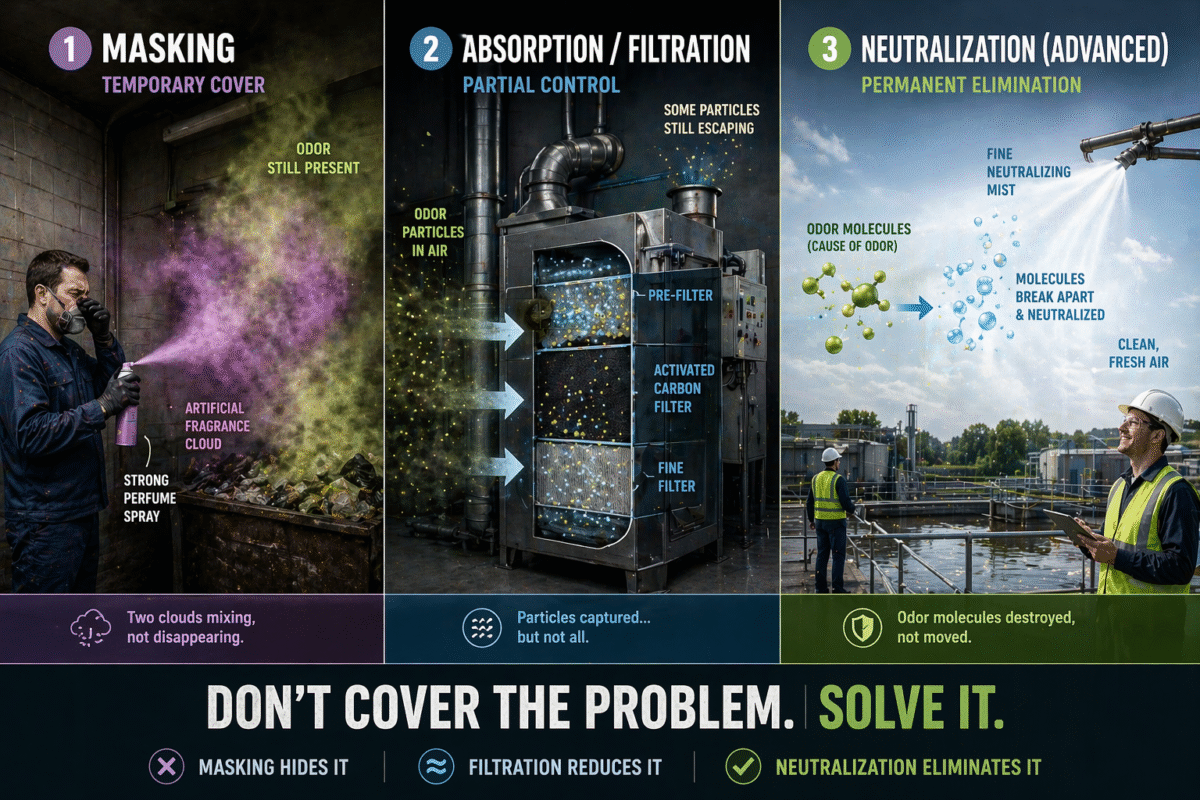
Odour control is no longer about masking—it’s about controlling, mitigating, and preventing at the root. With the right technology and process alignment, you can turn odour risk into operational resilience.