
Solid Waste Odour Control: Proven Strategies for Transfer Stations & Landfills

1. The Challenge: Why Landfill Odor is Hard to Control
1.1 The Chemistry of Landfill Odour
Landfill odours are caused by the breakdown of organic materials under anaerobic conditions. Typical compounds include:
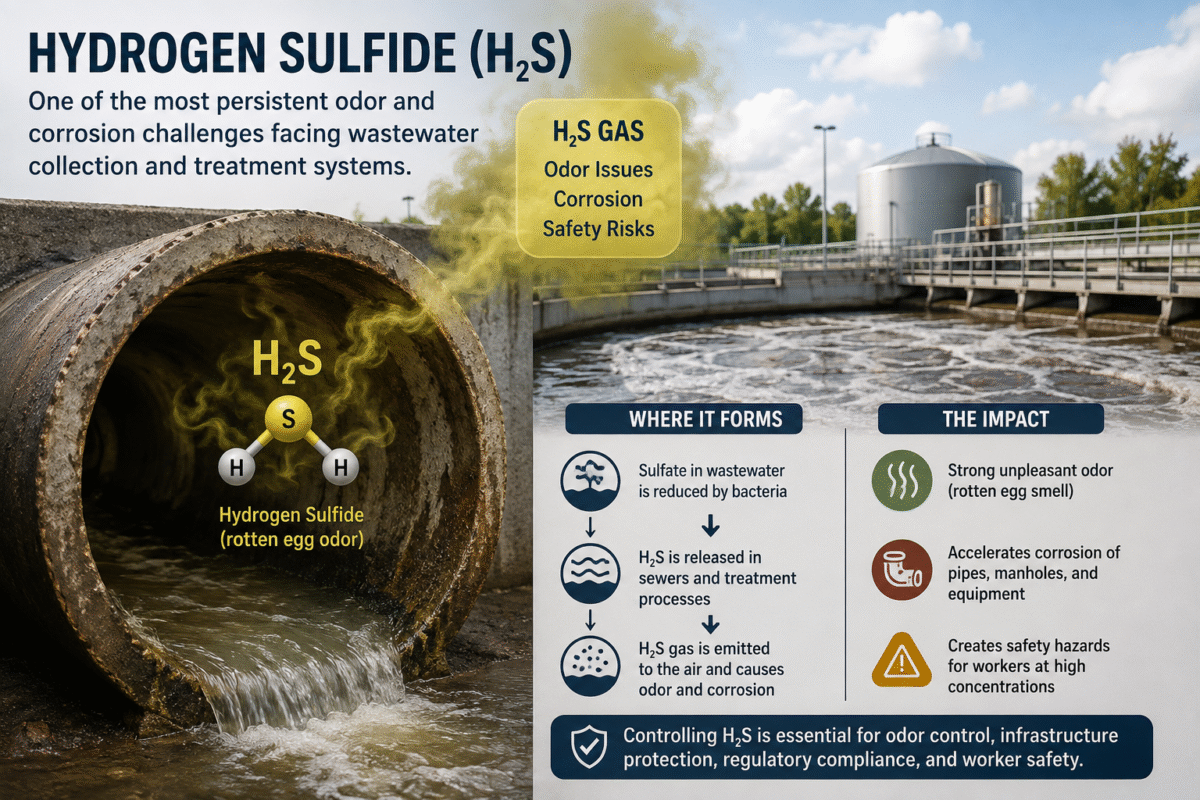
- Hydrogen sulfide (H₂S) – “rotten egg” smell
- Ammonia (NH₃) – from protein and urea decomposition
- Mercaptans & Sulfur VOCs – strong, skunky odours
- Volatile fatty acids (VFAs) – sour organic odours
- Amines & Ketones – from decaying food and leachate
These compounds are volatile and mobile — easily carried by wind and temperature inversions. H₂S, in particular, poses both odour and safety concerns, with odour detection thresholds as low as 0.5 parts per billion (ppb) and corrosive potential at higher concentrations.
👉 For more detail on landfill gas composition, see the U.S. EPA’s Landfill Gas Primer:
https://www.epa.gov/lmop/landfill-gas-energy-project-development-handbook
1.2 The Role of Leachate in Odour Generation
Leachate — the liquid that drains from decomposing waste — is one of the main odour sources in solid waste sites. It’s rich in sulfides, ammonia, and volatile organics. When stored in open tanks or ponds, anaerobic bacteria convert sulfates into sulfides, producing H₂S gas.
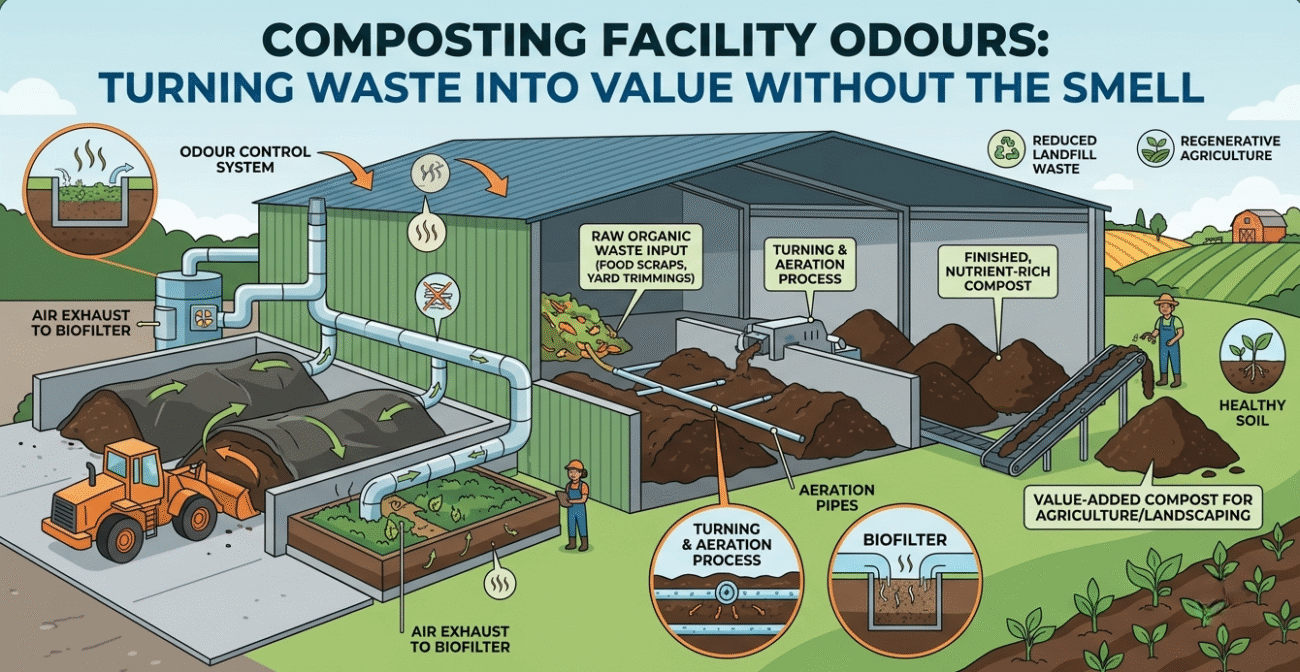
Over time, leachate ponds can become chronic odour emitters — especially during summer or stagnant wind conditions. Treating this layer biologically or via aeration is key to breaking the odour cycle.
1.3 Meteorological and Seasonal Factors
Odour dispersion depends on:
- Wind direction and velocity
- Temperature inversions
- Humidity
- Surface area of exposed waste or leachate
These variables make odour unpredictable — which is why automated, adaptive misting systems and real-time monitoring are now standard for leading municipalities.

2. The Multi-Layer Odour Control Approach
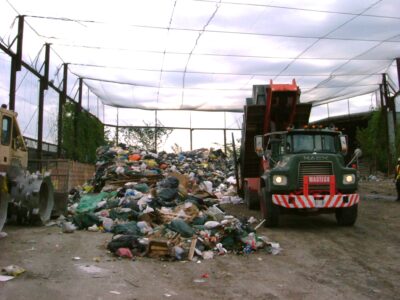
Landfill and transfer station odours originate from multiple zones: tipping floors, active faces, leachate ponds, haul roads, and perimeter fencing. Each requires tailored strategies.
2.1 Layer 1 – Source Control (BioStreme)
BioStreme introduces a biological treatment layer, tackling odour at its origin. By adding beneficial microbial cultures and nutrients, it enhances aerobic digestion and suppresses odour-forming anaerobic bacteria.
Key Benefits:
- Reduces H₂S, ammonia, and volatile organic precursors
- Improves leachate biodegradability and reduces sludge
- Stabilizes biological balance in ponds and waste cells
- Decreases long-term odour load
👉 Learn more about biological odour control principles:
https://www.researchgate.net/publication/343578664_Biological_Control_of_Hydrogen_Sulfide_Emissions2.2 Layer 2 – Air & Surface Neutralization (AirSolution)
Even with biological balance restored, odour gases escape into the air — especially around leachate ponds, tipping floors, and open waste. AirSolution provides chemical neutralization at the air-phase level.
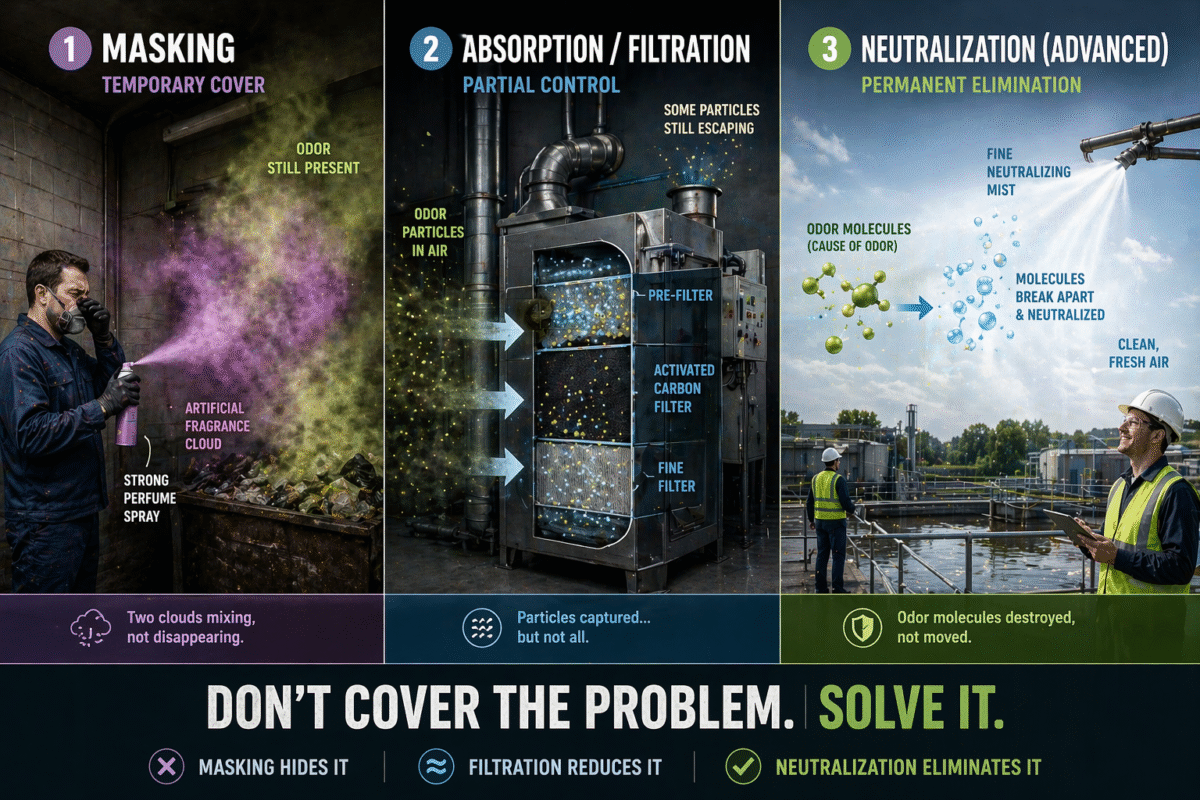
Unlike masking agents, AirSolution’s formulations bond with odour molecules through oxidation and molecular interaction, converting them into non-volatile compounds.
Applications:
- Spray bars and misting systems over transfer station hoppers
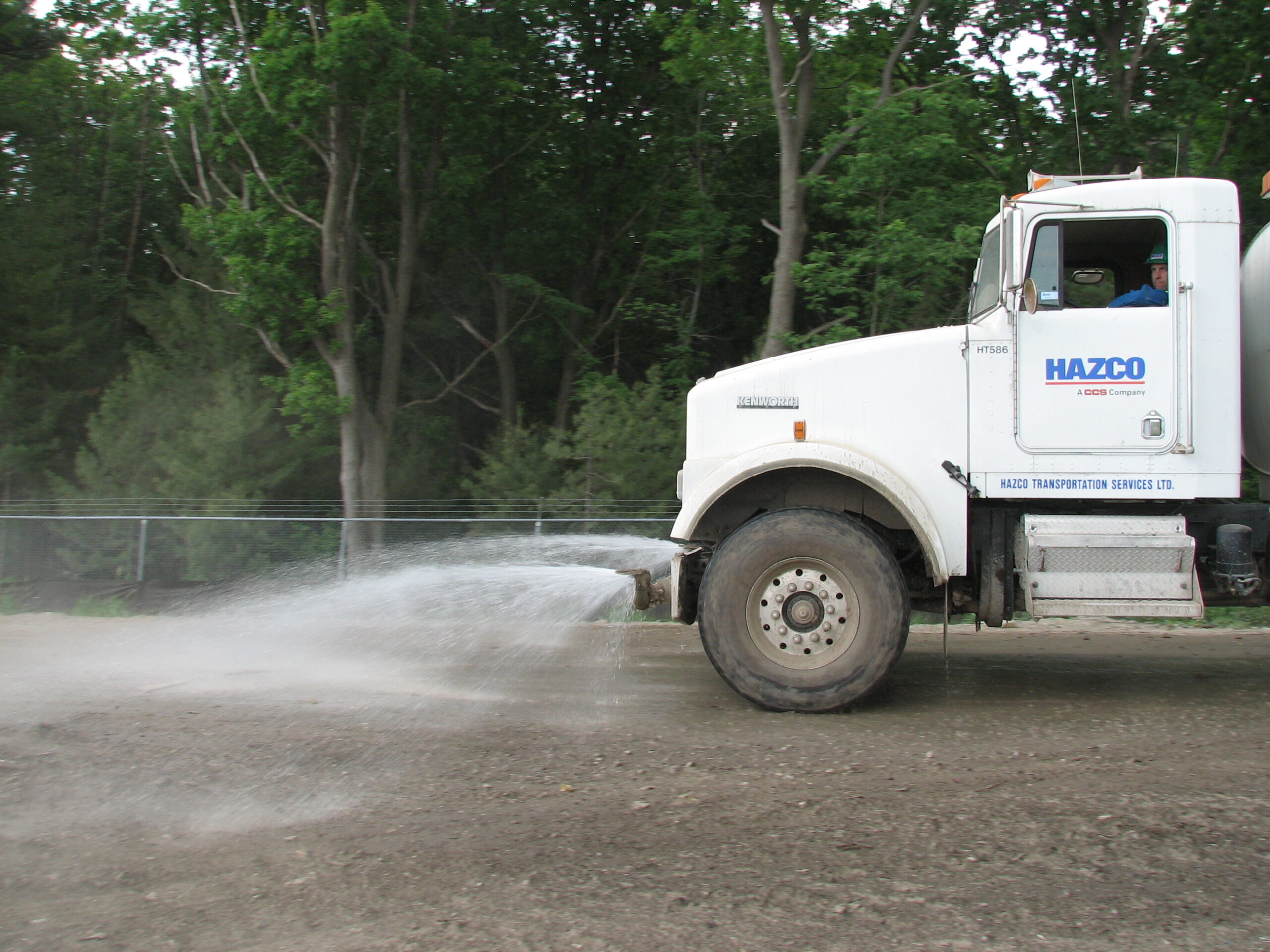
- Perimeter fencing with atomized neutralization
- Odour curtains near landfill working faces
- Building exhaust ducts, tunnel fans, and vent stacks
Why it works: It reacts with H₂S, mercaptans, and VOCs in real time, providing instant relief without overwhelming fragrance.
2.3 Layer 3 – Large-Area Atomization (XStreme)
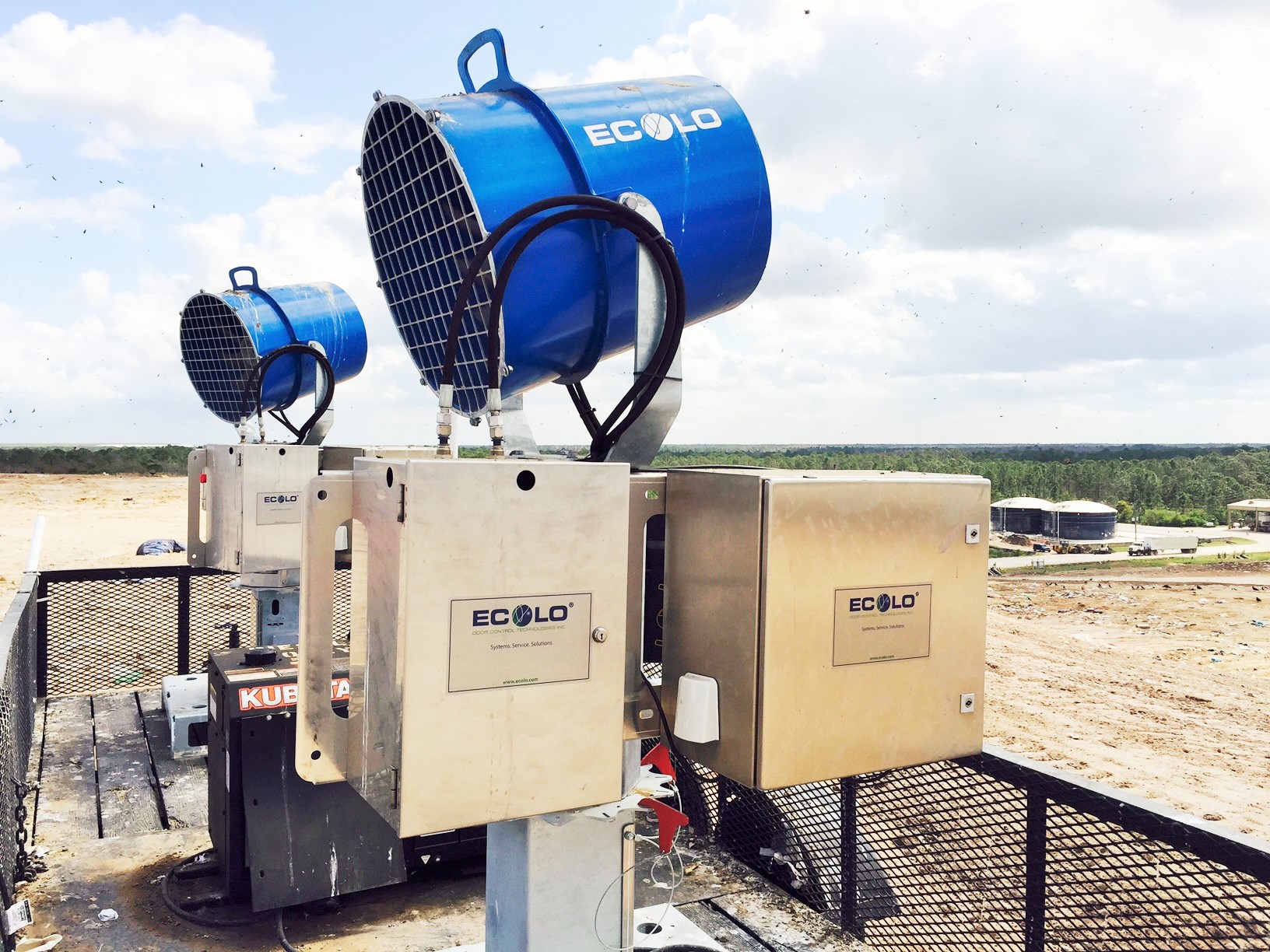
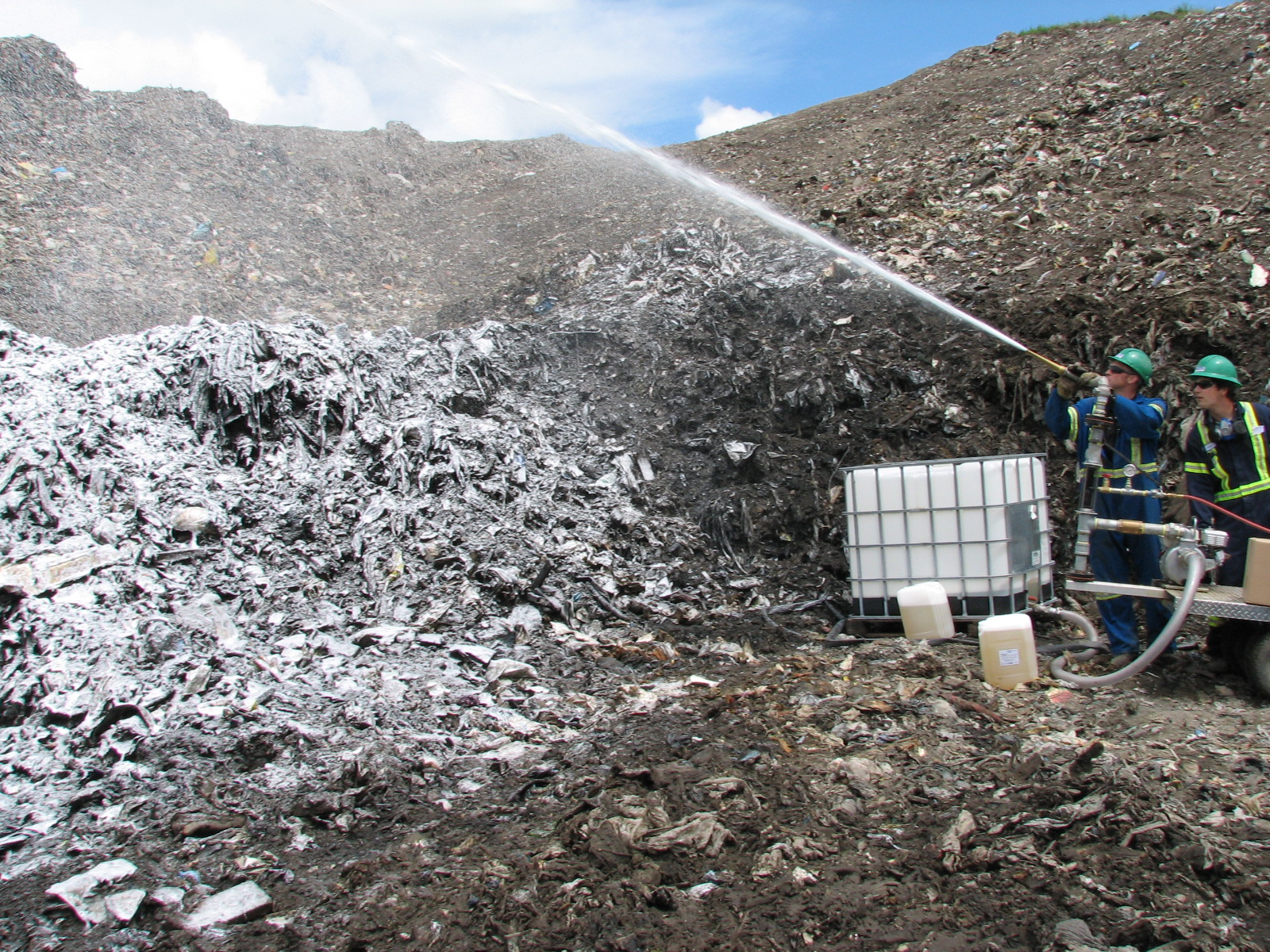
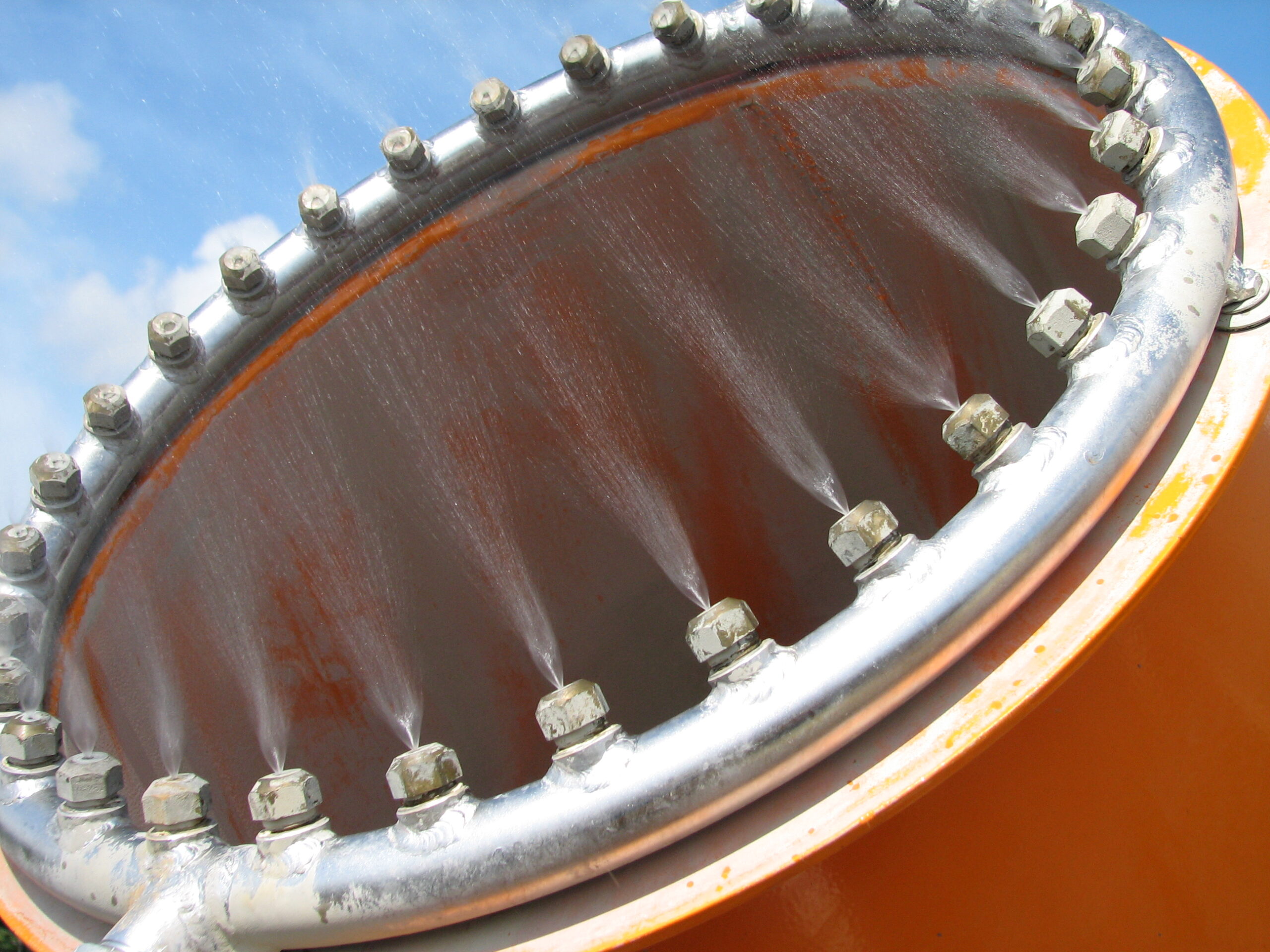
When odour coverage needs to scale across acres, XStreme is the powerhouse. Its high-pressure misting system delivers ultra-fine droplets that blanket large areas — forming a “neutralizing fog barrier.”
Core Advantages of XStreme:
- Engineered for outdoor industrial environments
- Handles harsh, dusty, and humid conditions
- Uses corrosion-resistant components
- Covers vast zones (perimeters, tipping areas, lagoons)
- Integrates with odor control solutions like AirSolution
XStreme can be configured as:
- Perimeter mist lines for wind-driven odour
- Fixed mast systems at landfill edges
- Mobile skid units for shifting work faces
- Automated PLC control with variable flow rates
- Reduces H₂S, ammonia, and volatile organic precursors
3. Proven Strategies for Key Odour Zones
3.1 Transfer Stations
Odour Sources:
- Unloading bays
- Compactor hoppers
- Leachate sumps
- Ventilation exhaust
Strategy:
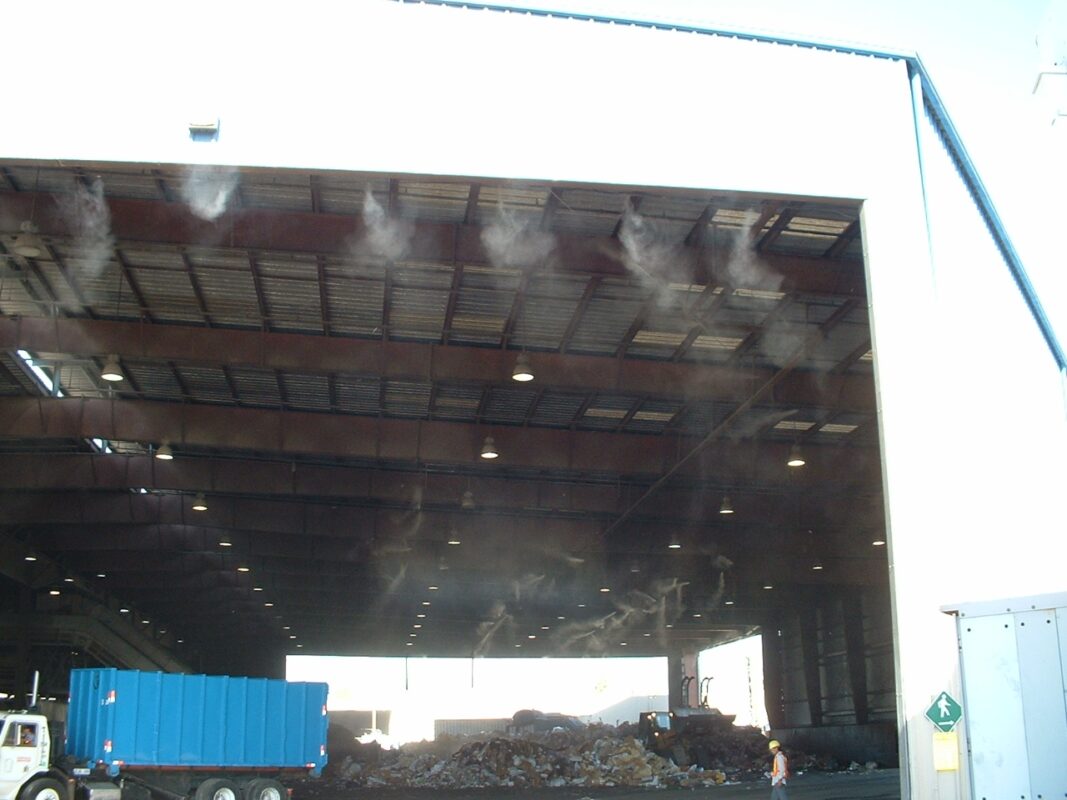
- Install XStreme misting lines along roof trusses or walls.
- Atomize AirSolution neutralizers to capture odours at the loading pit.
- Apply BioStreme in leachate drains to biologically reduce organics.
- Use automatic timers or motion sensors to run misting during operational hours.
Result: Continuous odour reduction without chemical overuse, and improved working conditions for staff.
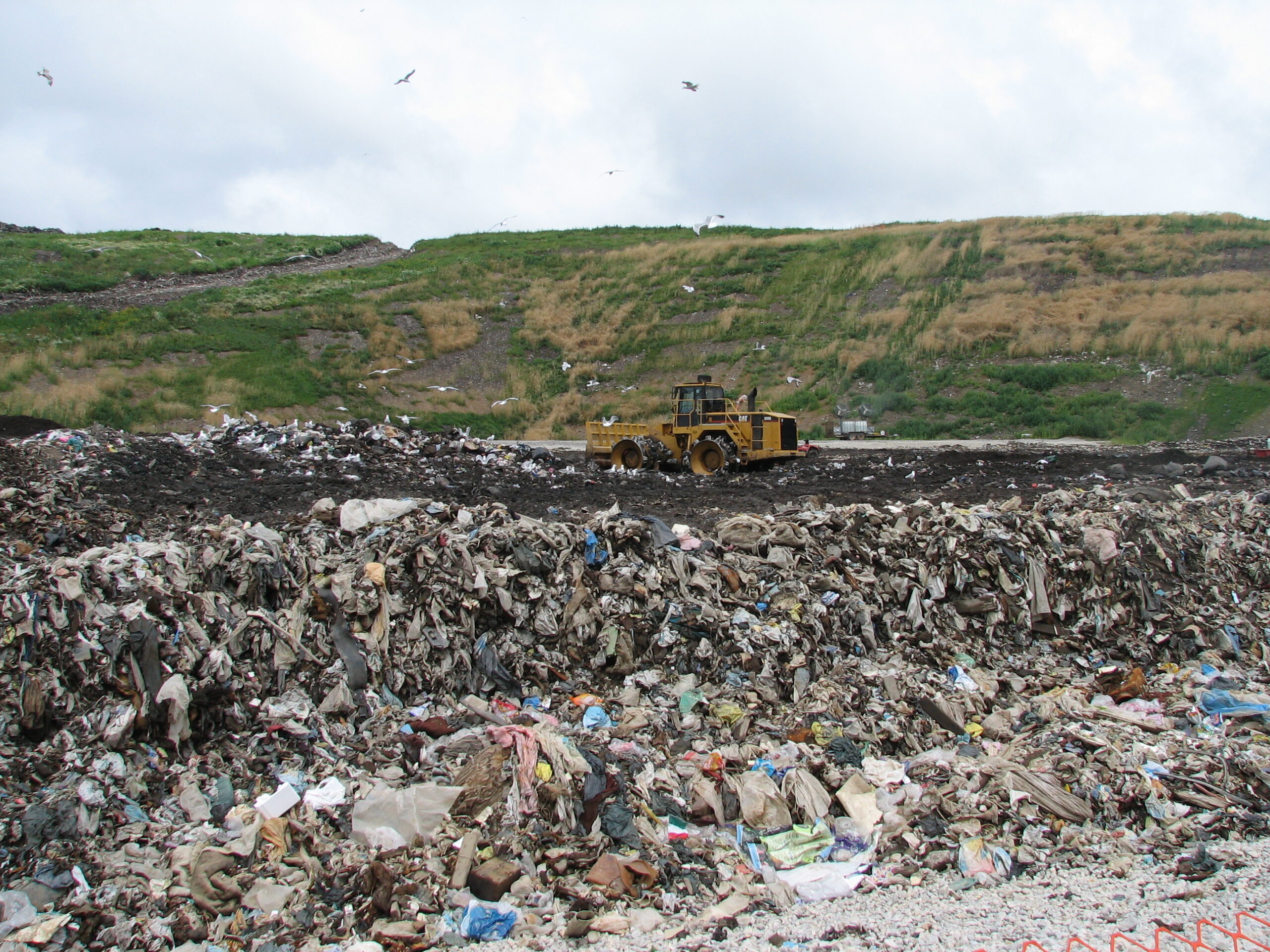
3.2 Landfill Active Face
Odour Sources:
- Exposed waste
- Decomposing organic matter
- Daily cover areas
- Gas wells and collection headers
Strategy:
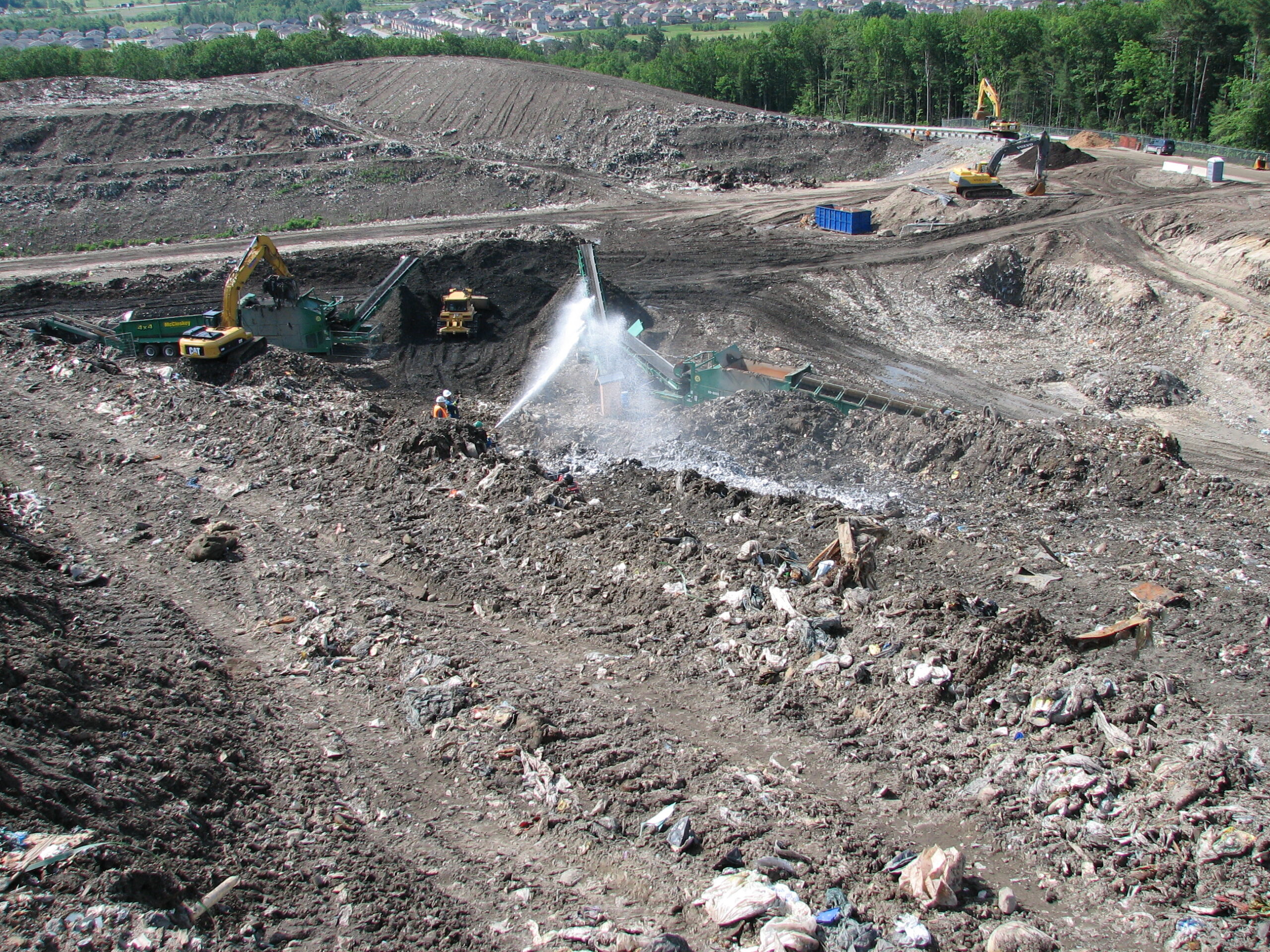
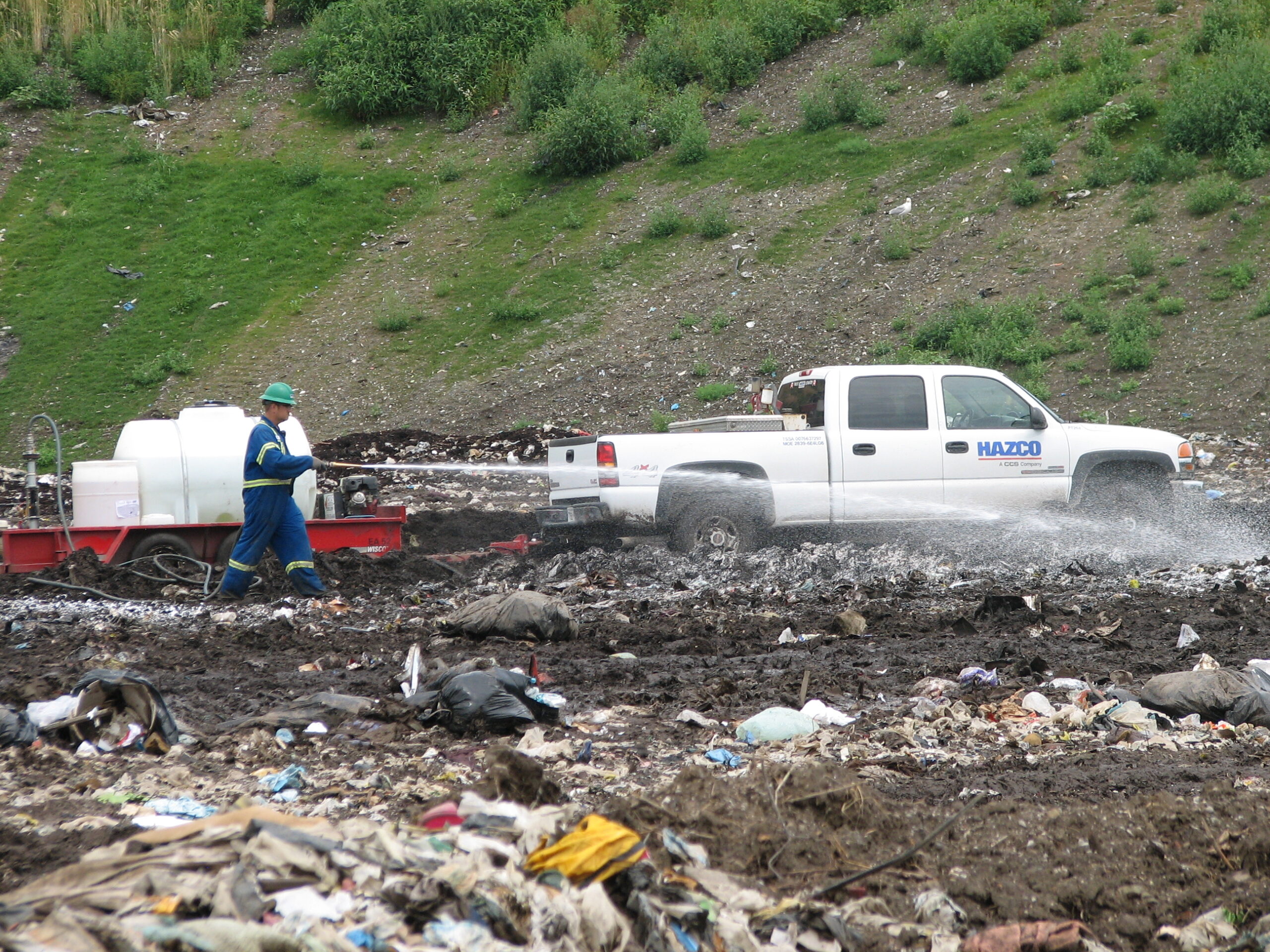
- Deploy XStreme perimeter systems to create a mist curtain around the active cell.
- Use AirSolution atomization across open tipping areas or heavy odour plumes.
- Apply BioStreme within leachate recirculation to enhance aerobic degradation.
Result: 70–90% reduction in detectable odours and fewer community complaints.
3.3 Leachate Ponds & Lagoons
Odour Sources:
- Anaerobic decomposition
- Sulfide formation
- Surface stripping of H₂S
Strategy:
- BioStreme: add to ponds to increase microbial oxygen demand and suppress SRB activity.
- XStreme + AirSolution: install floating or bank-mounted misting nozzles to neutralize escaping gases.
- Optional: supplemental aeration to maintain DO >1 mg/L.
Result: Reduced H₂S emission and improved water clarity.
For background on the role of aeration in odor mitigation, see this overview by the Water Environment Federation (WEF):
https://www.wef.org/news-hub/wef-news/the-science-of-odor-control
3.4 Perimeter Odour Control
Odour Sources:
- Wind-driven fugitive emissions
- Waste truck traffic
- Perimeter drainage
Strategy:
- Create a perimeter barrier system using XStreme misting with AirSolution neutralizer along property fences or tree lines.
- Program system to operate during high wind or elevated H₂S readings (via sensors).
- For large sites, install solar-powered control panels for energy-efficient operation.
Result: Odour containment before it leaves the site — improving neighbour relations and regulatory compliance.
4. Hydrogen Sulfide (H₂S) Removal: A Core Metric
4.1 Health & Safety Context
H₂S is not only odorous; it is toxic at higher concentrations. Prolonged exposure at even 10 ppm can cause irritation, while levels above 100 ppm are dangerous. OSHA defines a Permissible Exposure Limit (PEL) of 10 ppm (8-hour TWA).
https://www.osha.gov/hydrogen-sulfide/hazards
4.2 How the Combined System Reduces H₂S
Component | Function | H₂S Impact |
BioStreme | Inhibits sulfate-reducing bacteria | ↓ H₂S generation |
AirSolution | Oxidizes airborne H₂S | ↓ Odour intensity |
XStreme | Distributes neutralizer evenly across large areas | Maximized coverage |
Together, these systems achieve source suppression + airborne neutralization, ensuring compliance with ambient H₂S thresholds.
5. Large-Scale Implementation Example
Municipal Solid Waste Landfill (South Africa)
- Area: 120 acres, 5 leachate ponds, 2 active faces
- Problem: Persistent odour complaints, H₂S spikes >20 ppm
- Solution:
- XStreme 200 m high-pressure misting network along perimeter
- AirSolution 9100 neutralizer integrated in dosing tanks
- BioStreme 201 added to leachate ponds weekly
- XStreme 200 m high-pressure misting network along perimeter
- Results (after 90 days):
- 85% reduction in odour complaints
- Ambient H₂S levels <1 ppm at fence line
- Improved leachate quality and reduced sludge accumulation
- 85% reduction in odour complaints
6. Sustainability and Cost Efficiency
Modern odour control must also align with sustainability goals. The combined XStreme + AirSolution + BioStreme approach supports this by:
- Reducing chemical dependency (via biological balance)
- Minimizing water use through high-efficiency nozzles
- Lowering energy demand (XStreme systems run at optimized pressure with automated control)
- Supporting carbon neutrality goals by improving microbial efficiency and reducing methane precursors in leachate
In addition, proactive odour control enhances social license to operate, reducing legal risk and improving public trust.
7. Integration with Environmental Compliance Frameworks
Municipal operators can align odour programs with:
- U.S. EPA Odor Assessment Tools
https://www.epa.gov/air-research/odor-assessment-and-management - European Commission Best Available Techniques (BAT) for waste treatment
https://eippcb.jrc.ec.europa.eu/reference/waste-treatment - Canadian Council of Ministers of the Environment (CCME) guidelines for H₂S and air quality
https://ccme.ca/en/air-quality
Aligning odour control plans with these frameworks ensures regulatory resilience and demonstrates proactive environmental stewardship.
8. Best Practices for Facility Managers
8.1 Monitoring
- Deploy portable or fixed H₂S sensors.
- Log odour intensity using the Odour Unit (OU/m³) framework.
- Use drone-mounted sensors for spatial plume mapping.
8.2 Preventive Maintenance
- Clean misting nozzles monthly to prevent scaling.
- Inspect pump stations and filters for mineral build-up.
- Replace BioStreme dosing containers as per manufacturer’s schedule.
8.3 Data Integration
- Integrate H₂S and meteorological data into SCADA or central dashboards.
- Automate XStreme misting flow based on wind speed/direction triggers.
8.4 Community Engagement
- Maintain transparent communication on odour-control efforts.
- Offer a complaint portal and publish monitoring data.
Periodically invite community reps to site tours to demonstrate technology in action.
9. Comparative Technology Matrix
Method | Description | Advantages | Limitations |
Covering/Enclosure | Geomembrane covers, domes | Reduces direct emissions | Costly for large areas |
Chemical Dosing Only | NaOCl, H₂O₂, iron salts | Fast oxidation | High OPEX; risk of overdosing |
Biofiltration | Air passed through bio-media | Sustainable, natural | Large footprint |
Atomized Misting (XStreme + AirSolution) | Neutralizer fog over wide zones | Fast, adjustable, scalable | Needs water supply |
Biological Additives (BioStreme) | Enhances microbial balance | Long-term, natural | Gradual onset of results |
Combined Approach (Recommended) | Biological + Air-Phase + Atomization | Comprehensive, cost-balanced | Requires coordinated setup |
10. The Science of Droplet Physics and Coverage
XStreme’s high-pressure nozzles create droplets in the 5–15 micron range — small enough to stay airborne and interact with odour molecules, but heavy enough to resist drift.
The droplet’s surface area is critical: the finer the droplet, the more reactive surface available for AirSolution to contact airborne odours. This allows coverage across 100+ m with minimal water use.
For reference on droplet science and aerosol interaction, see:
https://www.ncbi.nlm.nih.gov/pmc/articles/PMC7167105/
11. Future Trends in Odour Control for Municipal Facilities
- AI-Driven Misting: Real-time meteorological data controls atomization output dynamically.
- Smart Bio-Dosing: IoT-linked BioStreme systems adjust biological feed automatically based on redox potential and sulfide sensors.
- Hybrid Solar-Powered Systems: Perimeter odour control using renewable energy.
- Community Monitoring Apps: Residents receive transparency on H₂S readings via public dashboards.
As environmental expectations grow, municipalities embracing integrated odour technology stand to benefit both reputationally and operationally.
12. Conclusion: Integrated Odour Control That Works
Effective odour management in transfer stations and landfills demands a multi-layered, science-based approach. By targeting both the source and the air-phase, the combination of BioStreme, AirSolution, and XStreme offers the most complete and sustainable odour mitigation system available.
Summary of Impact:
- ✅ Eliminates odours at biological source (BioStreme)
- ✅ Neutralizes air-phase emissions (AirSolution)
- ✅ Delivers wide-area coverage (XStreme)
- ✅ Reduces H₂S, VOCs, and leachate odour
- ✅ Protects community health and compliance standards
From municipal infrastructure to private waste operators, the message is clear: integrated odour control is no longer optional — it’s essential.
For more details on implementing a tailored odour control program, see related industry guidelines:
- EPA Odour Management Resources
https://www.epa.gov/air-research/odor-assessment-and-management
- WEF Odour Control Technical Series
https://www.wef.org/resources/publications/books/OdorControl/