
AirSolution: The Chemistry Behind True Odor Neutralization

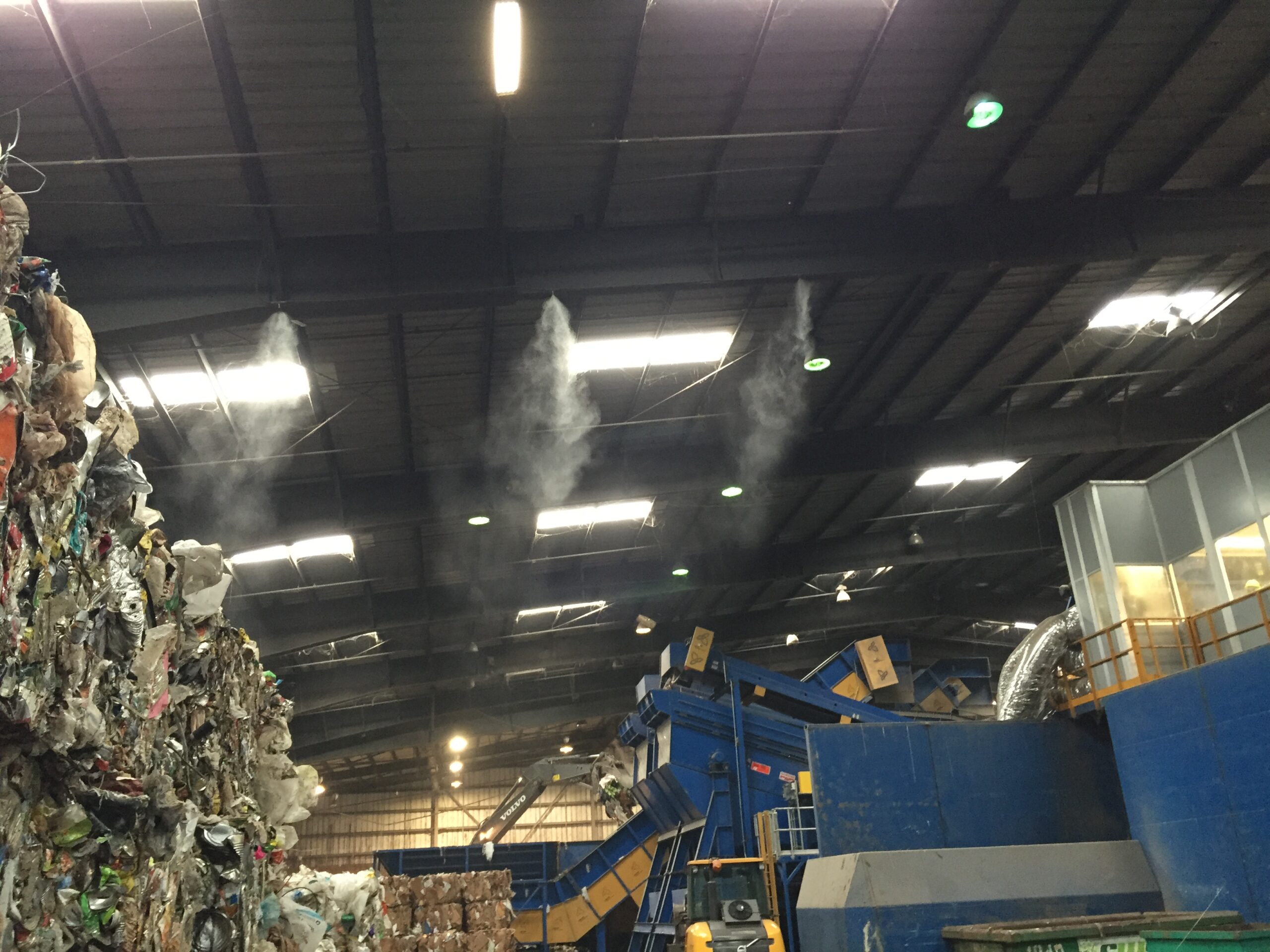
Unpleasant odours are more than an inconvenience—they impact workplace comfort, community wellbeing, and environmental compliance. Whether originating from wastewater treatment plants, food processing facilities, landfills, HVAC systems, or industrial operations, odour management has evolved from simple masking perfumes to sophisticated molecular-level solutions. Among today’s advanced technologies, AirSolution stands out as a true odour neutralizer engineered through scientific innovation, precision chemistry, and environmental responsibility.
As industries demand higher standards of performance and sustainability, understanding the science behind how odour neutralization actually works becomes essential. This product deep dive explores the chemistry of AirSolution, the mechanisms of molecular bonding, and why effective VOC control requires a fundamentally different approach from traditional masking agents.

1. The Evolution of Odour Control: From Masking to Molecular Chemistry
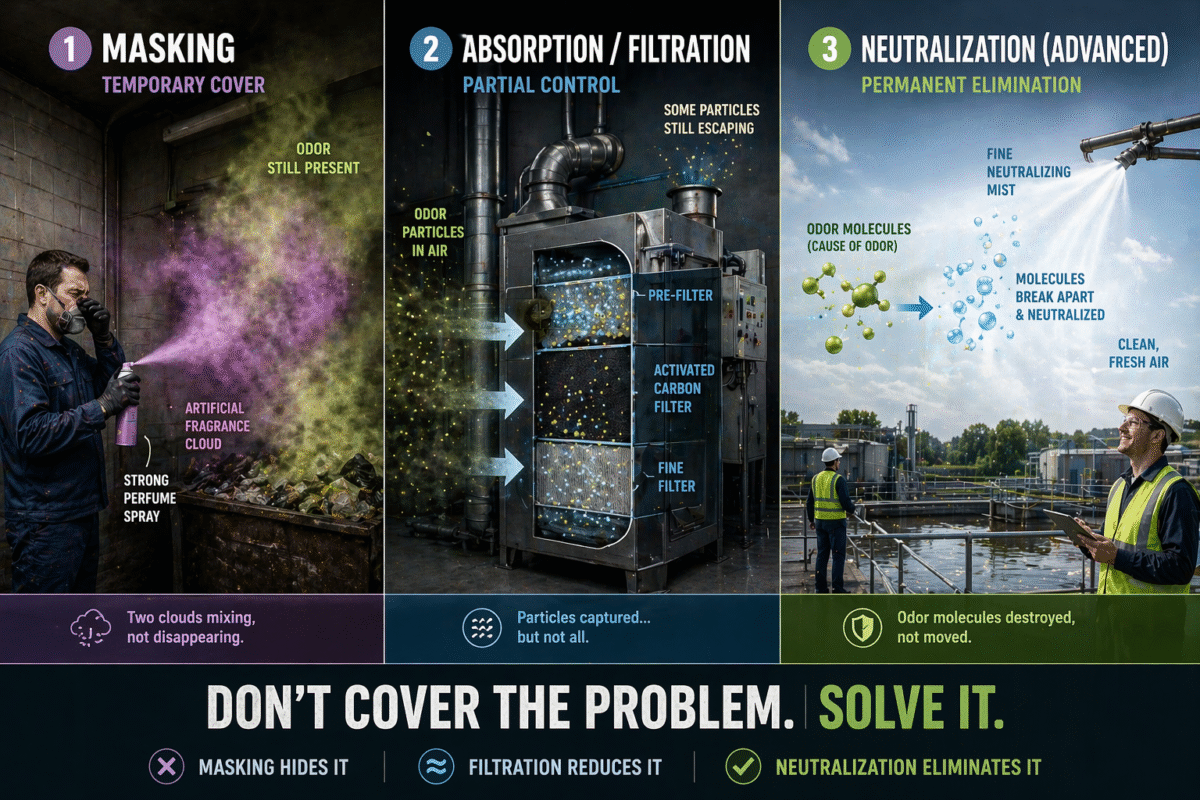
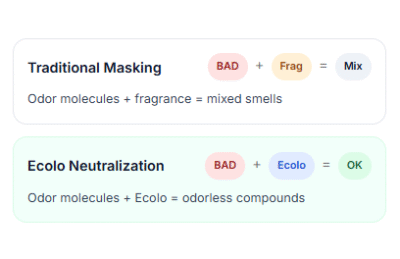
Historically, odour control relied on strong fragrances—perfumes that temporarily overpower or hide the unpleasant smell. These “masking agents” provide psychological relief but leave volatile organic compounds (VOCs) still active in the air. Over time, the malodours return, often stronger due to olfactory desensitization.
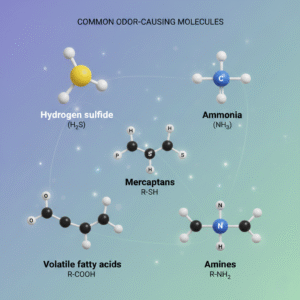
True odour neutralization requires a deeper understanding of the chemical reactions involved. Odours aren’t random—they are caused by identifiable molecules such as:
- Hydrogen sulfide (H₂S)
- Ammonia (NH₃)
- Mercaptans
- Amines
- Volatile fatty acids
These compounds, collectively known as VOCs (volatile organic compounds), are present in varying concentrations depending on the source and environment.
To address them effectively, the industry transitioned from covering up odours to chemically altering or deactivating the molecules responsible for the odour. This transition represents the fundamental difference between older approaches and modern solutions like AirSolution.
For reference on VOCs and their environmental impact, see the U.S. Environmental Protection Agency’s guidance on VOCs:
https://www.epa.gov/indoor-air-quality-iaq/volatile-organic-compounds-impact-indoor-air-quality
2. What Makes AirSolution Chemically Different?
Water-Based, Concentrated Formulations
AirSolution stands out due to its water-based, highly concentrated emulsions formulated from advanced odor-neutralizing compounds and essential oil-based chemistries. The formulations are specifically engineered to:
- React with malodour molecules
- Form stable, non-volatile byproducts
- Prevent odour reformation
- Deliver long-lasting VOC control
Non-Polarizing Odour Neutralizer Chemistry
One of AirSolution’s core features is its non-polarizing chemistry. Traditional masking fragrances create “polarizing” reactions—strong scents designed to distract the nose. AirSolution avoids this entirely by:
- Using molecular bonding
- Reacting with odour molecules
- Breaking the odour down at its source
This is the foundation of true neutralization.

3. How Does AirSolution Work? The Science of Molecular Bonding
Odour neutralization is a multi-step process involving chemistry, physics, and mass transfer dynamics. AirSolution’s odour neutralizer mechanism can be summarized through three major scientific principles:
A. Adsorption: Capturing VOC Molecules
AirSolution formulations contain reactive compounds designed to adsorb VOCs. Adsorption is different from absorption:
- Adsorption = molecules adhere to the surface of another compound
- Absorption = molecules are soaked into another material
Through targeted adsorption, AirSolution creates conditions where odour-causing molecules can be captured efficiently.
B. Chemical Reaction: Transforming Odour Molecules
Once adsorbed, AirSolution initiates a chemical reaction—typically through oxidation, reduction, or neutralization depending on the molecular profile of the VOC.
Examples of reactions include:
- Transforming hydrogen sulfide into non-volatile sulfates
- Neutralizing ammonia derivatives
- Breaking down volatile fatty acids into inert compounds
These reactions produce molecules with minimal vapor pressure, meaning they no longer evaporate or emit odours.
For an overview of oxidation chemistry, visit the Royal Society of Chemistry:
https://www.rsc.org/periodic-table/element/8/oxygen
C. Encapsulation: Creating Non-Volatile Complexes
After the chemical reaction occurs, AirSolution forms a non-volatile encapsulated complex around the byproducts. This prevents:
- Re-release of the odour molecules
- Secondary emissions
- Odour rebound after system shutdowns
Encapsulation ensures complete VOC control through chemical stability.
4. VOC Control: Why AirSolution Is Effective in Industrial Applications
Odours in industrial environments are rarely caused by a single compound. They are typically mixtures of chemically diverse VOCs, each with different properties such as:
- Solubility
- Volatility
- Polarity
- Reactivity
AirSolution’s formulations are engineered to address a wide spectrum of malodorous chemicals simultaneously, making it ideal for complex systems such as:
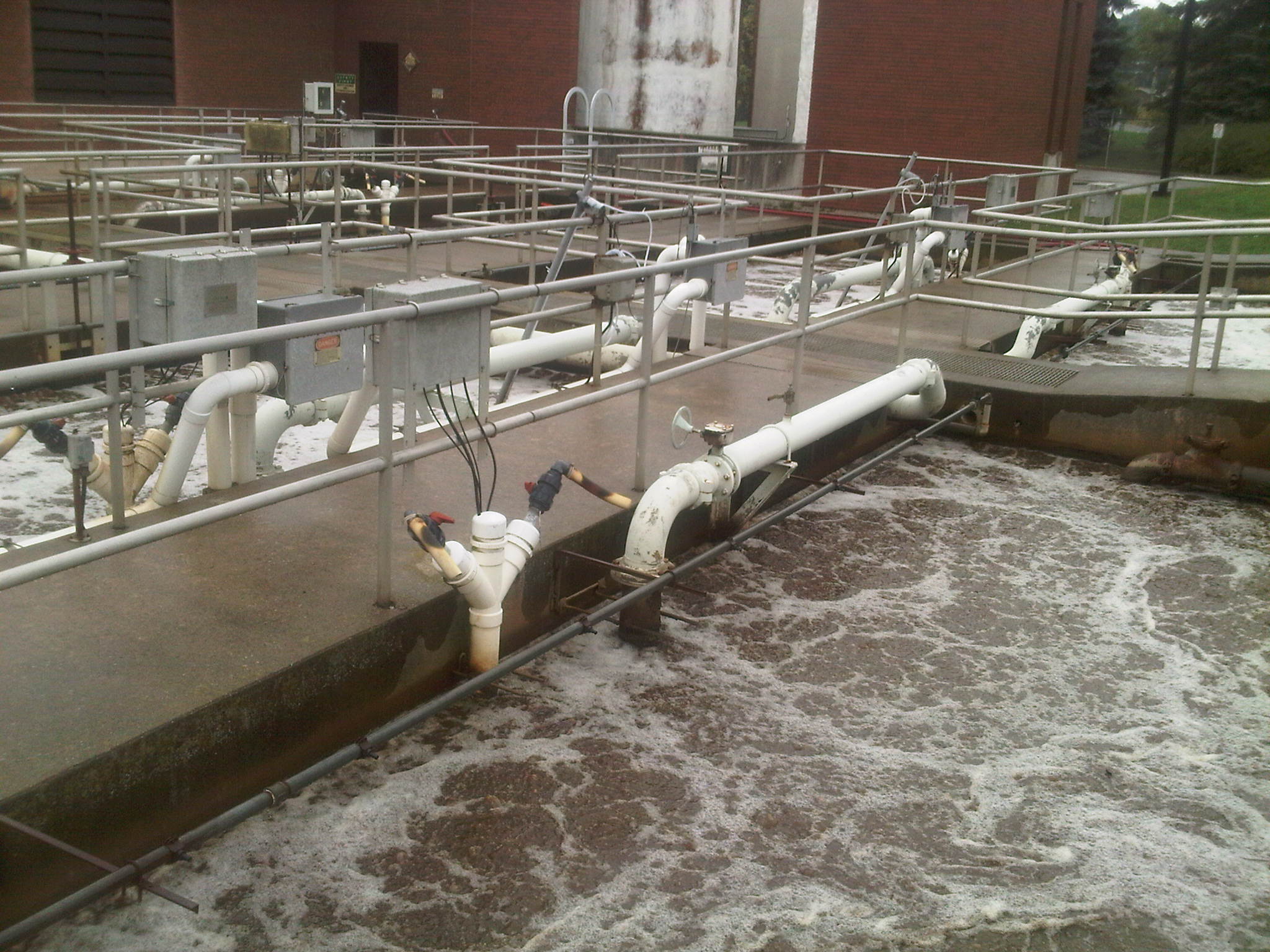
Wastewater Treatment Plants
Odours from sulfides, amines, ammonia, and organic decay are neutralized through reactive compounds tailored to waterborne environments.
Solid Waste Facilities
Landfills emit a wide variety of VOCs—including mercaptans and sulfur derivatives—that AirSolution can effectively neutralize.
Food Processing Facilities
Protein degradation produces amines, fatty acids, and sulfur compounds that require specialized molecular bonding chemistry.
HVAC and Air Handling Units
Low-level VOCs from industrial sources can be neutralized before entering indoor air circulation.
Chemical Manufacturing
Reactive environments benefit from AirSolution’s ability to bind, transform, and stabilize volatile molecules.

5. The AirSolution Formulation Science: Essential Oils + Synthetic Chemistry
AirSolution uses a hybrid approach combining natural essential oil components and engineered reactive molecules. Each ingredient type serves a specific chemical purpose:
Essential Oils
- Provide controlled vapor pressure
- Facilitate adsorption of VOCs
- Enhance solubility and reaction kinetics
Reactive Synthetic Compounds
- Trigger chemical transformation
- Provide stable molecular bonding
- Ensure long-term neutralization
This synergy is what differentiates AirSolution from fragrance-based products.
6. True Neutralization vs. Masking: Side-by-Side Comparison
Feature | Masking Agents | AirSolution |
Odour Mechanism | Overpowers odour | Neutralizes at molecular level |
VOC Control | None | Full chemical transformation |
Environmental Impact | Fragrance oversaturation | Water-based, safe formulations |
Longevity | Short-term | Long-lasting |
Safety | Can cause sensitivity | Low toxicity, essential oil-based |
Complexity Handling | Single odours | Multiple VOC groups |
7. Safe, Sustainable, and Cost-Effective
AirSolution is designed with environmental sustainability in mind. The water-based formulation ensures:
- Lower toxicity
- No harmful solvents
- Minimal environmental residue
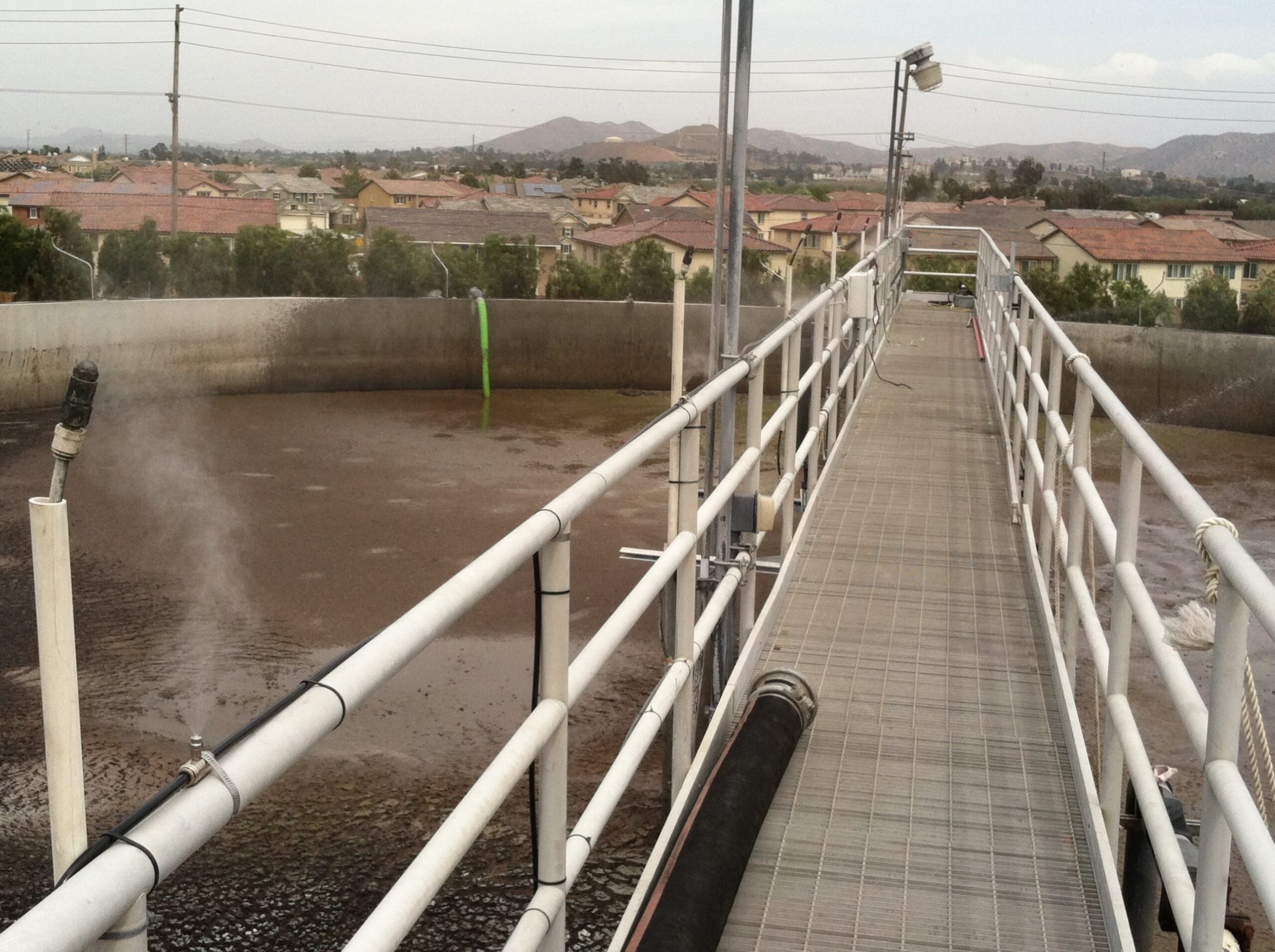
- Compatibility with industrial atomization systems
For additional context on green chemistry, see Green Chemistry principles from the American Chemical Society:
https://www.acs.org/greenchemistry/principles.html
8. Field Performance: Real-World Case Examples
Landfill Case Study – VOC Reduction
A municipal landfill reported:
- 90% reduction in hydrogen sulfide levels
- Significantly improved community satisfaction
- Lower complaint frequency
Wastewater Facility – Encapsulation Effectiveness
A wastewater treatment facility achieved:
- Measurable reduction in VOC concentrations
- Reliable odour control even during peak load hours
Food Processing Plant – Amine and Fatty Acid Control
AirSolution successfully neutralized:
- Strong amine odours
- Low-level fatty acid vapours
- Odours from protein degradation
9. The Science Focus: Why Molecular Bonding Works
When odour molecules are chemically neutralized, they cannot return to the air. This is because:
- Their molecular structure changes
- They become heavier, non-volatile compounds
- Their vapor pressure decreases
- Their polarity shifts
- They lose odour-causing functional groups
The reactions typically involve:
- Oxidation (removing electrons)
- Reduction (adding electrons)
- Acid–base reactions
- Bond formation with essential oil components
This is true odour elimination, not masking.
10. Application Methods That Maximize Effectiveness
AirSolution is typically applied through:
- Atomization systems
- Mist or vapor delivery units
- Duct injection
- Perimeter systems
- Portable sprayers
- High-pressure fogging equipment
These methods allow for precise dosage control, maximizing VOC capture and ensuring consistent odour neutralization.
11. Why AirSolution Delivers Better ROI
From a cost perspective, AirSolution provides a high return on investment due to:
- Concentrated formulations—lower dosing requirements
- Reduced odour complaints
- Improved regulatory compliance
- Enhanced community relations
- Lower operational downtime
Compared to traditional perfume-based products, the savings scale significantly.
Conclusion: AirSolution Represents the Future of Odour Neutralization
AirSolution is not a masking agent—it’s a scientifically engineered odour neutralizer designed for industrial-grade performance. Its unique blend of essential oils, reactive compounds, and water-based chemistry enables molecular bonding, transformation of VOCs, and long-lasting odour elimination.
For industries facing complex odour challenges, AirSolution offers a modern, environmentally responsible, and highly effective solution based on real chemistry—not illusions.