Why Odor Control Is Becoming a Critical Operational Issue in Ontario’s Waste & Sanitation Industry

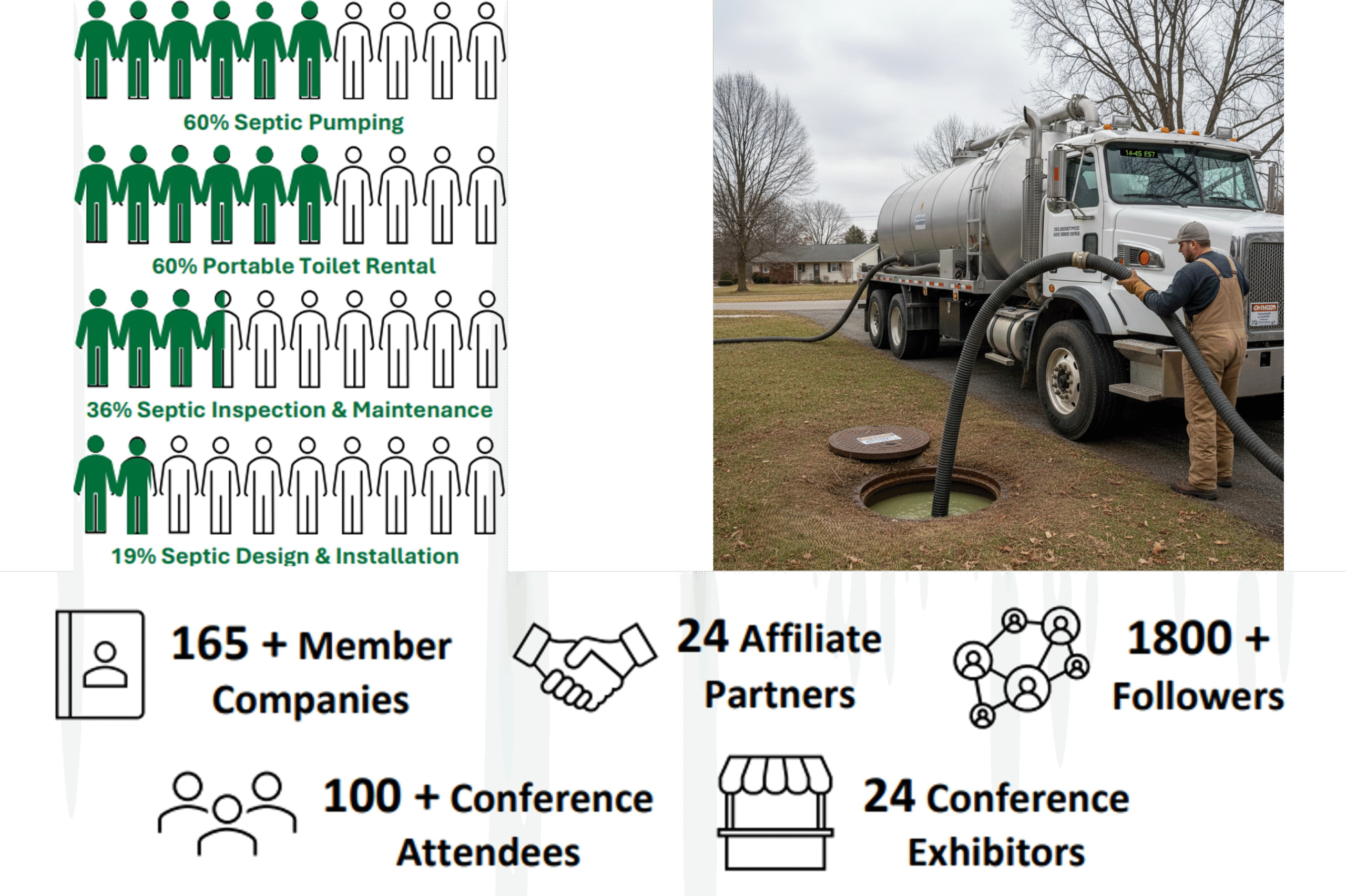
From septic servicing and portable sanitation to biosolids handling and onsite wastewater treatment, one operational challenge continues to cut across every segment of the industry: odor.
As professionals prepare to gather at the OASIS Conference & Trade Show (Jan 29–31, 2026, Casino Rama Resort) — Ontario’s leading event for onsite wastewater and sanitation sectors — the conversation is shifting. Odor is no longer viewed as a minor nuisance or cosmetic issue. It is now directly tied to:
Regulatory compliance
Community relations
Worker safety and retention
Equipment longevity
Operational efficiency
For operators running vacuum trucks, managing portable restroom fleets, maintaining lift stations, or designing treatment systems, uncontrolled odors signal deeper biological and chemical processes that affect performance, perception, and profitability.
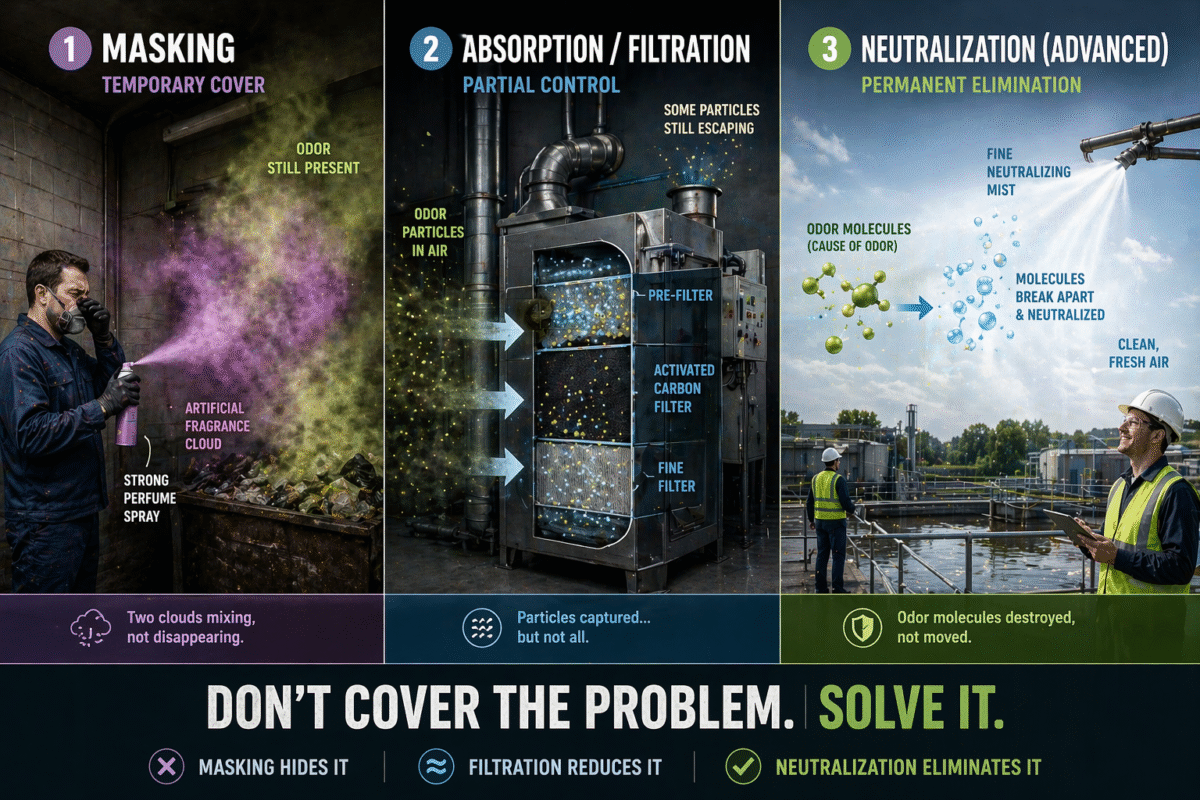
The industry is moving beyond masking agents and fragrances. The focus is now on practical, field-proven molecular odor neutralization — solutions designed to stop malodors at the source rather than temporarily covering them.
In this article, we’ll explore how modern odor-control chemistry is evolving and what it means for sanitation and wastewater operations across Ontario.

Why Odor Control Matters More Than Ever
In septic servicing, portable sanitation, and waste-handling operations, odors aren’t random — they’re the by-product of active biological and chemical processes. Gases like hydrogen sulfide (H₂S), ammonia (NH₃), and various volatile organic compounds (VOCs) are continuously generated as organic matter breaks down in septage, sludge, and biosolids.
The issue goes far beyond an unpleasant smell. These emissions affect how your business is perceived, how your crews work, and how regulators view your operation.
1️⃣ Client Experience & Complaint Reduction
Operators today work in highly visible environments — public events, urban neighborhoods, commercial properties, and active construction sites. In these settings, odor travels faster than your service reputation.
Even a technically well-run operation can be judged negatively if strong odors are present. Repeated odor issues lead to complaints, strained customer relationships, and in competitive markets, lost contracts. Effective odor management directly supports client satisfaction and long-term account stability.
2️⃣ Working Conditions for Field Crews
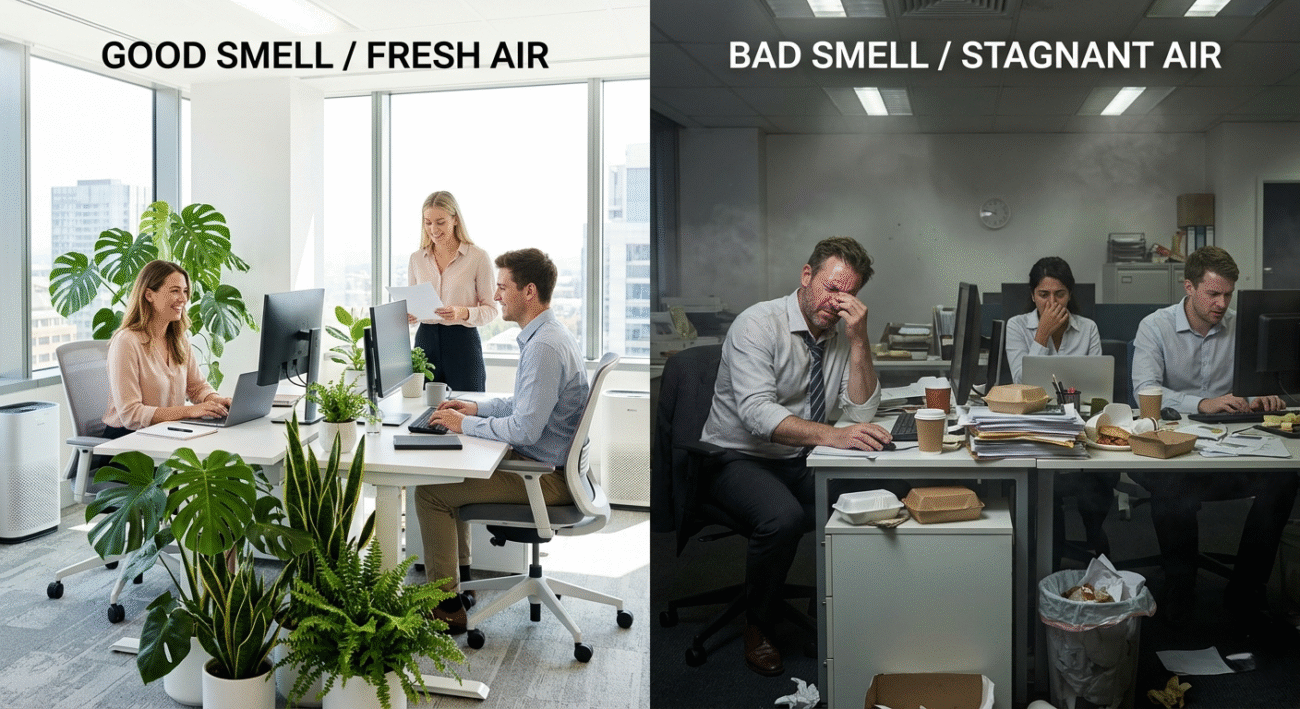
Drivers, pump operators, and service technicians spend hours each day around tanks, vacuum equipment, holding vessels, and confined spaces where odor concentrations are highest.
Reducing malodors isn’t just about comfort — it contributes to a more professional and tolerable work environment. Companies that invest in odor control often see improvements in crew morale, reduced fatigue associated with harsh environments, and better employee retention in a physically demanding industry.
3️⃣ Rising Regulatory & Community Expectations
Municipalities and environmental authorities are placing increased attention on nuisance odors, especially near biosolids storage areas, transfer stations, lagoons, and treatment systems.
Odor complaints from nearby communities can trigger inspections, operational restrictions, or corrective requirements. Proactive odor mitigation demonstrates environmental responsibility and helps operators stay ahead of regulatory scrutiny rather than reacting under pressure.
4️⃣ Professional Image & Modern Operations
Sanitation and wastewater companies are upgrading fleets, investing in advanced equipment, and adopting more sophisticated treatment technologies. Strong, unmanaged odors undermine that progress.
Today, odor control is part of operational professionalism. A clean, well-maintained system that also smells controlled signals modern practices, technical competence, and respect for customers, communities, and workers alike.
Where Odor Problems Show Up at OASIS Industries
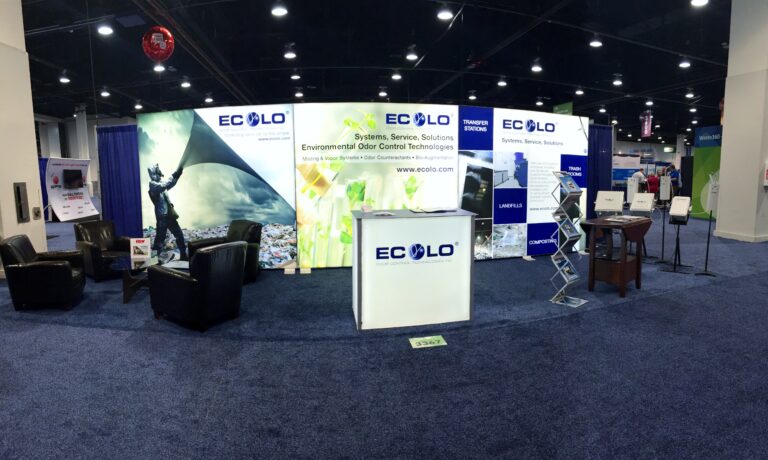
The OASIS exhibitor landscape highlights how widespread odor challenges are across the industry.
🚛 Vacuum Truck & Fleet Operations
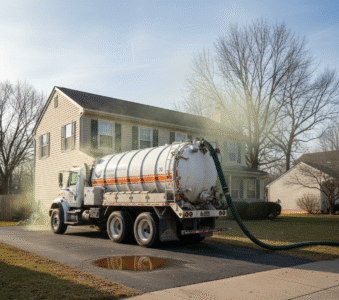
Companies like Vacutrux Limited and Schellvac manufacture and supply vacuum tanks and hydrovac trucks — essential but inherently odor-heavy equipment. During pumping, transport, and discharge, gases escape from:
Tank vents
Hoses and fittings
Access hatches
Dumping stations
Effective odor neutralization at the source and in the airspace makes a major difference for operators and surrounding communities.
🚽 Portable Sanitation Providers
Manufacturers such as PolyJohn and Satellite Industries, along with premium restroom trailer operators like Room To Go Inc. and The Trailer Factory, operate in environments where user experience is everything.
Traditional masking fragrances are no longer sufficient. Modern odor control focuses on:
Neutralizing odor molecules
Reducing airborne VOCs
Maintaining freshness in enclosed environments
This is especially critical at:
Events
Weddings
Festivals
Construction sites
Remote workforce locations

💧 Wastewater & Treatment System Manufacturers
Companies including:
Infiltrator Water Technologies
Waterloo Biofilter Systems
Bionest
Premier Tech Water and Environment
Polylok, Inc.
are advancing treatment performance and system design. Yet even advanced systems encounter odor points during:
Septic tank pumping
Effluent distribution
Sludge handling
Maintenance access
Odor control complements these technologies by managing gas-phase emissions outside the liquid treatment process.
🧪 Chemical & Biological Treatment Suppliers
Providers like Johnny’s Choice and TELAMODE Environmental Solutions supply deodorizers, dyes, bacteria, and enzymes. These play important roles in liquid-phase treatment, but airborne odor still requires targeted molecular neutralization.
🧩 Associations, Advisors & Distributors
Organizations such as:
Ontario Onsite Wastewater Association
Concrete Precasters Association of Ontario
ENCORE GROUP
Imperial Dade
NAPA Auto Parts Canada
support the industry’s operational backbone. Odor management ties directly into risk reduction, worker safety, fleet professionalism, and client perception.
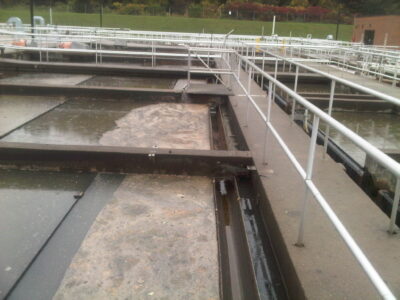
The Shift from Masking to Molecular Odor Neutralization
Historically, odor control relied on fragrances or strong chemicals that masked smells temporarily. Today, leading operators are moving toward engineered molecular solutions that:
✔ Neutralize odor compounds at the molecular level
✔ Reduce H₂S, ammonia, and VOC presence
✔ Work in air and vapor spaces
✔ Avoid harsh oxidizers or corrosive chemicals
✔ Improve safety and equipment longevity
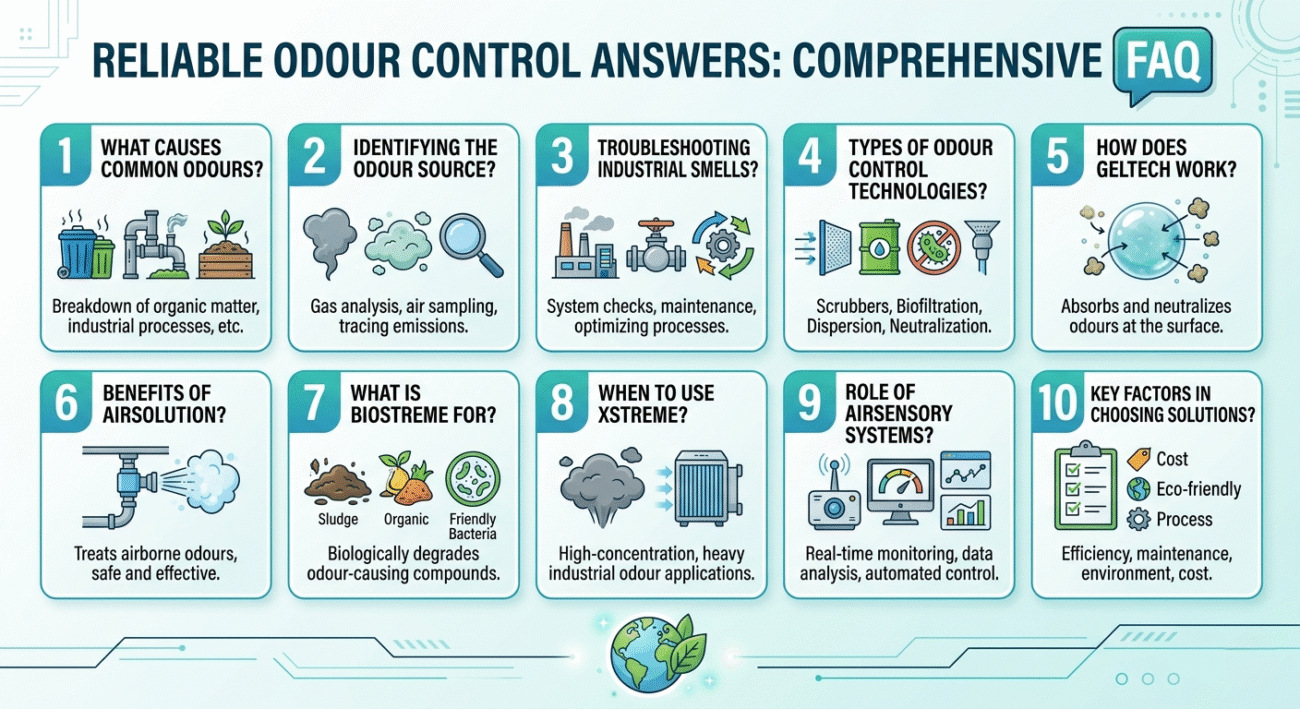
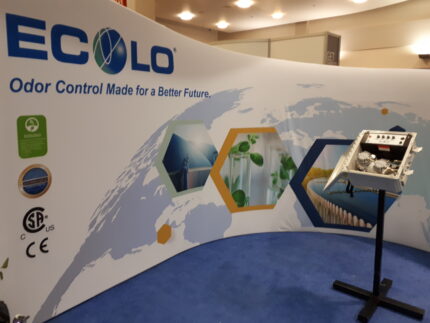
This is where Ecolo’s AirSolution, Geltech, BioStreme, and XStreme systems are being used globally across wastewater plants, industrial facilities, landfills, and sanitation operations.
Practical Applications Relevant to OASIS Attendees
At OASIS, we’re focusing on real-world field applications, including:
🔹 Vacuum Truck Odor Reduction
Tank headspace treatment
Vent neutralization
Hose and discharge area control
🔹 Portable Sanitation Enhancement
Inside-unit air treatment
Service yard odor control
Trailer restroom freshness
🔹 Septage & Biosolids Handling
Transfer stations
Storage tanks
Dewatering and loading zones
🔹 Maintenance & Pump-Out Events
Reduced odor spikes during tank opening
Improved conditions for technicians
Business Benefits Beyond Smell
Odor control is often viewed as cosmetic — but the business impact is tangible.
| Benefit | Operational Impact |
|---|---|
| Fewer odor complaints | Protects contracts & client relationships |
| Improved worker environment | Better retention & productivity |
| Professional service perception | Stronger brand positioning |
| Support for environmental goals | Alignment with modern expectations |
| Reduced reliance on harsh chemicals | Safer operations & equipment protection |
Why Meet at OASIS?
OASIS is uniquely positioned because it brings together:
Equipment manufacturers
Fleet operators
Treatment system designers
Installers
Regulators
Associations
Service providers
This ecosystem makes it the ideal place to discuss integrated odor-control strategies that fit into:
Septic operations
Portable sanitation logistics
Wastewater system performance
Fleet management practices
Let’s Connect
If you’re attending OASIS and involved in:
Septic services
Portable sanitation
Vacuum truck fleets
Wastewater systems
Biosolids handling
Environmental services
we would welcome the opportunity to meet.
Ecolo Odor Control Technologies works with operations worldwide to deliver practical, field-ready odor-neutralization solutions — not just fragrance masking, but targeted molecular control of H₂S, ammonia, and VOCs.